Facing fierce opposition over waste transport, Indigenous and regional consent issues, the Nuclear Waste Management Organization defended its 2043 and 2050 repository timelines before MPs.
OTTAWA — Canada’s first permanent underground nuclear waste dump will not open until 2043—more than three decades after site selection began—while a second tomb for future reactors is not slated until 2050, federal MPs heard Monday amid mounting backlash over radioactive transport and fast-track review proposals.
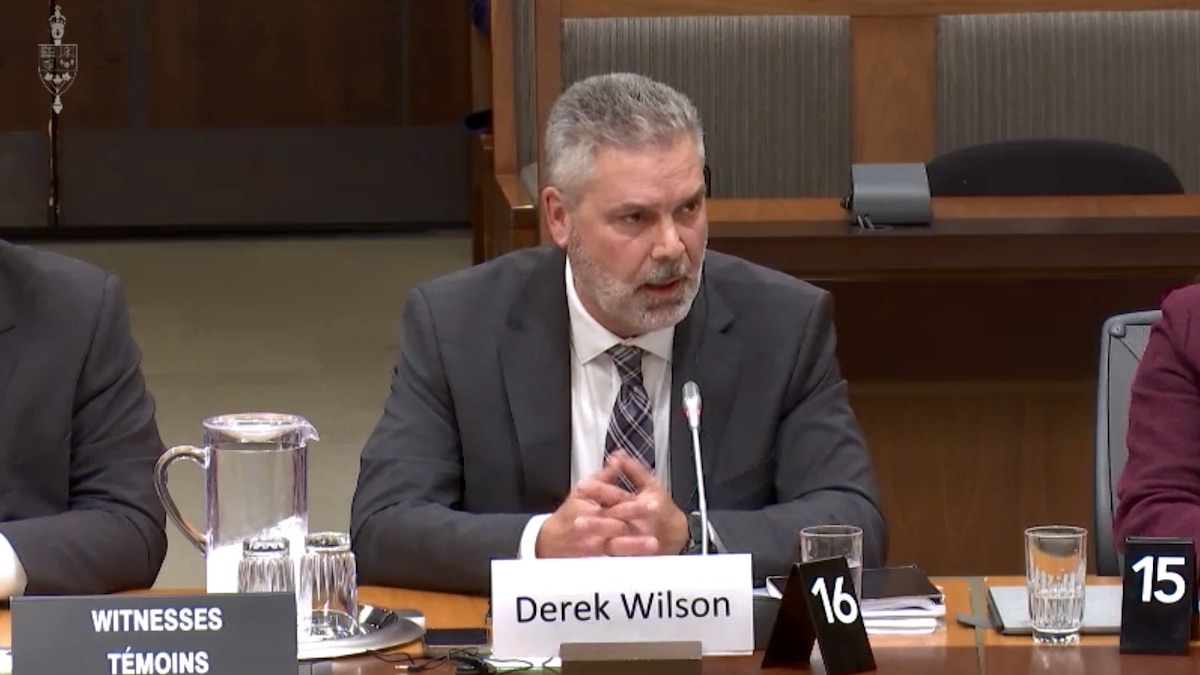
Appearing before the House of Commons Standing Committee on Natural Resources on November 16, 2026—in a session cut short after a single round of questioning by House voting bells—Nuclear Waste Management Organization (NWMO) CEO Derek Wilson and government affairs director Dakota Kochie faced sharp scrutiny over the multi-decade delays, community pushback in northwestern Ontario, and plans to haul high-level radioactive waste thousands of kilometres across Canadian highways and rail lines.
Wilson argued that keeping used fuel in interim storage at reactor sites is unsustainable and framed the deep geological repository (DGR) as an intergenerational obligation. “One of our organization’s core values is that we owe it to future generations to not leave the waste that we created and benefited from as a burden for them to manage,” Wilson told the committee.
Widespread Opposition Over Consent and Watershed Risks
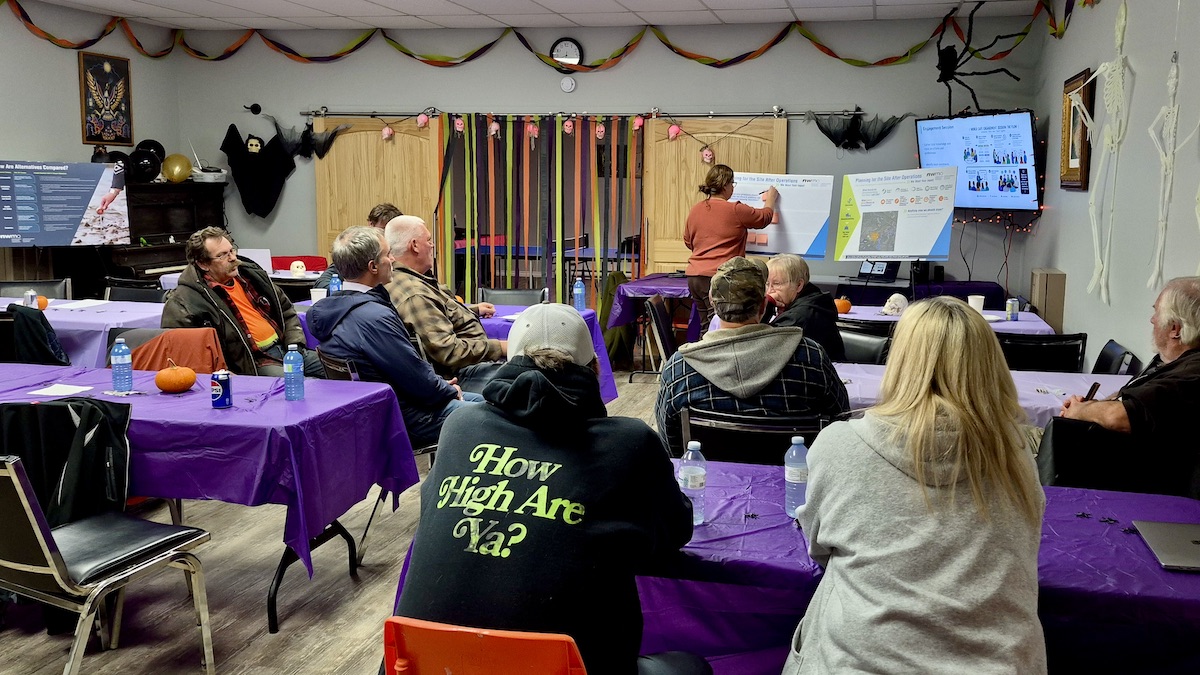
In November 2024, the NWMO selected the Revell site between Ignace and Dryden in northwestern Ontario after Wabigoon Lake Ojibway Nation and the Township of Ignace voted to advance the project. The divisive Deep Geological Repository (DGR) is directly adjacent to the small, unorganized Melgund Township communities of Dyment and Borups Corners. The dump program has long been a significant source of worry and concern to local residents as the regulatory process moves forward.
The facility is designed to bury roughly 5.9 million used fuel bundles from Canada’s existing reactor fleet.
During the hearing, Liberal MP Jennifer McKelvie—a former NWMO employee—invited Wilson to highlight how the agency secured community approval. Wilson acknowledged the 14-year search between 2010 and 2024 took longer than initially expected so residents could weigh the risks and rewards of hosting a multibillion-dollar facility, noting Ignace and Wabigoon Lake Ojibway Nation each ran separate, self-directed decision processes.
“We would not select a site if we didn’t have a informed and willing host community and that was one of the three criteria, overriding criteria we had in our site selection process,” Wilson said, adding the same consent-based model will govern the second repository search.
Across northwestern Ontario, however, the NWMO’s claim of consent has ignited fierce, sustained resistance. Downstream municipalities such as Dryden—just 40 kilometres from the Revell site—alongside directly adjacent Melgund Township residents, grassroots groups like We the Nuclear Free North, and major Indigenous organizations including Grand Council Treaty #3, Nishnawbe Aski Nation, the Anishinabek Nation, and the Chiefs of Ontario have formally opposed burying and hauling nuclear waste through the region.
Opponents argue that allowing two host communities to greenlight a permanent radioactive dump ignores the rights of neighboring First Nations, unorganized townships, and downstream regional residents whose rivers, lakes, and wild rice beds sit directly in the path of potential groundwater contamination within the English-Wabigoon watershed.
Critics also contend that southern Ontario is offloading its most toxic industrial waste onto a region that generates no nuclear power, forcing thousands of high-level radioactive shipments onto northwestern Ontario’s narrow, weather-battered highways and rail lines—a vulnerability underscored by Wilson’s admission that transport is excluded from the NWMO’s mandate.
Outside Ottawa, that regional pushback was notably absent from the committee’s own travel plans. Earlier in Monday’s meeting, MPs approved $54,453.60 for committee travel to nuclear hubs in Toronto, Kincardine, and Hamilton, with no trips scheduled for northwestern Ontario.
When the Impact Assessment Agency of Canada (IAAC) opened public comments on the project’s initial description in early 2026, opponents flooded the registry with hundreds of submissions challenging virtually every pillar of the proposal—from unassessed highway and rail transport risks and missing baseline environmental data to the lack of broader Indigenous and regional consent, potential watershed contamination, and the irreversible hazards of abandoning radioactive waste underground rather than maintaining monitored, hardened storage near reactor sites.
Clashes Over Transport and “National Interest” Fast-Tracking
Tensions over how the project will be reviewed surfaced directly at the committee table. The NWMO is currently seeking to have the proposed northwestern Ontario repository designated as a “Project of National Interest” under the federal Building Canada Act — a move critics and regional municipalities warn could curtail environmental scrutiny.
Municipalities across northern Ontario—including Dryden and Thunder Bay, alongside the Northwestern Ontario Municipal Association (NOMA), which represents 37 regional councils—have repeatedly pressed Ottawa and the NWMO over the lack of transparency and regional consultation. Local leaders have raised alarms that thousands of high-level radioactive shipments will roll directly through their communities, along the undivided two-lane Trans-Canada Highway and possibly regional rail lines without dedicated emergency-response funding, infrastructure upgrades, or inclusion in the federal integrated impact assessment.
Bloc Québécois MP Mario Simard warned Wilson that pairing nuclear waste with expedited federal approvals is counterproductive and threatens public trust, pointing out that municipalities like Dryden have raised alarms over whether shipping radioactive fuel across the province will be left out of the federal impact assessment.
“I don’t believe that it’s to your benefit to see your project being defined as a project of national interest,” said Simard.
While MP McKelvie noted that the government’s “one year, one process” review clock would not start until formal application submission, Wilson rejected the “fast-track” label altogether. He argued that an “already assumed to be optimistic” 2043 schedule makes federal-provincial regulatory coordination essential, insisting the designation would not bypass due diligence or consultation.
Earlier in the meeting, however, when Conservative MP Carol Anstey asked whether waste transport had been factored into the agency’s planning, Wilson stated that hauling radioactive material falls outside the NWMO’s direct mandate.
“The transportation for intermediate level and high level waste is already currently being done between reactor sites and interim storage facilities so it’s already licensed activity and already well established within the existing operators so we are not looking at that as part of the mandate,” Wilson told Anstey.
First Nations along potential highway and rail corridors—including the Matawa Chiefs Council—have repeatedly condemned that stance, noting the project cannot operate without shipping high-level radioactive waste an average of 1,700 kilometres from southern reactors to northwestern Ontario.
That push coincides with fierce parliamentary and Indigenous backlash over the federal Major Projects Office and Bill C-39—the government’s Building Canada Strong Act—which seeks to make fast-track cabinet powers permanent. First Nations, environmental groups, and opposition MPs have warned that the legislation sidelines independent review panels, hands sole nuclear assessment authority to the Canadian Nuclear Safety Commission, and compresses federal approvals into a rigid one-year clock at the expense of environmental safeguards, Indigenous and community consent—while critics have also raised numerous conflict-of-interest alarms over private-sector and bank staff seconded to the Major Projects Office itself.

A Second Nuclear Dump Delayed Until 2050
With Ottawa and provincial utilities pushing a major expansion of small modular reactors (SMRs) and new nuclear builds, Natural Resources Canada tasked the NWMO in October 2023—following a multi-year Integrated Strategy for Radioactive Waste—with developing a second Deep Geological Repository for future intermediate- and high-level waste. Wilson noted the agency studied co-locating the new waste at the northwestern Ontario site before concluding a separate facility was required.
Siting for that second nuclear waste repository will not begin until around 2028, with operations targeted for 2050.
Anstey pressed officials on why the second facility will take more than a quarter-century to materialize. “You talked about in 2023, the federal government had tasked you with planning this second underground nuclear waste repository because the current storage arrangements are temporary and unsuitable for the long term … you have a site picked but we have the target of 2050 for the waste disposal infrastructure. Can you speak to what are the main factors that contribute to this lengthy time frame?” Anstey asked.
Wilson replied that while the NWMO hopes to apply lessons from its first search to shorten the schedule, it can’t risk derailing the 2043 repository or splitting its specialized workforce.
“We also want to be very cognizant of not interrupting the first project because that will be fundamental for us to be able to address the current liability on the ground as well as being able to leverage that workforce so as we transition from the first project, if a second is required. We could transition those resources into that project,” Wilson said.
With federal cabinet weighing whether to list the hotly contested $26-billion project under the Building Canada Strong Act, Ottawa faces a defining test: whether it can force a permanent radioactive burial ground through northwestern Ontario before answering how—or safely—that waste will ever get there.