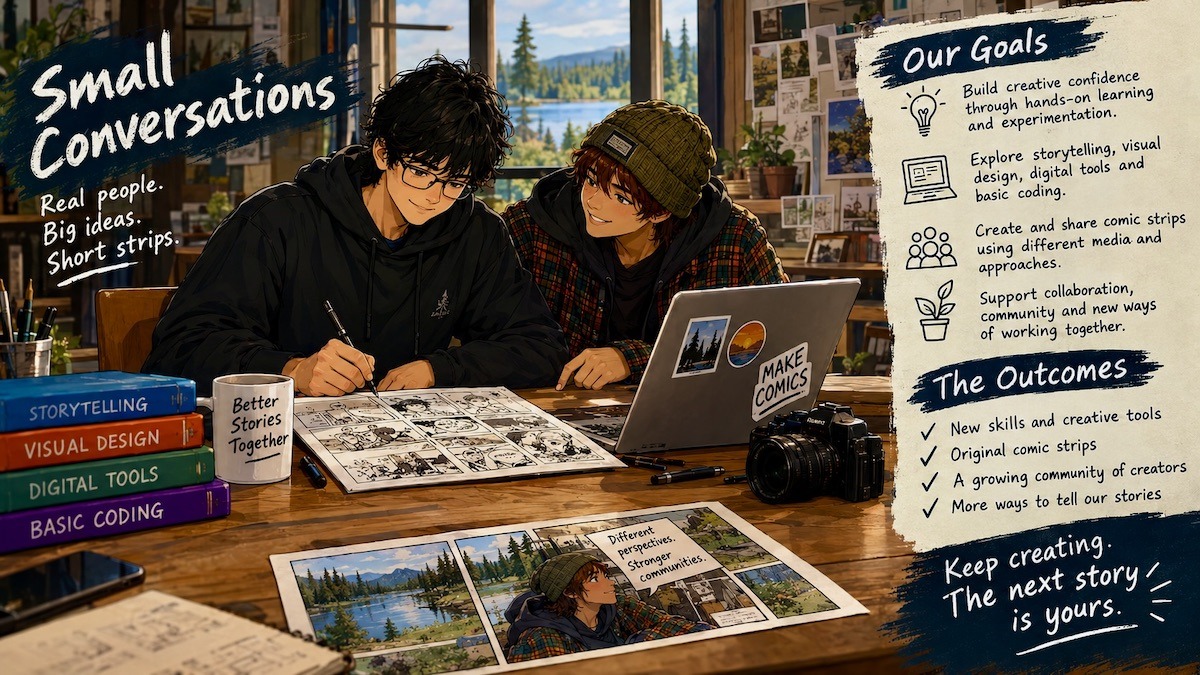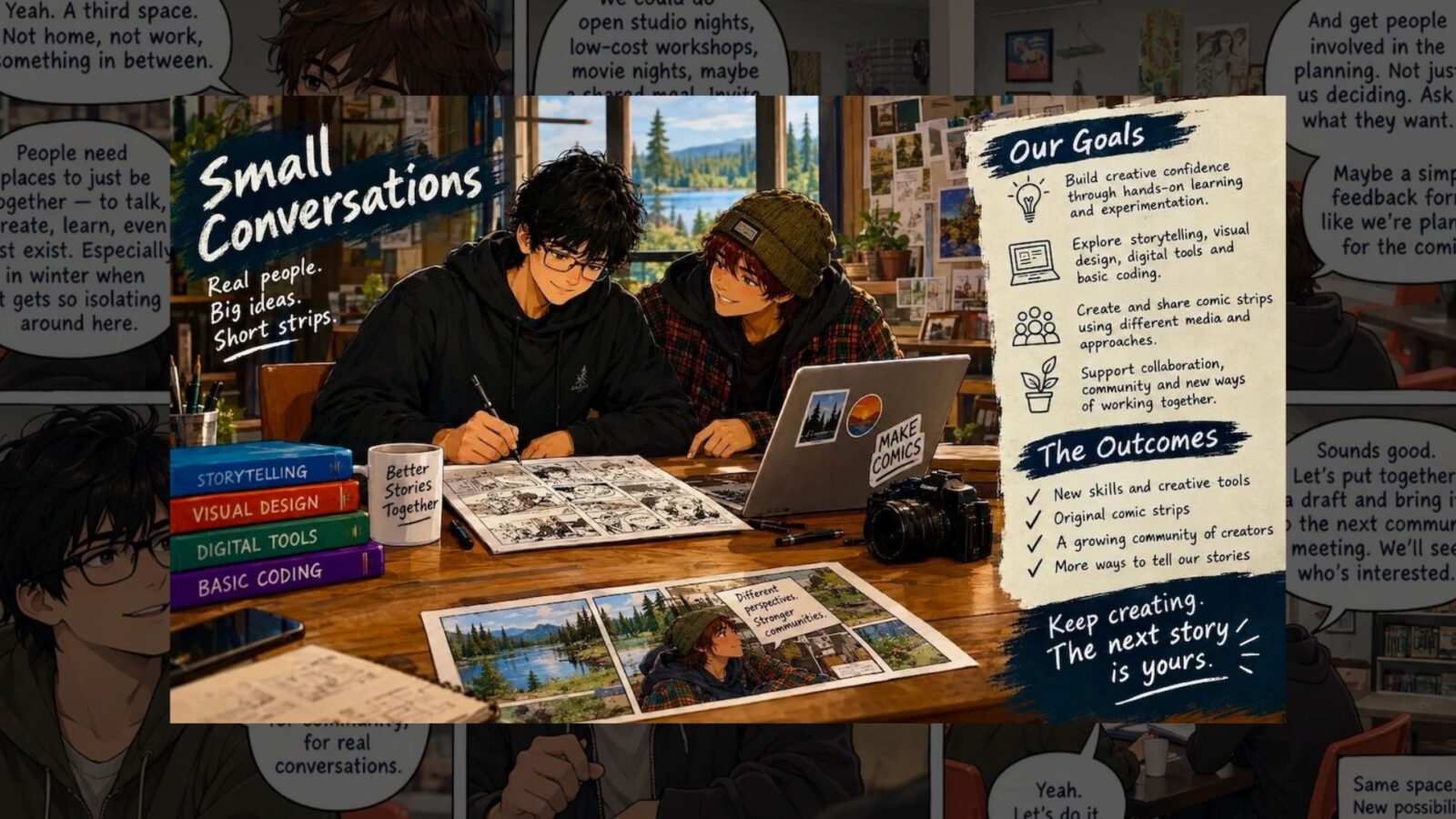
This week, we explored turning ideas into comic strips while learning about design, digital tools and basic coding.
This weekend, our Storytelling Club got creative with comic-making! As part of our fall and winter program, we spent time playing with ideas, developing characters and turning little moments into stories told through pictures and words.
Making a comic is a lot more than putting drawings into boxes. Where does a story begin? What happens between one panel and the next? How do a character’s expressions, a bit of dialogue or a change in perspective help move the story along? We experimented with these questions, planned scenes, worked on panel layouts and started bringing our own comic strips together.
There was plenty of discussion, sharing and trying things out along the way. We bounced ideas around, made changes, tested different approaches and had fun seeing how a simple idea could grow into a story. That’s what the club is all about: making things together, learning from one another and giving ourselves room to experiment.
We also got into the technology behind digital comics. Alongside the creative work, we’re building our own WordPress plugin to publish and organize the strips. That means getting hands-on with images, website layouts and a bit of HTML, CSS, JavaScript and PHP. We’re figuring out how the pieces fit together, how a plugin works and how to turn an idea into a tool we can actually use.
For this week’s exercise, we used generative AI tools to help develop comic illustrations and bring our stories to life. It was a fun way to experiment with new technology, play with visual ideas and see how quickly a story could take shape. But it was just one approach. The plugin we’re building is very basic, but supports all kinds of creative methods and image formats. Artists were encouraged to use whatever tools and materials they felt most comfortable with, whether drawing, painting, photography, digital illustration or a mix of different media. It’s their story, their style and their way of making it!
It’s a great way to connect creative practice with digital literacy. One minute we’re talking about storytelling and how to make a panel more expressive; the next we’re looking at code, testing a feature or working out how to make the comics easier to navigate. There are plenty of opportunities to pick up new skills, solve problems and see the results of our work.
And, of course, it should be fun. We’re not just following instructions or working towards a single finished product. We’re making room for curiosity, group conversations, mentorship and experimentation. Participants can draw, paint, use photographs, work with digital tools or try different ways of creating images. Everyone brings something different to the process.
Small Conversations is one of the projects we’re developing through our fall and winter program, where we’ll keep trying new skills, creative approaches and technologies. Over the next few weeks, we’ll keep learning about making comics, sharing ideas, building tools and seeing where the stories take us.