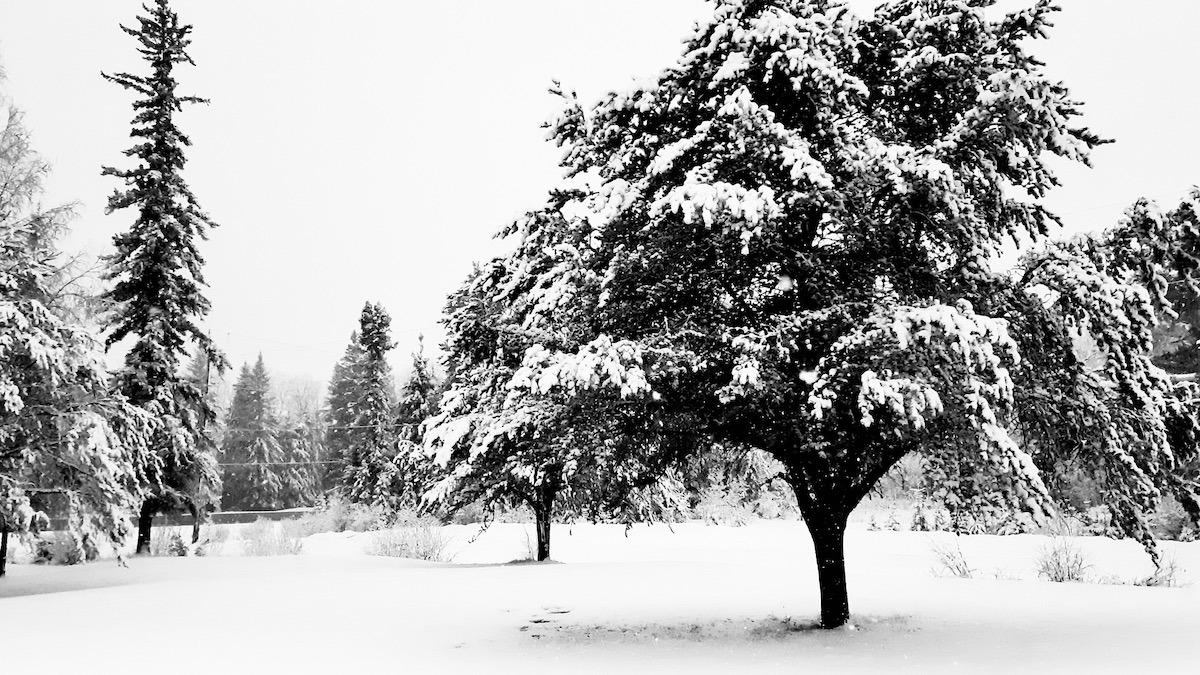
Winter rarely arrives all at once, except on the mornings when heavy snow turns the whole yard black and white.
You notice the quiet before you even open the curtains. Traffic down the road sounds muffled, and the light leaking around the blinds is flatter and brighter than usual.
Outside, the yard has lost all its colour overnight. This isn’t the dry, blowing snow we get in January that skitters across the driveway. It is wet, early-season snow, the kind that sticks to the windward side of bark and piles up thick along the wide branches of the old deciduous tree until the limbs sag. Even the tall spruce by the fence looks heavier, its needles clumped together under the white.
Without leaves or yellow grass to look at, the whole property turns into simple shapes. Dark trunks rise straight out of a smooth white sheet. Nobody has walked across the lawn yet, though something small—a rabbit or a neighbour’s cat—left a few brief prints near the base of the big trunk before turning back.
For weeks, November feels like a chore, all wet leaves, grey mud, and trying to get the last yard work done before your hands go numb. Once a snowfall like this lands, that whole fight is over. The rake can stay in the shed, the garden is put to bed, and there is nothing left to do outside except shovel a path to the car and put the kettle on.