MPs clash over Impact Assessment Act project links and corporate feasibility tests during Bill C-39 clause-by-clause review.
OTTAWA — Federal officials are pointing to the Impact Assessment Act as a central backstop for cumulative environmental effects and major project conditions under Bill C-39, even as opposition MPs warn the legislation tilts approvals toward corporate interests.
Although four Impact Assessment Agency of Canada officials were listed on the witness roster for the Legislative Committee on Bill C-39 on Saturday, November 21, 2026 in Ottawa, the 15-hour clause-by-clause sitting focused on energy, navigable waters, ocean dumping and species-at-risk provisions without calling agency witnesses to the table.
Still, the Impact Assessment Act surfaced repeatedly as a flashpoint across clauses governing pipeline approvals, navigable waterways and mining exemptions.
Designated projects and feasibility rules
Under Clause 159, which amends the Canadian Navigable Waters Act, the Transport Minister must weigh technical, economic and practical feasibility before attaching or changing conditions on approvals tied to certain large developments.
“The first subsection of this new clause requires the Minister of Transport consider the technical economic and practical feasibility of terms and conditions before attaching, adding and amending in respect to certain approvals issued under subsection 76 of Canadian navigable waters Act. If the approvals relate to a work that’s related to a designated project requiring an impact assessment under the impact assessment Act, or by prescribed regulation under the Minister of Transport,” Joanne Weiss Reid, Director of Operations and Regulatory Development at the Department of Transport told the committee.
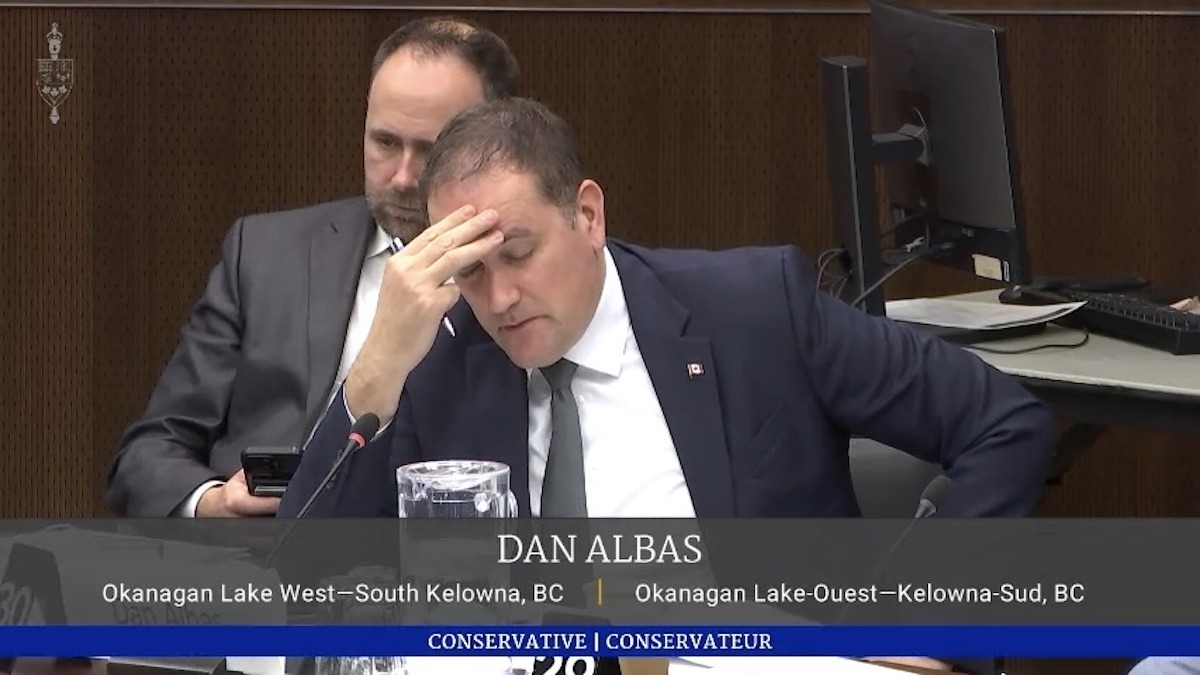
Conservative MP Dan Albas pressed officials to clarify how those rules differ from projects listed under the Building Canada Act. “That is related to a designated project. So this would be under the building Canada Act. Is that correct?” Albas asked.
“Under the impact assessment Act,” Weiss Reid replied.
“Designated project, what is that? When I think of designated project I usually think schedule 1. It’s not the same thing,” Albas said.
“Designated projects are those listed under the physical activity regulations under the impact assessment Act,” answered Adèle Cooper, Acting Executive Director, Navigation Protection, Environmental Program and Major Projects Coordinator, citing examples such as large marine terminals or rail lines crossing prescribed size thresholds.
Albas’s question reflects how tightly Bill C-39 is intertwined with last year’s Building Canada Act (Bill C-5), which granted cabinet sweeping powers to fast-track projects placed on Schedule 1 as being in the “national interest”. Bill C-39 builds directly on that framework—including deleting the five 2030 sunset clauses that originally limited those extraordinary powers—while creating parallel fast-track rules across existing environmental and transport statutes.
Indigenous rights and profit concerns
NDP MP Jenny Kwan tried to amend Clause 159 to require free, prior and informed consent from Indigenous Peoples before conditions are altered, arguing the new feasibility mandate favours industry.
“This amendment once again reflects the concerns that members of the public have raised about the Liberals requiring regulators to consider the undefined concept of economic feasibility. Which for big corporations means having no restrictions on super profits over other values that folks across Canada, first and foremost concerned about like environmental safety and respect for Indigenous rights,” Kwan said.
Environmental law organizations have raised similar alarms outside Parliament. West Coast Environmental Law—which dubbed Bill C-39 the “Reckless Project Approvals Act“—and Ecojustice have warned that writing “technical, economic and practical feasibility” tests into federal statutes while shifting exemption powers from full cabinet to individual ministers allows corporate cost considerations to override environmental safeguards and weakens Canada’s environmental safety net.
Both Liberal and Conservative MPs rejected Kwan’s amendments, arguing constitutional protections under Section 35 and existing statutes already bind federal decision-makers.
“Including a specific duty that already exists into a particular clause into a piece of legislation that doesn’t add any additional clarity because that duty is constitutionally set. Am I correct in that?” Conservative MP Kyle Seeback asked Natalie Turmel, Senior Counsel from the Department of Justice Canada.
“Yes, you are,” Turmel replied.
Transport Canada officials similarly testified that Section 2.3 of the Canadian Navigable Waters Act and the Constitution already require assessing adverse impacts on Aboriginal and treaty rights.
Mining exemptions and cumulative effects
Debate flared again on Clause 160, which shifts authority from cabinet to the Transport Minister to exempt waterways from prohibitions against dewatering or depositing mining waste.
“Clause 160 is another highly concerning aspect of Bill c-39, that environmental aspects and Indigenous peoples have voiced their opposition to. This means the Canadian navigable waters act so that the cabinet can exempt entire bodies of water from critical safety regulations preventing devastating environmental consequences if they believe that it is in the national interest,” Kwan said.
When Albas asked how departments co-ordinate mining exemptions and cumulative impacts affecting Indigenous communities, Transport Canada officials pointed back to the impact assessment regime.
“Mining projects would likely be subject to a provincial impact assessment or federal impact assessment so there would be quite a bit of environmental considerations as part of the project,” an official said, adding: “So in terms of cumulative impacts, this would be something that would be looked at in the impact assessment process. It would be also something that we consider as part of our decision making process.”
Earlier in the sitting, Conservative MP Branden Leslie contrasted the Canada Energy Regulator’s approach favourably against the Impact Assessment Agency while blaming past political decisions and environmental assessment hurdles for stalling major projects.
“Of the many problems we’ve seen over the last decades across the suites of policies and frankly political decisions such as the cancellation of the northern gateway pipeline after going through all of the necessary hoops of environmental assessment and everything else involved in getting a regulatory approval, that decision was the beginning of the end of the pipeline construction in this country and the fleeing of a trillion dollars in investment over the last decade,” Leslie said.
Despite opposition objections from Kwan and Green Party MP Elizabeth May, Clauses 159 and 160 passed with Liberal and Conservative support.