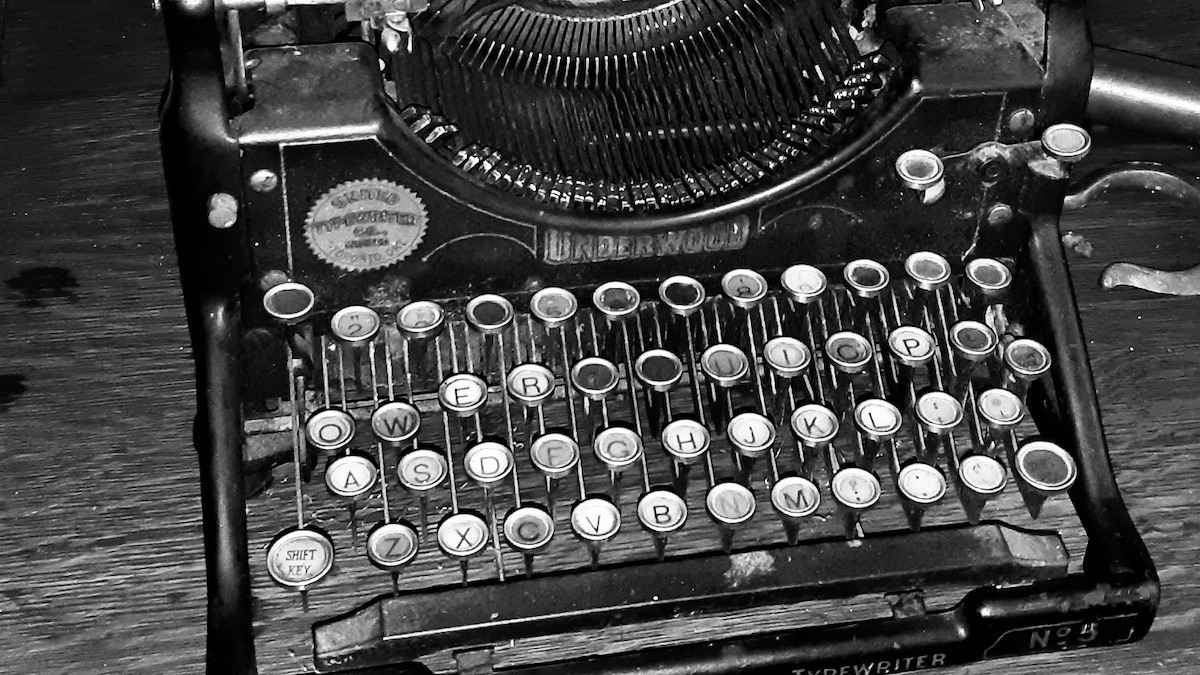
What an old Underwood typewriter tells us about how much work communication used to take—and why we should put it on display.
An Underwood No. 5 weighs about thirty pounds. If you’ve ever tried to lift one off a wooden table, you know it feels closer to an engine block than anything you’d write a letter on. The black paint on this one is chipped down to the bare metal along the edges, and the little silver rings around the glass keys have gone dull with age. Between 1900 and the early 1930s, though, this exact machine was the best personal tech money could buy.
How people actually wrote on these things
When the No. 5 was sitting on every desk, getting words onto paper took physical effort. Picture an office or a newspaper room in the 1920s. Forty or fifty people hammering iron keys at the same time made enough racket that you had to shout across the room just to be heard. You didn’t tap a screen; you drove a metal bar into a ribbon with your fingers.
Nothing about it was forgiving. If you needed a copy of a receipt or a contract, you had to line up a sheet of messy carbon paper between two blank pages and hit the keys harder so the letters would press through. If you spelled a word wrong near the bottom of a page, you couldn’t fix it cleanly. You either scrubbed at the ink with a gritty eraser until the paper wore thin, or you yanked the sheet out of the roller, threw it in the trash, and typed the whole thing over again.
From cast iron to artificial intelligence
People look at old machines like this and assume life must have been simpler back then. In a few ways, they’re right. You couldn’t check your email on an Underwood, and nobody was pinging you while you tried to finish a paragraph. You rolled a piece of paper in, and that was the whole job.
Now we live in a world where AI can spit out a thousand-word essay, summarize a report, or rewrite an email before you finish your morning coffee. We went from sweating over every single keystroke on thirty pounds of cast iron to acting like editors for software that generates whole paragraphs on command. Looking at the dust piled up inside the keys of this old machine, it’s striking how the distance between having a thought and seeing it in print has practically disappeared.
Why we need to line these machines up in one room
It’s easy to forget how dramatic that shift actually is when all of our modern tools are invisible software living inside a slim glass screen. That’s why there’s been growing talk about gathering up real, physical examples of communication technology to put together a proper exhibition—a hands-on timeline you can actually walk down.
Imagine starting at a table with dip pens, inkwells, and blotting paper, then moving on to heavyweights like the Underwood No. 5 and the electric typewriters that followed. Keep walking, and you hit the beige-box era: early personal computers with clunky mechanical keyboards, whirring floppy drives, and green monochrome monitors, leading straight into the pocket-sized smartphones and AI tools we barely think twice about today.
Putting these relics side by side wouldn’t just be a fun trip down memory lane … it would let people hear the clack of a carriage return, feel the resistance of a mechanical key, and see firsthand what it used to take just to get a single sentence onto a page. When you see the whole journey laid out in one place, you appreciate both the craft we left behind and the sheer magic of what sits on our desks now.