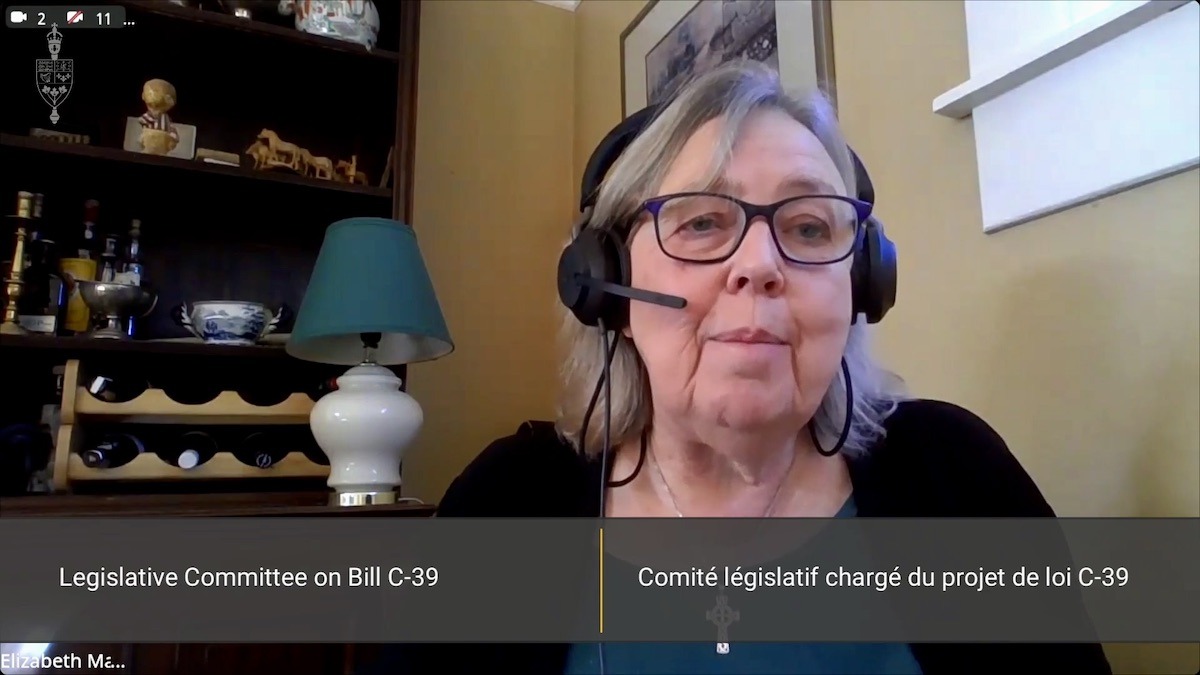
Green MP warns new economic feasibility tests and ministerial carve-outs open legal doors to weaken habitat protections.
OTTAWA — Green Party MP Elizabeth May is warning that federal omnibus legislation hands cabinet and individual ministers sweeping, undefined powers to bypass critical habitat protections and let project proponents dictate environmental conditions.
Speaking during clause-by-clause study at the Legislative Committee on Bill C-39 on Saturday, November 21, 2026, in Ottawa, May fought unsuccessfully through five separate amendments to rein in ministerial exemptions and new economic feasibility tests across three major environmental statutes.
Bill C-39—the Building Canada Strong Act—is a sweeping, 246-page omnibus bill introduced by Prime Minister Mark Carney’s Liberal government on September 21, 2026, containing over 300 clauses across more than a dozen federal statutes to fast-track major infrastructure projects, modernize trade corridors, and overhaul federal labour laws.
Critics have attacked the bill for making temporary cabinet fast-track powers from last year’s Building Canada Act permanent by stripping out 2030 sunset clauses, compressing environmental and Indigenous consultation timelines, and bundling sweeping regulatory rollbacks into a single rushed legislative package—a move that has drawn fierce opposition from environmental groups (which dubbed it the “Reckless Project Approvals Act“), First Nations leaders, scientists, and labour unions, even as Liberals and Conservatives largely aligned to advance it.
The feasibility clause
At the centre of May’s critique is a requirement inserted across the Canadian Navigable Waters Act, the Canadian Environmental Protection Act, 1999 (CEPA), and the Species at Risk Act (SARA) forcing ministers to weigh “technical, economic and practical feasibility” before setting permit conditions.
“This section does two remarkable things in C-39. For the first time—again, I stress we’ve never had any piece of legislation in this country that says in stating a condition, the decision-maker must consider, and I assume consideration to the extent that it must be feasible, but the economic and practical feasibility of a condition being applied—that’s brand new,” May told the committee while defending amendment PV-21.
Later, arguing for amendment PV-22 on ocean disposal rules—a proposal backed by Nature Canada, West Coast Environmental Law, the Canadian Parks and Wilderness Society, and the David Suzuki Foundation—May warned the feasibility test shifts regulatory power into corporate hands.
“Providing conditions for approving projects doing environmental damage—those conditions have to go through this test, which is undefined, of economic, technological and practical feasibility, which essentially leaves it up to the proponent to say, ‘We can’t do that, so we’re not going to,'” she said.
Ministerial discretion versus redundancy
May also targeted provisions allowing the transport minister or cabinet to exempt waterways from prohibitions on depositing mining waste or dewatering rivers when deemed “in the public interest” or “appropriate in the circumstances.”
“The other one is just above my amendment, which says that if there’s an application for an exemption, the minister can be satisfied—this is entirely personal, unfettered discretion—the minister is satisfied it would be in the public interest, a term not defined here, or if the minister considers it appropriate in the circumstances. Again, why discretion for the minister to create exceptions to the normal protections that exist, after many battles to ensure the Navigable Waters Protection Act is operative?” May asked, referring to the statute by its former name.
Liberal MP Mike Kelloway countered that May’s proposed habitat safeguards under amendment PV-20 were unnecessary because SARA rules still apply.
“We feel that this particular clause is repetitive and unnecessary and that it’s addressed under the Species at Risk Act, and therefore we will not be supporting this clause,” Kelloway said.
Conservative MP Philip Lawrence pressed federal officials directly on the legal clash between May and the government.
“I believe I heard from the government that the Species at Risk Act was still operative, and I heard from Ms. May that it might be the intention for it to be operative, but that’s not necessarily codified. Could you please comment on this debate, as it will help me sway my vote there?” Lawrence asked.
“So just to confirm, the proponent would remain subject to the requirements of the Species at Risk Act as part of the project approval. In addition to that, any potential impacts on species-at-risk critical habitat or any other environmental impacts—impacts that would be adverse to the exercise of constitutionally protected rights—would all be part of the public interest decision-making process,” a Transport Canada official replied.
May dismissed official assurances as inadequate against written statutory exemptions.
“Intentions are one thing, but buttressing protections with legal language—no matter how much we may hear from officials it’s redundant, it’s not redundant if, in absence of this amendment, it would be allowable under the law to exempt the Navigable Waters Protection Act provisions that affect adding contaminants to the water, dewatering in areas of critical habitat,” she said.
Harbours, species and late-night defeats
May also challenged Transport Canada’s claim that past exemptions for minor works caused few navigation problems, pointing to derelict vessels and buoy congestion in coastal British Columbia harbours such as Brentwood Bay in her Saanich–Gulf Islands riding.
“The idea that the minor works exemption has not affected navigation is palpably false. It’s the number one concern of people in my riding,” May said, adding: “In my experience as an MP in coastal British Columbia, it’s a large problem.”
Conservative MP Dan Albas asked officials whether excluding certain minor works under Clause 161 was simply an effort to coordinate across departments.
“In your mind, if I’m not putting words in your mouth, this is an administrative amendment, coordination amendment?” Albas asked.
“Yeah, it would be an amendment that would seek to reduce duplication, because many of these works are already regulated by other federal departments, but they would still have to meet the requirements of any Species at Risk Act, Fisheries Act provisions,” the Transport Canada official answered.
On CEPA ocean-dumping permits, Liberal MP Tim Louis questioned Environment and Climate Change Canada Director General Stephanie Lane on whether May’s PV-22 amendment—which sought to codify a strict “mitigation hierarchy” requiring proponents to avoid, minimize, and restore environmental damage before offsetting harm—would bog down the existing permitting regime.
“If PV-22 were adopted, would the department have to develop and administer a new framework within this program? And if so, can you explain how those new requirements would interact with the existing obligations under the Species at Risk Act where listed species or critical habitat are affected?” Louis asked.
“I would say that it will certainly introduce a series of new requirements into the consideration of whether to issue a disposal-at-sea permit,” Lane replied, adding that existing marine and species-at-risk protections remain intact without the amendment.
When May’s final amendment sought to anchor that same mitigation hierarchy inside SARA—which officials noted covers 671 listed species and roughly 100 permits annually—Albas asked Environment and Climate Change Canada Wildlife Director General Chris Evans whether repeating existing preconditions caused confusion.
“Is it helpful to have these concepts repeated, or is it discombobulating for an expert such as yourself?” Albas asked.
“I would say that duplicative terms or terms that are inconsistent within a statute can create a situation of lack of clarity and interpretation challenges,” Evans replied.
May warned that diluting statutory habitat protections undermines Canada’s international pledge to conserve 30 per cent of lands and waters by 2030.
After six consecutive days of committee sittings running as late as midnight, all five of her amendments were voted down by Liberal and Conservative MPs, with Bloc Québécois MP Gabriel Ste-Marie casting a lone supporting vote.