Unions and industry leaders warn MPs that Canada’s 2050 nuclear targets face severe training bottlenecks.
OTTAWA — Multi-billion-dollar nuclear expansion plans risk stalling unless Ottawa links apprenticeship dollars to real-world job placements and stops losing women from male-dominated work sites, labour and industry leaders warned parliamentarians.
Testifying before the House of Commons Standing Committee on Natural Resources on Monday, November 2, 2026 in Ottawa, representatives from the Canadian Union of Skilled Workers and Women in Nuclear Canada told MPs that doubling the sector’s workforce by 2050 will fail if training starts after reactor contracts are signed.
Shawn Campbell, CUSW’s central growth and opportunities representative, reminded lawmakers that experienced domestic crews helped deliver recent Darlington and Bruce Power refurbishments ahead of schedule and under budget, but warned a steep training lag looms. “However, here is the challenge: It takes five years to train a licensed electrician, and additional training is required to qualify for work on a nuclear site. The workers Canada needs must begin training now,” Campbell said.
Liberal MP John-Paul Danko pointed to federal billions flowing into energy alongside Ottawa’s $8-billion Team Canada Strong workforce package, asking union leaders how to align worker supply with long-term project certainty. “I’ll give you the opportunity to talk about the importance of building up the availability of workers in the skilled trades at the same time that we’re creating certainty for workers to go into the jobs in the industry,” Danko said.
CUSW education and training director Cody Quan delivered a blunt warning against funding classrooms without guaranteed job sites. “The investments the government has been putting into training are welcome, but they need to be tied not just to training people, but to real-world placements at the end of those training efforts. We could train all kinds of people, but if they never enter the industry, it’s a fail, to be frank,” Quan replied.
Danko also asked whether employer and apprentice incentives under Team Canada Strong help push young Canadians across the finish line. “Do you have any specific comments on the team Canada strong approach, with incentives for employers and incentives for workers to go through and complete their apprenticeships as a way to encourage young Canadians to go into the skilled trades?” Danko asked.
“I don’t have the stats in front of me, but a significant portion of people who enter the skilled trades don’t complete them. These funds definitely help to make sure that more people reach the completion of their certificate of qualification and contribute meaningfully to these sectors,” Quan said, adding that tariff-hit and oil-and-gas workers offer a ready pool of transferable talent if transitions are coordinated.
Isolation driving women out of nuclear jobs
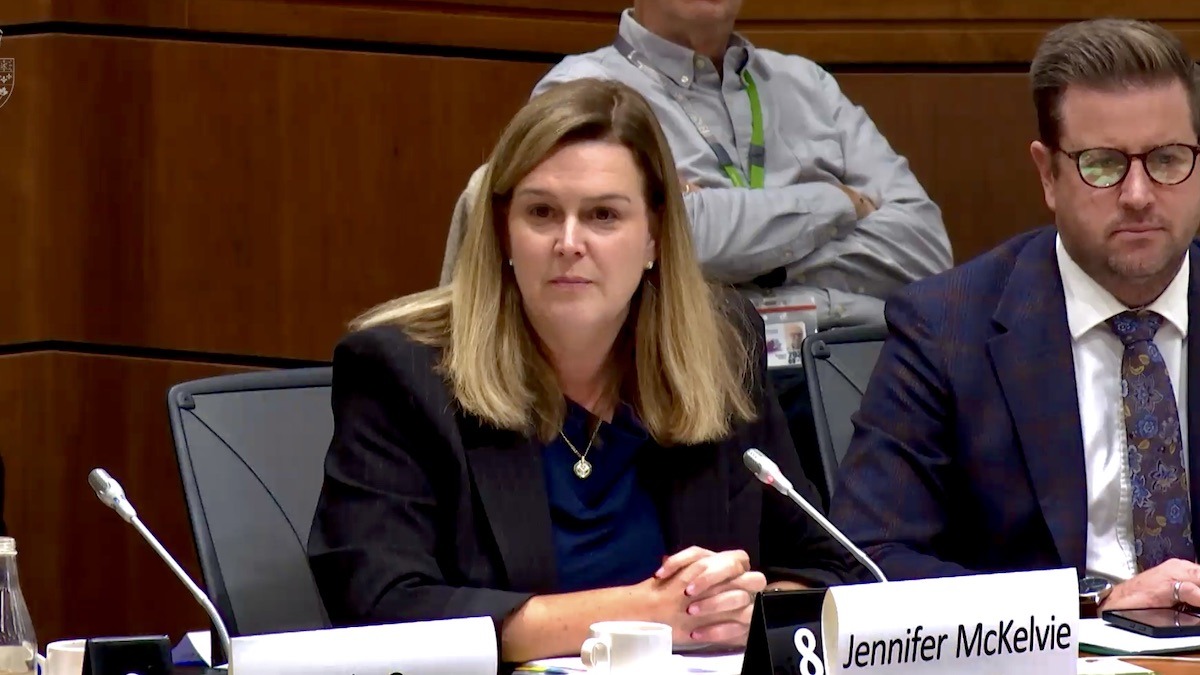
Liberal MP Jennifer McKelvie, a former member of Women in Nuclear Canada, pressed WiN Canada president Priya Malik on why the industry still struggles to keep female workers. “About one in five workers in the industry today is a woman. Can you speak to the goals around increasing recruitment? Can you also speak to retention? What is retention data saying?” McKelvie asked.
Malik pointed directly to workplace culture as a primary driver of attrition. “Certainly, retention has been one of the issues in the industry, because as we know, this is a traditionally male-dominated industry. Women can find themselves isolated in the sense that they need to establish credibility repeatedly, which makes women leave the industry. Once they start their career, they don’t see any other women around them,” Malik testified.
With nuclear ambitions stretching across power generation, medical isotopes, and exports, Malik urged employers and Ottawa to pair recruitment outreach in elementary and high schools with mentorship and leadership advancement. “This is not simply an equity issue; it is a workforce and economic imperative,” she told MPs.
Skills across reactor designs
Conservative MP Pat Kelly asked whether skilled trades training ties workers to CANDU plants alone or carries over to competing reactor designs. “I want to get one question in for the Canadian Union of Skilled Workers on the skills training needed to fill the positions at the CANDU plant. Are those skills transferable to other technologies, or is your membership focused on just the one technology?” Kelly asked.
“Electricians working in nuclear power plants can transfer the technology across models, and we’re prepared to do so,” Quan answered.
“You’re agnostic about technology—just get something built,” Kelly shot back.
“No, we’re prepared to build, and we’re prepared to support workers and the skills to build,” Quan replied.