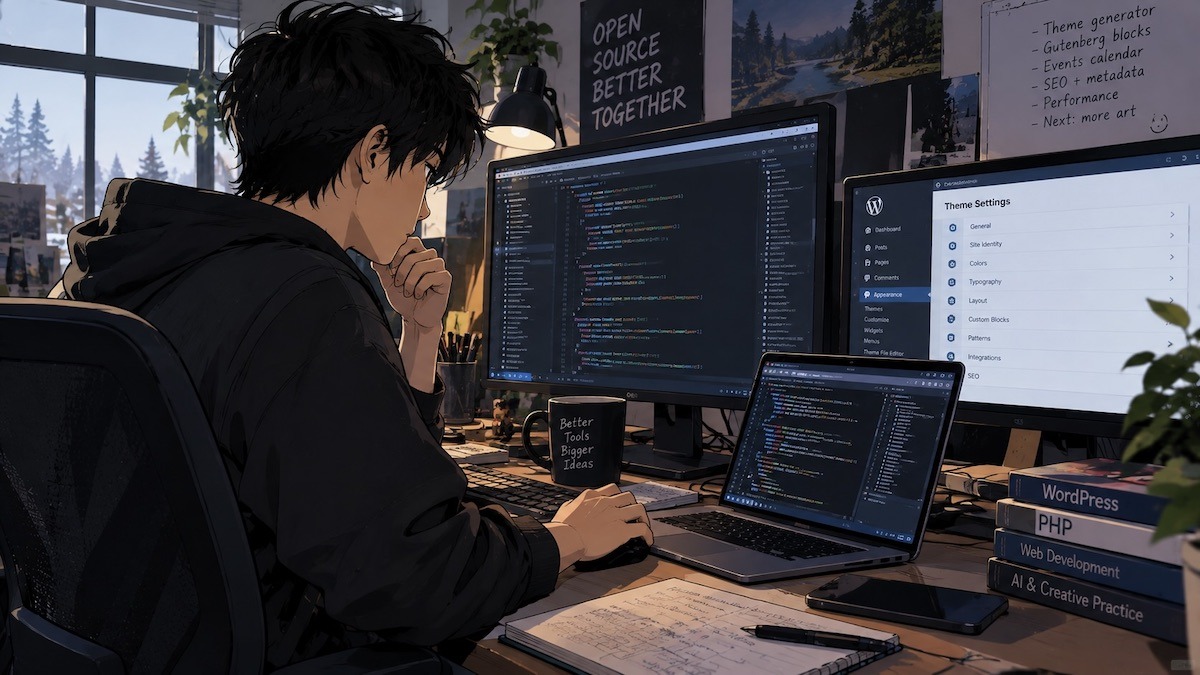
A simple website project turned into a sizeable experiment in PHP, WordPress and AI-assisted development, with some useful lessons for small community organisations along the way.
We’ve been making quite a few changes to our artsincubator.ca website lately. As our collection of news and stories, exhibitions and projects has grown, we’ve wanted more flexibility in how we publish, manage and communicate our work. That meant looking beyond the appearance of the WordPress theme and spending time on the systems that support the website, too.
We could have started with another off-the-shelf theme, but we wanted to build something around the way we actually use the site. We also wanted to see how far we could take the development process with a bit of help from AI.
That turned into our own PHP generator and development system. It produces things like the theme, but also handles the connections between its different components and the wider WordPress environment. Gutenberg, the Customizer, The Events Calendar, SEO tools, structured data and other parts of the publishing infrastructure all have a place in the project.
It grew well beyond the original idea, but we’ve enjoyed working on it.
Building our own tools
The generator keeps the theme definitions in one PHP source and produces the files WordPress needs. We can make changes, run the script and rebuild the theme without maintaining things like a separate Node.js, Webpack, Vite or Gulp toolchain.
It also gives us a way to coordinate features that cross different parts of WordPress. A change might involve a PHP template, an editor setting, frontend styling and plugin integration. We can work through those connections together rather than chasing changes across a collection of separate files.
A better publishing experience
We’ve put considerable work into Gutenberg, adding 12 custom block styles and 21 reusable patterns. They cover articles, interviews, galleries, exhibitions, schedules and other content we regularly publish.
The aim was to make the editor more useful for our actual work. We want to be able to put a story together, arrange images and use different layouts without fighting the theme.
We also built a simple gallery lightbox using native HTML dialog functionality and vanilla JavaScript. It includes keyboard navigation, mobile swipe controls, slide counts and focus restoration. It’s a small feature, but one we were happy to build ourselves rather than add another plugin that we’d have to constantly be paying for.
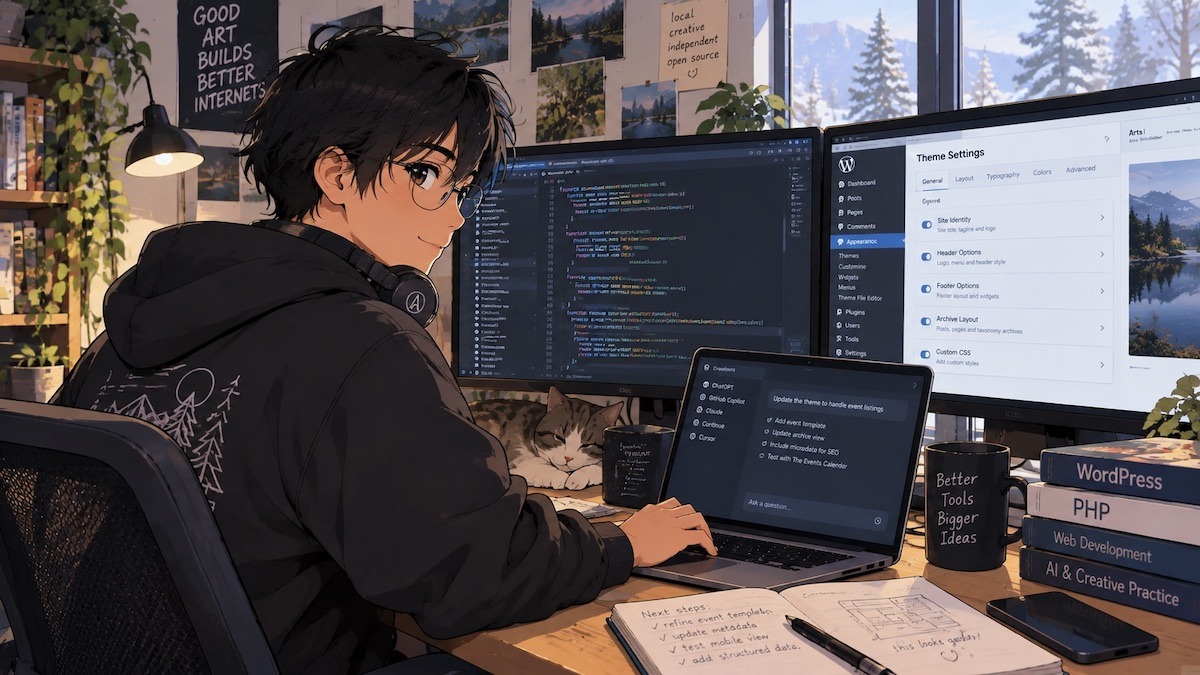
Building Our Own Digital Infrastructure
More Capacity, Greater Control, Better Use of Resources
Our custom WordPress system brings together the website theme, publishing tools, accessibility features, search optimisation and essential plugin integrations. With AI-assisted development, work estimated at 160 to 240 hours of senior developer time was completed in a fraction of that time. We’re talking hours.
That means major savings in development costs, no ongoing software subscriptions, and more resources left for artists, programming and community projects. It also strengthens our team’s capacity for digital self-determination: the ability to manage, adapt and shape our own tools, on our own terms, with greater digital sovereignty and self-reliance.
Connecting with WordPress and its plugins
The Events Calendar was another substantial part of the project. We integrated its V2 templates and worked on event pages, archives, month and list views, breadcrumbs, headings, date badges and widgets. Its styling now uses the theme’s own design variables, so the calendar fits naturally into the rest of the website.
There was also work connecting event information with the site’s existing metadata and structured data. This is part of a wider effort to make the different systems work together rather than treating each plugin as an isolated addition.
The same applies to WordPress’s own publishing and configuration tools. The generator produces theme.json, Customizer controls and editor styles alongside the theme files, so the frontend and administration environment remain connected.
Under the hood
We’ve also worked on the site’s performance and search infrastructure. This includes conditional loading of stylesheets and scripts, responsive image handling, canonical URLs, sitemap adjustments, OpenGraph metadata and JSON-LD structured data.
The metadata system accounts for the organisation, website, articles, authors, images and different archive types. It also works alongside existing SEO plugins, avoiding duplicated output and keeping the information consistent.
What this means for a small organisation
For a small arts collective, website development is usually squeezed in around everything else. The people updating pages and fixing things are often the same people organising workshops, working with artists, running programs and keeping projects moving. There isn’t necessarily a developer on staff, or money set aside to hire one whenever something needs changing.
Having control over the underlying system makes a huge difference. We’re not limited to the features of a commercial theme or left trying to make separate plugins behave as though they were designed to work together. We can change the way our website operates and build around the work we’re actually doing.
There’s also a serious financial side to this. The tools we’ve built are ours to use, without another subscription, licensing fee or recurring software bill. We’re not tied to a commercial development platform that gradually moves essential features behind paid plans, pushes upgrades or makes continued access dependent on a subscription.
For small organisations working with limited budgets, avoiding those costs matters a lot. We’d rather put that money into artists, workshops and community projects than pay another monthly fee just to keep our website tools working.
AI has helped make that possible. We’ve used it to write and revise code, work through problems and develop features across different parts of the system. Can we do it by hand? Sure. But it’s time-consuming and people are busy enough already. We can work faster. It’s allowed us to take on work that would have been considerably harder to fit into our available time and resources.
We don’t think every community organisation needs to build its own WordPress development system. But we do think there’s something worth paying attention to here. Small groups can use these kinds of tools and approaches to gain more independence over their digital infrastructure, rather than always having to buy another service or commission someone else to make changes.
Skills that stay with us
One of the valuable parts of this project has been the opportunity to bring more hands-on programming into our existing work. Many of our team members are artists rather than software developers, but that hasn’t stopped us from getting into the code, testing ideas, learning and working out how things fit together.
It’s another layer of digital literacy, and an increasingly important one. Understanding code, working with automated tools and being able to shape what we use gives our team more room to experiment and take on projects that cross artistic and technical disciplines. The experience also builds confidence. Code becomes something we can work with directly, rather than something that always has to be handed off to a specialist.
That knowledge carries into our other projects. The more familiar we become with the technology, the more we can do with it.
Stay tuned as we roll out changes over the coming weeks.