OTTAWA — Canada’s quantum technology startups are being courted with direct cash from U.S. states because domestic growth capital has failed to keep pace with university spinoffs, an academic leader told MPs.
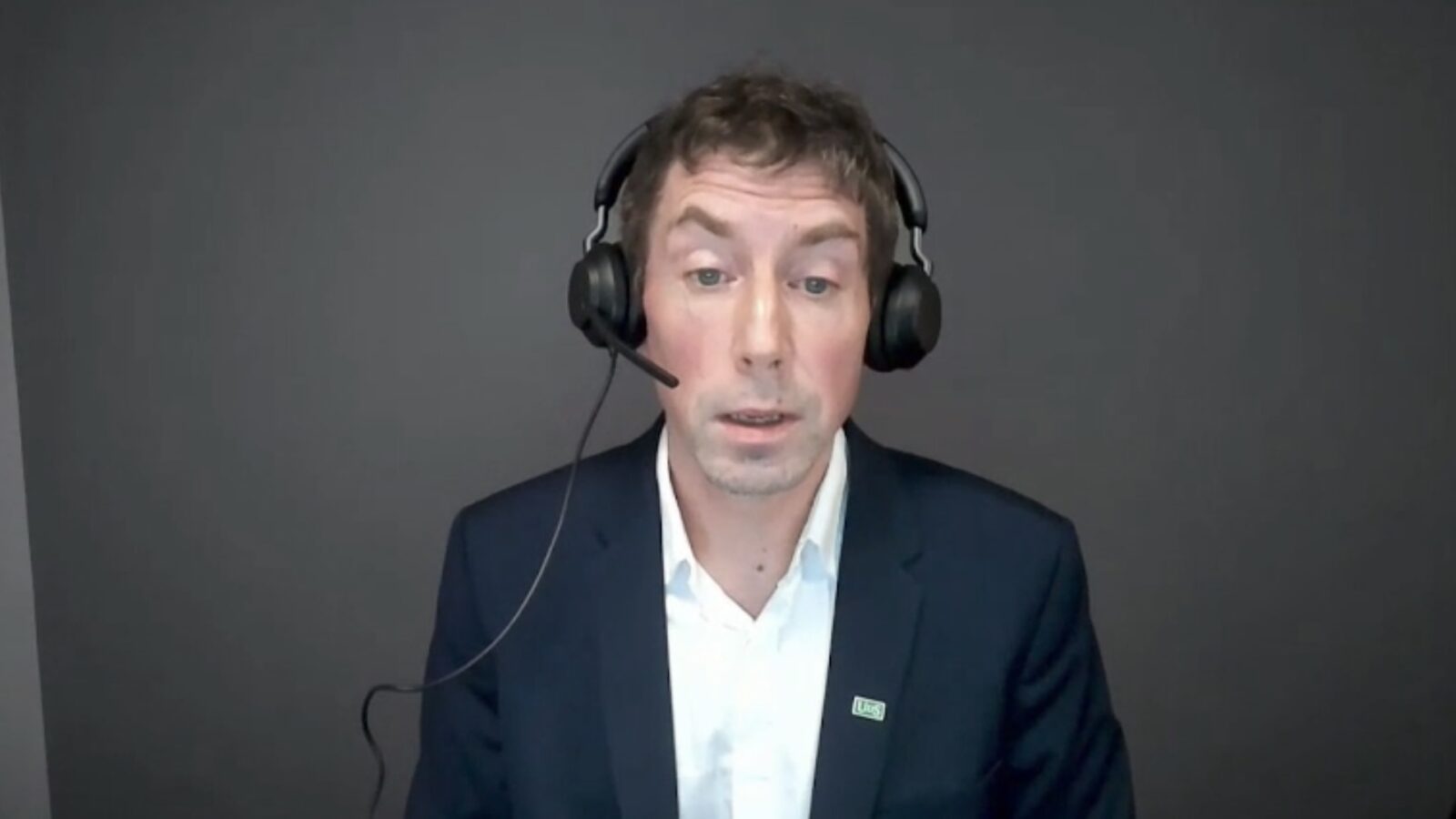
Christian Sarra-Bournet, associate vice-president of infrastructure development and quantum strategy at the Université de Sherbrooke, testified by video conference before the House of Commons Standing Committee on Science and Research on Thursday, October 29, 2026, in Ottawa.
Growth Capital and Talent Vulnerabilities
Bloc Québécois MP Maxime Blanchette-Joncas asked Sarra-Bournet to pinpoint the biggest risk facing strategic research in Quebec and at Sherbrooke’s Institut quantique.
“Mr. Sarra-Bournet, can you tell us what you believe is currently the main vulnerability that could allow a foreign actor to gain access, for example, to the strategic expertise being developed in Quebec or at the Institut quantique at Université de Sherbrooke?” asked Blanchette-Joncas.
“I think the main flaw or vulnerability is something we often hear about. I’m sorry to say this, but it’s money. More specifically, in our sector, the quantum sector, we in Canada successfully create many spinoff companies from universities,” replied Sarra-Bournet.
While pre-seed and seed capital remain accessible, he warned that scaling companies face a steep shortfall. “What we’re seeing in our ecosystem are companies that reach the growth or capital-raising phase and have to look abroad. That’s where the vulnerability lies, because if they don’t have the capital to grow here, it can lead to a brain drain or the loss of intellectual property. There are, however, some very clear examples right here already. Nord Quantique, for example, was approached by U.S. states that offered it direct investments without taking an equity stake. We need to address this to ensure that we have growth capital for this type of company,” he said.
“Thanks to hard work, the excellence of research at our Canadian universities, and our ability to create these companies, we rank second in the world in terms of the number of start-ups per capita in the quantum field, but it is really in terms of growth capital that we are vulnerable,” added Sarra-Bournet.
Blanchette-Joncas pressed the point on academic funding: “To come back to the vulnerability you just very clearly pointed out, if I understand correctly, insufficient public funding can force researchers, particularly research teams, to accept partnership terms they would not have accepted if funding had been sufficient. Is that correct?”
“We need to ensure that researchers receive sufficient funding to be able to recruit the best talent and have the resources they need to conduct their research. In some cases, some researchers will look abroad to form partnerships,” replied Sarra-Bournet.
He also warned that federal research security grants do not cover universities’ full compliance costs. “However, current funding levels cover only a portion of the actual costs incurred by institutions. We therefore recommend that the federal government adjust this support to reflect evolving needs and expand access to it in order to strengthen the security and resilience of the entire Canadian research ecosystem,” he said.
Protecting IP Without Closing Science
Liberal MP Marilyn Gladu asked university witnesses how campuses can protect intellectual property without sacrificing open scientific collaboration. “I want to talk to all of the universities on the subject of open science and trying to protect our intellectual property. Do you think that there is a risk there? If so, what should we do about it?” asked Gladu.
Sarra-Bournet said current risk assessments work for now, but nationalistic policies abroad require constant adjustment. “In six months time, I might have a different answer. My answer for today would be, yes, let’s keep ourselves in an agile mindset to make sure that we protect the research of Canadian researchers,” he said.
University of Ottawa senior fellow Margaret McCuaig-Johnston drew a sharper line between basic and strategic work. “I would say basic science lends itself well to an open science approach, but as we turn to Canadian strategic industries and very sensitive fields like photonics, genomics, quantum computing and nanotechnology, these are areas that really need to be protected,” she said.
Ontario Tech University’s Dr. Les Jacobs acknowledged the friction between commercialization and openness, while noting that open-source software companies have still built major businesses. He also detailed how campuses physically isolate classified allied defence work, including NATO DIANA test centres, in response to Liberal MP Aslam Rana.
“On the NATO DIANA test centres, our allies’ work in innovation is being done on the same campuses as regular academic research. From what you have seen, how does a university keep that work properly protected without walling it off from the rest of the research community?” asked Rana.
“In our particular case, we have a couple of research facilities, including a huge research facility that does a lot of defence work. It is a highly secure facility that controls entrance access. People enter it and sign NDAs, all of those kinds of measures, which are quite new. The central point is that it actually involves an investment, and it’s a bit of a pay-to-play situation,” replied Jacobs.
Rana also asked Chief Science Advisor Mona Nemer how Ottawa balances openness with security and what new investments are needed. Nemer argued that data integrity depends on protection—including guarding against unpublished data leaking into commercial large language models—and flagged ongoing patent costs.
“Research security actually goes hand in hand with open science. If you don’t have research security, anybody can play with your data and can manipulate the data so that the data is not worth much. It’s in the best interest of open science to have research security,” said Nemer.
On intellectual property, she added: “They simply don’t have the resources to do this because it’s not a one-shot deal. Every year, you have to maintain the patent.”