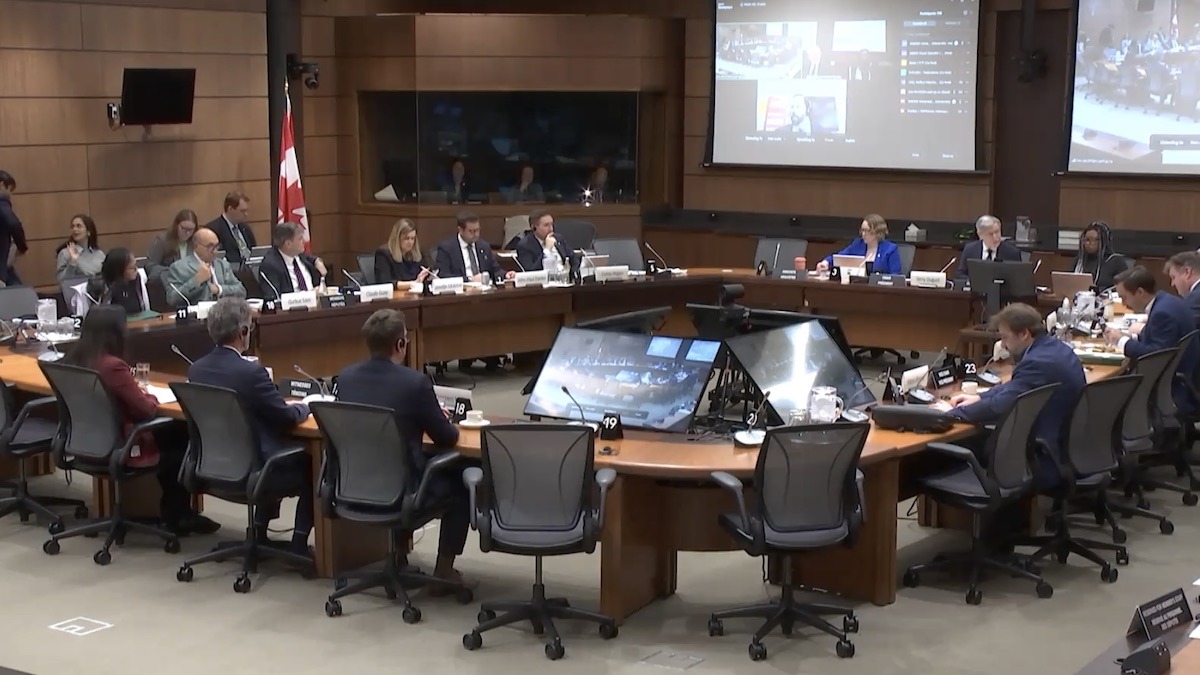
MPs and nuclear advocates clash over waste anxiety, small reactors, Indigenous reviews, and fusion’s no-spent-fuel pitch.
OTTAWA — Public anxiety over radioactive nuclear waste, stalled environmental reviews, and unproven small reactors collided on Parliament Hill as lawmakers weighed how to sell an aggressive nuclear expansion to sceptical regions.
Testifying before the House of Commons Standing Committee on Natural Resources on Monday, November 2, 2026 in Ottawa, nuclear advocates, union leaders, and fusion executives fielded sharp questions from MPs over waste management, Indigenous consultation, and regulatory burdens—issues that remain flashpoints in parts of Canada, including northwestern Ontario.
Conservative MP Pat Kelly pressed Dr. Christopher Keefer, president of Canadians for Nuclear Energy, over his blunt dismissal of Ottawa’s former small modular reactor strategy. “You characterized the small modular reactor strategy as “policy by focus group”. I would like you to elaborate on that point if you can,” asked Kelly.
Keefer pointed directly to public pushback over nuclear waste in New Brunswick as the flawed origin of federal SMR policy. “When the population was surveyed, there were concerns with nuclear waste being produced at Point Lepreau. This is a single nuclear plant producing a tiny volume of very well-managed nuclear waste. The small modular reactor investigation basically argued that we should invest in not one but two technologies—molten salt reactor-based technology and fast reactor technology—to deal with that very small amount of waste,” replied Keefer.
He argued those waste-burning reactor designs have never been commercialized and amounted to chasing public opinion with engineering compromises. “Again, this was focus group-based and a nuclear-engineering solution to a public-relations problem. I think we’ve done the work on the public relations front, and common sense has returned,” Keefer said.
Kelly pushed back by asking whether smaller reactors still belong in isolated parts of the country far from major power grids. “Do you think there is a role for small modular reactors in extremely remote locations, for example for power for national defence, for Arctic defence and for some of the most remote industrial operations, like the oil sands even? Is there any application that makes sense to you for small modular reactors?” Kelly asked.
“First off, I don’t want to be too simplistic here. If we have small grids, SMRs are going to fit on them. There’s going to be a cost premium paid for diseconomies of scale, and those jurisdictions will have to decide on whether that’s worth it,” Keefer answered.
Reviews, reconciliation and siting hurdles
Beyond reactor size, MPs pressed witnesses on whether Canada’s regulatory and consultation machinery can handle a rapid build-out without igniting local opposition. Conservative MP Jeremy Patzer asked whether Ottawa can meet its goal to more than double grid capacity by 2050 without nuclear power. “The government wants to more than double electricity grid capacity by 2050. Without nuclear, is that even possible?” Patzer asked.
Keefer warned that project timelines depend heavily on streamlining approvals while respecting Indigenous rights. “I think we’re making really positive strides in creating a one project, one process review in terms of environmental assessment and indigenous consultation. I think we’re moving in the right direction. We probably need to move faster,” he said.
Union leaders pointed to existing Ontario projects as proof that local partnerships can defuse conflict when economic benefits stay in the community. Shawn Campbell, central growth and opportunities representative for the Canadian Union of Skilled Workers, cited medical isotope production in southern Ontario as a model. “Bruce Power’s $250-million isotope expansion, in partnership with the Saugeen Ojibway Nation, demonstrates how skilled trades deliver both reconciliation and world-class health care,” Campbell told MPs.
Still, siting and public acceptance remain sensitive across provinces, prompting committee chair Terry Duguid to invite MPs to propose Canadian cities for future committee travel to examine nuclear communities firsthand.
Fusion pitches a future without spent fuel
Later in the hearing, fusion developers seized directly on conventional nuclear waste concerns to market next-generation reactors as a cleaner alternative. General Fusion director of government relations Matthew Whittington told MPs fusion avoids the long-lived radioactive tailings and spent uranium fuel driving controversy around fission sites.
“It has the potential to transform how the world produces energy by providing reliable emissions-free baseload power, with low ongoing fuel costs and without high-level radiation risks and the spent fuel associated with traditional conventional nuclear fission,” Whittington said.
Bloc Québécois MP Mario Simard pressed Whittington to spell out how regulators would treat that lower-risk profile. “When you talk about regulations, what do you mean more concretely? If you’re the fusion specialists, what might the regulations look like?” asked Simard.
Whittington pointed to rules already adopted by Canada’s allies while noting the Canadian Nuclear Safety Commission is still drafting its framework. “Both the U.S. and the U.K. have very clearly set up frameworks distinct from those of fission.
Recognizing that fusion is lower risk, they have their own regulatory framework,” he replied, adding that British oversight resembles rules for particle accelerators used in cancer care rather than uranium reactors.