Bloc and Liberal MPs press Nuclear Waste Management Organization on fast-track fears, timelines and waste costs.
OTTAWA — A bid to list Canada’s planned underground nuclear waste repository under the federal Major Projects Office drew sharp warnings from opposition MPs who say pairing radioactive disposal with fast-track legislation threatens public trust.
The proposed deep geological repository (DGR) is directly adjacent to the Northwestern Ontario Melgund Township communities of Dyment and Borups Corners. The highly controversial nuclear waste dump program remains a significant concern to local residents as the regulatory process moves forward.
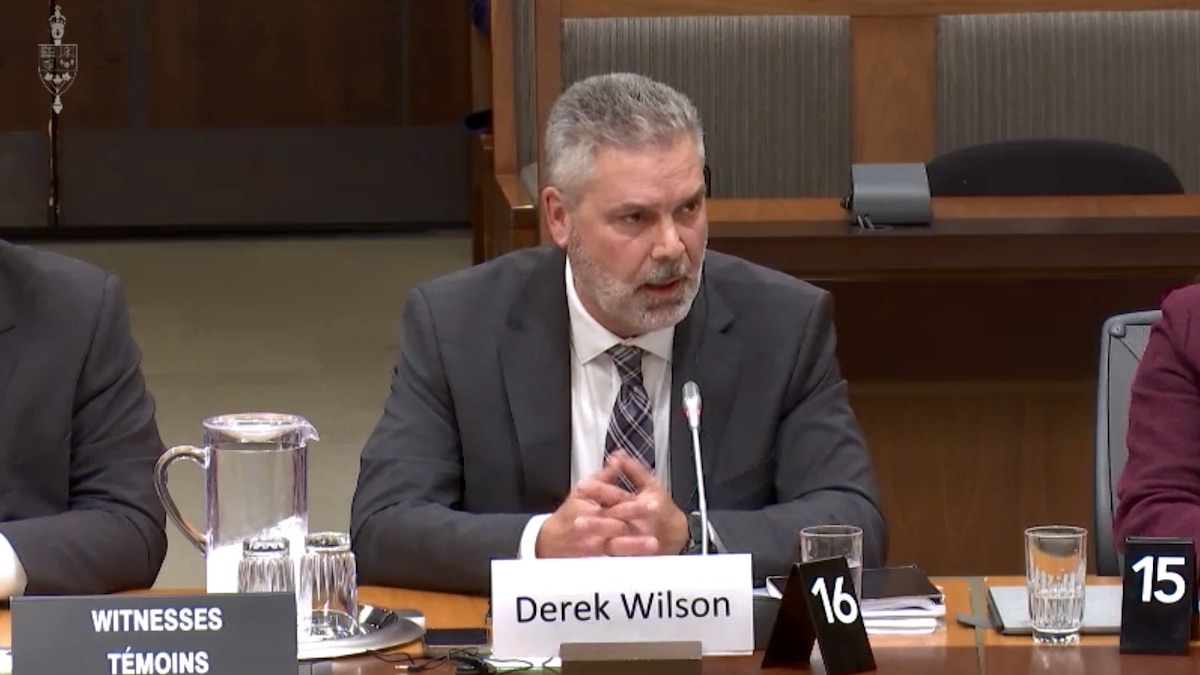
Testifying before the House of Commons Standing Committee on Natural Resources on Monday, November 16, 2026 in Ottawa, Nuclear Waste Management Organization (NWMO) president and CEO Derek Wilson defended the agency’s push for federal designation while facing pointed questions on municipal opposition, regulatory timelines and waste transport.
Wilson told the committee the organization, created by Parliament in 2002 and funded by nuclear fuel waste producers, is “currently engaged in a Major Projects Office process to have Canada’s DGR for nuclear fuel considered for listing under the Building Canada Act.”
Major Projects Office Push Sparks Backlash
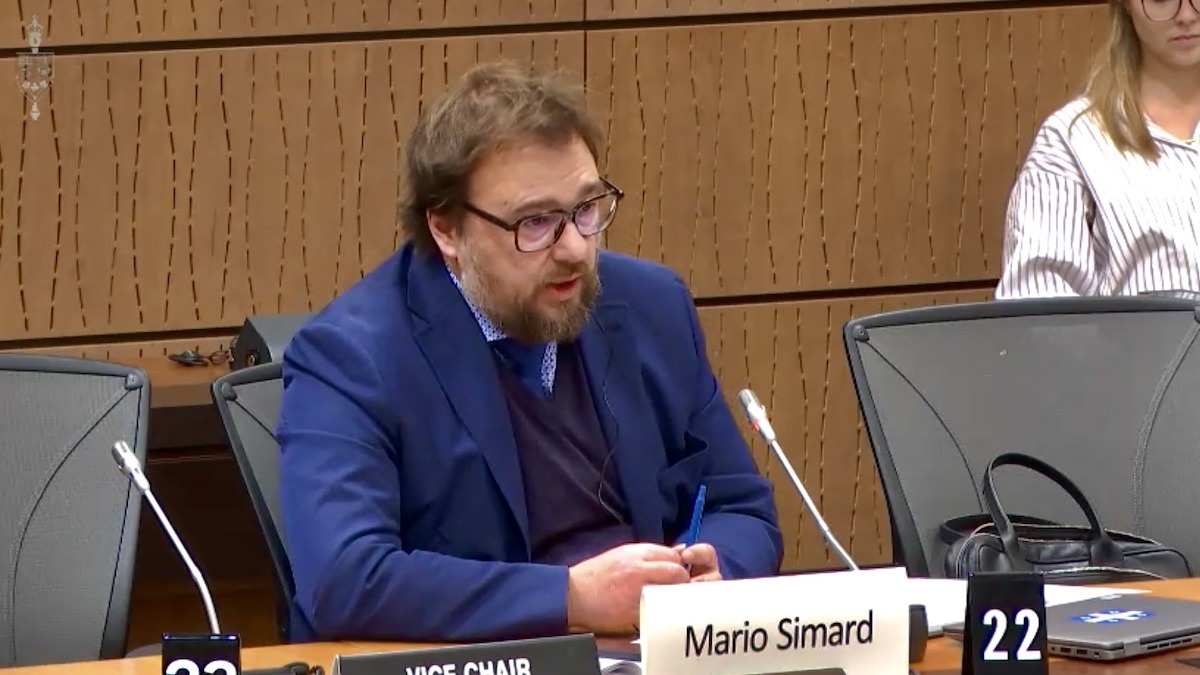
Wilson triggered an immediate pushback from Bloc Québécois MP Mario Simard, who argued that branding a Deep Geological Repository (DGR) as a Project of National Interest (PONI) would erode social acceptability and backfire with communities.
“Mr. Wilson, I believe in a project such as yours, but in my mind [what] seems to be important is to have social acceptability and social acceptability is rooted in a sense of trust and confidence,” Simard told Wilson, warning that combining expedited federal reviews with spent nuclear fuel triggers alarm bells. “When I hear fast-tracked and nuclear waste, a red light goes on in my head.”
“I personally don’t believe as others that your project is designated as a national project, but I think that’s counterproductive for you,” Simard added.
“I think rather it’s going to lead to have more people who are against because they have a sense that consultation will be sped up and the attempt will be to simply omit questions that are absolutely legitimate. And one might say that because for some time now I’ve seen objections being raised, and I think a few weeks back I saw the municipality of Dryden I believe who asked almost the same thing, that these not be considered as projects of national interest.”
Simard also pointed to lingering uncertainty around whether spent fuel transport will be factored into federal reviews, noting that ambiguity has already fuelled public anxiety.
“We wondered whether or not transportation would be included in the impact assessment, and it wasn’t clear and it led to concerns for some thinking that perhaps this impact would not be factored in,” he said, challenging Wilson on how the agency could reassure the public under a national-interest designation. “I believe that this is not the means of carrying out an evaluation regarding a component that is as sensitive as nuclear waste.”
Wilson rejected the premise that Major Projects Office oversight would short-circuit safety reviews or consultation.
“The Major Projects Office in this project, the topics that you spoke of in terms of trust, transportation, the sensitivity of such a project when we were talking about nuclear fuel, I think those concerns are there regardless of whether you’re through one process or another,” Wilson replied.
“I think those are the types of questions that the general public would expect to be asking for this type of project and again, you used the word fast tracking and from my perspective, the process does not give us a fast track. We still have to do the work that we have to do and we still have to meet the regulatory requirements that are in front of us and we still have to ensure that there is an appropriate amount of consultation on this project so I don’t see it as fast tracking,” he said.
Timeline Expectations and Unanswered Questions
Liberal MP Jennifer McKelvie—who noted she worked for the NWMO eight years ago—pressed Wilson to clarify public expectations around the federal government’s one-year review target.
“In the summer, your project was referred to the Major Projects Office and I wonder if you could speak to what you would like to see should your project be designated but also some clarity around your timeline with the reason being projects that are often listed. We say that on the government side it would be one year, one process for review but that clock does not start until the submission of the application so I think we need to be clear that should your project be listed, this is not happening in a year. There is still additional steps that are there so can you walk us through what is left in the regulatory process for you and how the Major Projects Office could be a benefit?” McKelvie asked.
Wilson confirmed the agency does not expect a rapid turnaround, noting that Major Projects Office involvement is meant to coordinate provincial and federal permits rather than compress technical work.
“As far as the overall timelines, we don’t expect that the timelines will change significantly,” Wilson said. “We have a body of work that we have to do in order to prepare impact statements whether that be through the Impact Assessment Agency of Canada or through the CNSC,” he added, referring to the Canadian Nuclear Safety Commission.
Before the committee adjourned for a House vote, Simard pressed Wilson twice more—first asking, “Do you believe that transportation will be included in the impact assessment?” He also questioned how waste costs factor into nuclear megawatt comparisons with hydroelectricity.
“From your point of view, when it comes to managing waste costs, are they taken into account when you draw a comparison between the generation cost in megawatts, hydro power compared to nuclear?” Simard asked.
Wilson did not directly answer whether waste transport will be scoped into the impact assessment, focusing instead on project accounting.
“What I can say is that when you are looking at a nuclear project, the cost of waste and this is unique to the nuclear industry, the cost of disposing of that waste is quantified up front and has to be accounted for,” Wilson replied, adding “It’s not within our mandate to actually do the business case on technology on a per kilowatt basis.”
Simard’s pushback reflects growing resistance across Northwestern Ontario. In October, the City of Dryden formally opposed designating the repository as a Project of National Interest until the NWMO addresses outstanding compensation and regional impact concerns—including funding an independent nearly $600,000 assessment of how the project will affect the city.
“Dryden has been patient, reasonable, and engaged in good faith throughout this process, but the NWMO still has not adequately addressed their project impacts on our community,” said Mayor Jack Harrison. “We cannot stand by while the federal government accelerates a project that, at this point, offers our residents nothing but burden. If this repository is truly in the national interest, then the national interest must include protecting the communities that will bear its consequences.”
Grand Council Treaty #3, several First Nations across the region, and grassroots coalitions such as We the Nuclear Free North have also urged Ottawa to reject the designation, warning that fast-tracking high-level nuclear waste storage erodes democratic principles, undermines Indigenous rights, environmental oversight, and long-distance transport safety.