Airlines and shippers urge MPs to strengthen mediators, allow pre-strike orders and drop foreign-vessel loopholes.
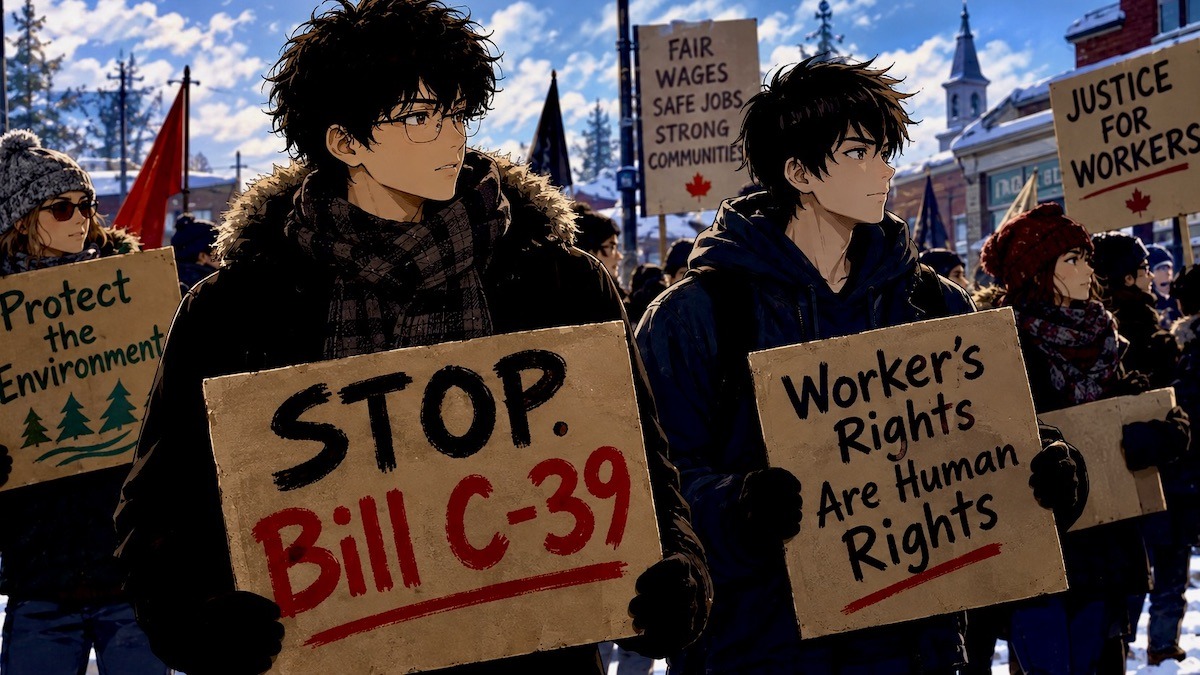
OTTAWA — Airline executives and major employers want Parliament to restore pre-emptive federal powers to stop strikes before networks shut down, arguing Bill C-39’s new special mediator lacks the authority to stop peak-season travel chaos.
At the same time, marine shippers and opposition MPs are uniting to demand the government strip out a separate maritime clause they warn could open Canadian waters to American vessels during declared emergencies.
Testifying before the House of Commons Legislative Committee on Bill C-39 on Tuesday, November 3, 2026 in Ottawa, WestJet CEO Alexis von Hoensbroech pointed to his airline’s summer dispute with cabin crew to argue that waiting until a walkout starts is already too late.
"For WestJet, even a one-minute strike leads to four days of labour disruption. It takes about two days to safely bring down the network and another two days to restore it," von Hoensbroech told MPs. "If a strike is required to actually begin before government can intervene, this is simply too late."
Special Mediators ‘Have No Teeth’
Under Bill C-39’s proposed Canada Labour Code changes, the federal labour minister could appoint a special mediator to issue a public transparency report, while ministerial intervention under section 107 would be restricted until after a stoppage begins.
Conservative MPs challenged witnesses on whether a mediator armed only with a public report can resolve deadlocks.
"That special mediator, sir, has no powers to compel people to meet. They could literally just write a report with the two parties on either end of the country," Conservative MP Dan Albas said.
"I agree with the undertone of your question, that the current proposal is certainly helpful in that it improves things because it drives transparency, but it has no teeth. The special mediator has no tools to do something to change the course of what’s happening," von Hoensbroech replied, urging MPs to let mediators extend conciliation periods.
Conservative MP Philip Lawrence put a similar challenge to Business Council of Canada CEO Goldy Hyder. "Now, the government has put a potential solution there with a special mediator, but unfortunately, that special mediator is completely toothless. All he can do is publish a report, and if reports got the economy growing, our Canadian economy would be the fastest-growing economy in the world, which it clearly is not. Do you have any concerns with the special mediator’s not having any real power?" Lawrence asked.
"Your concern, however, is well founded, because our whole point to this message on optionality is that if such a thing were to happen, the government should have a lever to pull to say: “We’re not going along with that. We’re going to intervene because there’s a national interest here that supersedes what’s taking place.”" Hyder said.
Bargaining in Good Faith Under Section 107
Liberal and Bloc Québécois MPs countered with concerns raised by labour unions in earlier hearings—namely, that keeping section 107 intervention on the table undermines genuine bargaining and that mediators could tilt toward one side.
"If both parties—the employer and the union—know that the minister can ultimately invoke section 107 of the Canada Labour Code to say that the dispute will be settled in the usual way, even if the bill says that negotiations must be conducted in good faith, each party will have less interest in making concessions at the bargaining table, because that could be held against them when mediation takes place at the end," said Bloc Québécois MP Gabriel Ste-Marie.
Air Canada Vice-President of Labour Relations Michael Abbott argued the raw strike rate masks the real economic toll. "The statistics are that 5% of deals in federal jurisdiction go to a strike or a lockout. The reality is that you need to look at person-days lost. That’s tripled over the past three or four years," Abbott said. He added that national-interest intervention would apply selectively: "We have nine bargaining units at Air Canada. There are five or six that could shut down our entire operation. I wouldn’t consider the other two or three to be national interest."
Liberal MP Caroline Desrochers asked Hyder directly: "Do you believe that, if the provisions under section 107 of the Canada Labour Code are maintained, employers will be less likely to negotiate in good faith?"
"Let me say on behalf of employers that there’s a cost to strikes for employers as well. It’s a great pain to have to shut down your business, only to plan to restart your business," Hyder answered.
Liberal MP Tim Louis asked airline executives whether public mediator reports would deter bad-faith tactics, asking: "Would you instruct your side of negotiating not even to sit at the table, not to act in good faith? If you knew that would be in a report that would become public knowledge, would that help change the way…or do you think that would also change the way the other side handles the negotiations?"
"Absolutely. I think transparency will moderate the behaviour of both sides for the positive, so it’s a net positive," Abbott said. When Liberal MP Mike Kelloway raised union fears that a special mediator might favour employers, Air Transat’s Irene Chrisanthopoulos defended federal and private arbitrators as neutral professionals.
Coasting Trade Act Draws Cross-Party Fire
While airlines called for longer strike notices and stronger mediator powers, Canada Steamship Lines Director Guillaum Dubreuil urged MPs to extend marine strike notices to 15 days and delete Bill C-39 changes to the Coasting Trade Act that waive checks on Canadian vessel availability during emergencies.
"Mr. Dubreuil, you talked about the Coasting Trade Act changes as being unnecessary. I agree with you. We’ve had other witnesses come and say that this is a solution in search of a problem. Would you agree with that assessment?" Albas asked.
"I absolutely would. In all the discussions we’ve had with Transport Canada so far in trying to determine what specifically would constitute an emergency situation that is not already covered in the Coasting Trade Act, we have not found a satisfactory example. I would fully agree with that assessment," Dubreuil said.
Ste-Marie agreed, saying: "In an emergency, then, it’s better to rely on our strengths, our resources, our workforce and our expertise, rather than subcontracting those things to foreign companies."
"That is absolutely true, especially considering that the foreign companies that are geographically closest to us are American companies. They could therefore take advantage of the system to come and do more business here in Canada in what would be deemed emergencies," Dubreuil warned.