Spring Reset Underway as Land Lab Program Expands Community Garden and Food Systems in Third Year
With winter finally loosening its grip on Melgund Township, work is shifting back outdoors as the Art Borups Corners Land Lab begins its spring season. The first phase is practical but essential—clearing, organizing, and preparing growing spaces for what is expected to be an active summer focused on food production, food security, and community gardening.
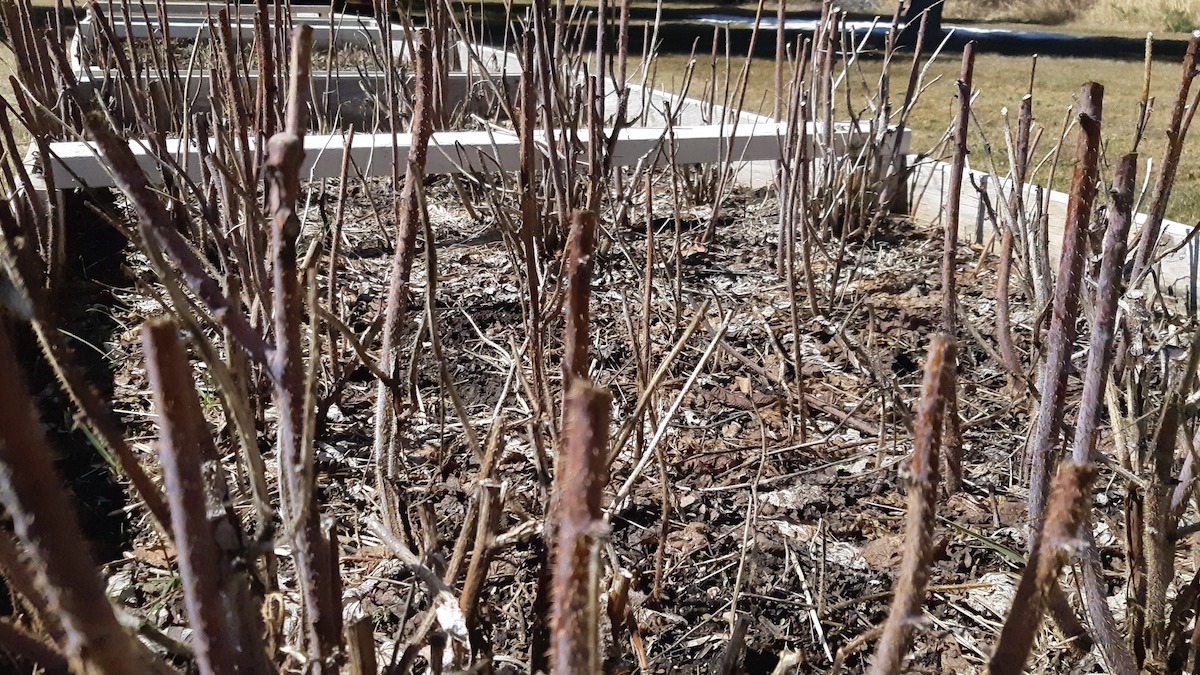
Garden beds and grow boxes across the site are now being refreshed after a long winter. Among the most noticeable changes are the raspberry plants, which have expanded rapidly over the past year. The once-contained boxes are now dense with new growth, pushing beyond their boundaries. As a result, one of the key early-season priorities is transplanting—relocating these thriving plants into larger, more suitable spaces where they can continue to develop.
Some of the raspberries will be replanted into newly dug trenches nearby, while others—along with several young apple trees—are being moved into the community garden at the Dyment Recreation Hall and Complex. The site’s open greenspace and park setting are helping shape it into a shared hub for gardening, recreation, and local food initiatives within the community.
Now entering its third year, the program has steadily grown from its beginnings in arts-based and land-focused activities into a more integrated seasonal system. It continues to link recreation, food systems, and community well-being, building on early support from the Canada Council for the Arts. Since then, the initiative has expanded through research and collaboration between 2023 and 2025, including work connected to Winnipeg, Manitoba, and supported by Manitoba Agriculture, the Sustainable Canadian Agricultural Partnership, Minneapolis College of Art and Design, and the Labovitz School of Business and Economics at the University of Minnesota Duluth.
The approach reflects a broader understanding of recreation spaces—not just as places for activity, but as supportive environments where learning, connection, and local food systems can grow together. This aligns with the Framework for Recreation and Parks in Canada, particularly its focus on strengthening communities through accessible, inclusive, and well-designed physical and social spaces.
In practice, this means creating environments that welcome participation at all levels. The gardens and surrounding areas are being shaped as spaces where people can gather, contribute, and build shared ownership of the land. Considerations around safety, accessibility, and the creation of calm, respectful community spaces are also part of how the program continues to evolve.
What is emerging in Melgund Township is a connected system—one that links growing areas, public greenspaces, and recreation infrastructure into a continuous seasonal cycle. Food is cultivated, shared, and supported through collective effort, reinforcing both local resilience and social connection.
As the growing season begins, the work underway—clearing beds, moving plants, and preparing soil—marks the start of another year of development. With expanded gardens and stronger systems in place, the program is set to continue building toward a more resilient and community-driven approach to food and recreation in Northwestern Ontario.