Community-run research space studies nuclear waste filings, Bill C-39 impacts and Major Projects Office legislation.
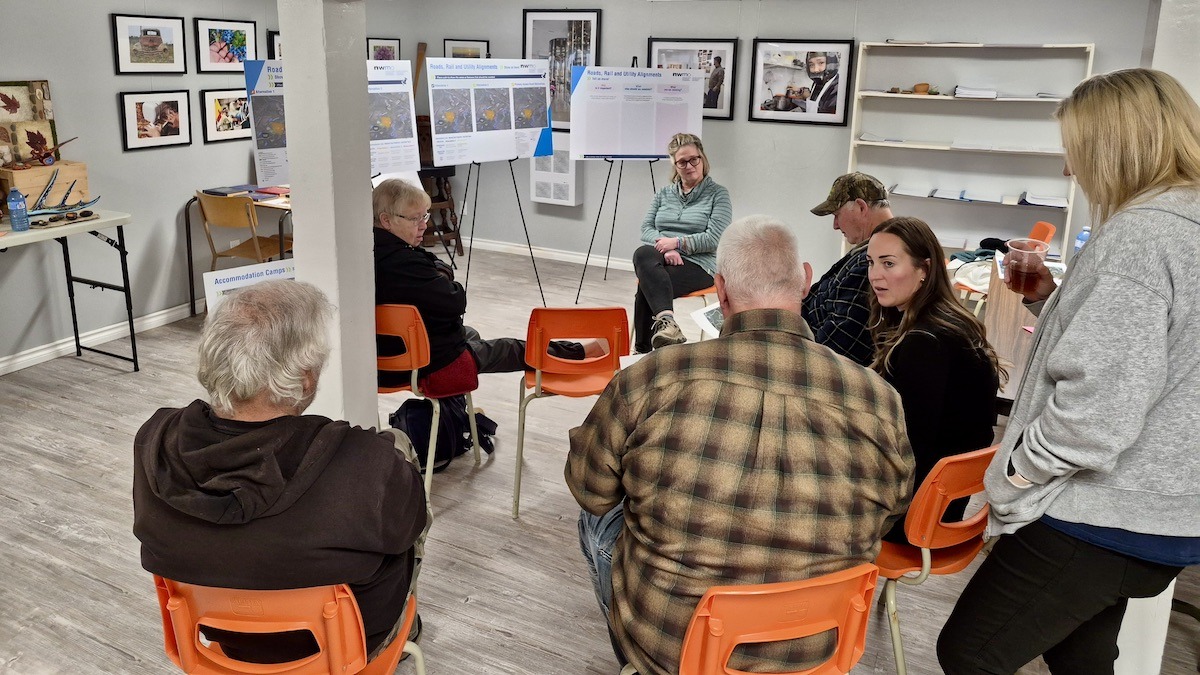
When our team travelled to Northwestern Ontario on Oct. 28 to attend Nuclear Waste Management Organization (NWMO) community workshops on the proposed Deep Geological Repository (DGR) for Canada’s Used Nuclear Fuel project, one local facility stood out: the Nuclear Waste Management Information Centre and Research Library inside the Dyment Recreation Hall.
Located in Melgund Township—where the unincorporated communities of Borups Corners and Dyment sit less than 10 kilometres from the proposed Revell DGR site—the reading room and research library gives residents, visitors and researchers a physical space to examine documents tied to one of the largest nuclear infrastructure projects in Canadian history.
Melgund Recreation, Arts and Culture (MRAC) operates the space as part of a broader effort to build independent, community-driven research capacity in the area. Using arts-based and participatory methods, MRAC has created a setting where local residents can review technical materials, ask questions and document local knowledge outside of formal industry or government channels.
That local capacity has taken on added urgency as 2026 nears its end. The DGR project entered a formal Integrated Impact Assessment earlier this year, and in September it was referred to Canada’s Major Projects Office as a Project of National Interest under the controversial Bill C-39, the Building Canada Strong Act.
With the program estimated at more than $26 billion, the social, environmental and infrastructure effects on neighbouring unincorporated communities are expected to be substantial. While the NWMO leads formal technical consultations—such as the Oct. 28 Alternative Means Studies workshops in Dyment—community-run spaces like the library give residents direct access to primary documents and independent study space as regulatory timelines accelerate.
Inside the hall, the library houses Integrated Impact Assessment filings, NWMO project reports, and regulatory updates tracking Bill C-39 and Major Projects Office processes.
Because high-speed internet remains uneven across rural Northwestern Ontario, the space also provides on-site Wi-Fi capable of supporting videoconferencing, live webinars, streamed public sessions and virtual meetings alongside its print collection. Workshop tables and meeting areas accommodate small study groups, participatory sessions and visiting delegations. Beyond serving Dyment and Borups Corners, the space has also hosted sessions with nuclear programs and projects from across Canada and internationally.
We need to give big shout-out to the folks at Melgund Recreation, Arts and Culture for their leadership in building independent, community-driven research capacity through arts-based and participatory approaches in Northwestern Ontario. Thanks for making us feel so welcome!
The library is open Mondays and Wednesdays from 1 p.m. to 4 p.m. and by appointment.