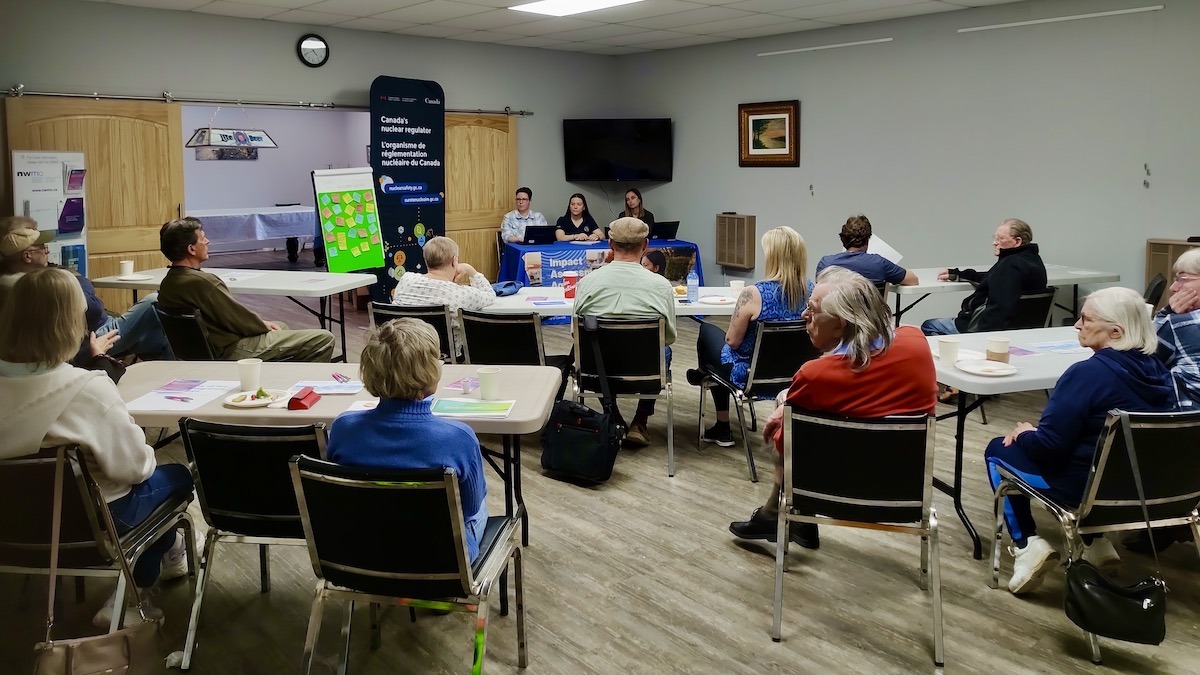
Highly controversial nuclear waste consultations in Melgund Township continue as IAAC and CNSC met with residents to discuss the proposed used nuclear fuel repository.
“Who Represents Us?” was an important question being asked by residents in Melgund Township, Northwestern Ontario this month.
Maya Ekman’s article ‘It’s not a done deal’: Community nearest nuclear waste site to hire lawyer published in today’s edition of The Winnipeg Sun is drawing broader public attention to ongoing federal consultations for the proposed Deep Geological Repository (DGR) for Canada’s Used Nuclear Fuel Project near Revell Lake.
The story highlights questions being raised by residents in and around Melgund Township about representation, environmental oversight, community participation, and how local concerns will be considered during the federal impact assessment process of the highly controversial nuclear program. Melgund Township, and its two unorganized communities of Dyment and Borups Corners are the closest in proximity to the site, and the most to be impacted.
Federal officials involved in consultations held this month at the Dyment Recreation Hall emphasized that no final decision has been made and that public comments continue to play an important role as assessment guidelines are developed.
As discussions continue over the $26,000,000,000, 160-year project, this remains an important opportunity for residents, organizations, and Indigenous communities to engage with the federal review process and ensure local perspectives are included in the public record. The program has drawn both support and fierce opposition from across the region and the country.
The impacts on local water wells and ecosystems, formal and informal recreation, harvesting, and land use, food security, equitable participation, property values and Free, Prior and Informed Consent were among the many issues raised by residents across multiple sessions.
The article also reflects something commonly seen in large infrastructure and environmental assessment processes across Canada: communities regularly seek access to independent legal, scientific, or technical expertise so residents can better understand complex regulatory processes and participate meaningfully in decisions that may affect them for generations.
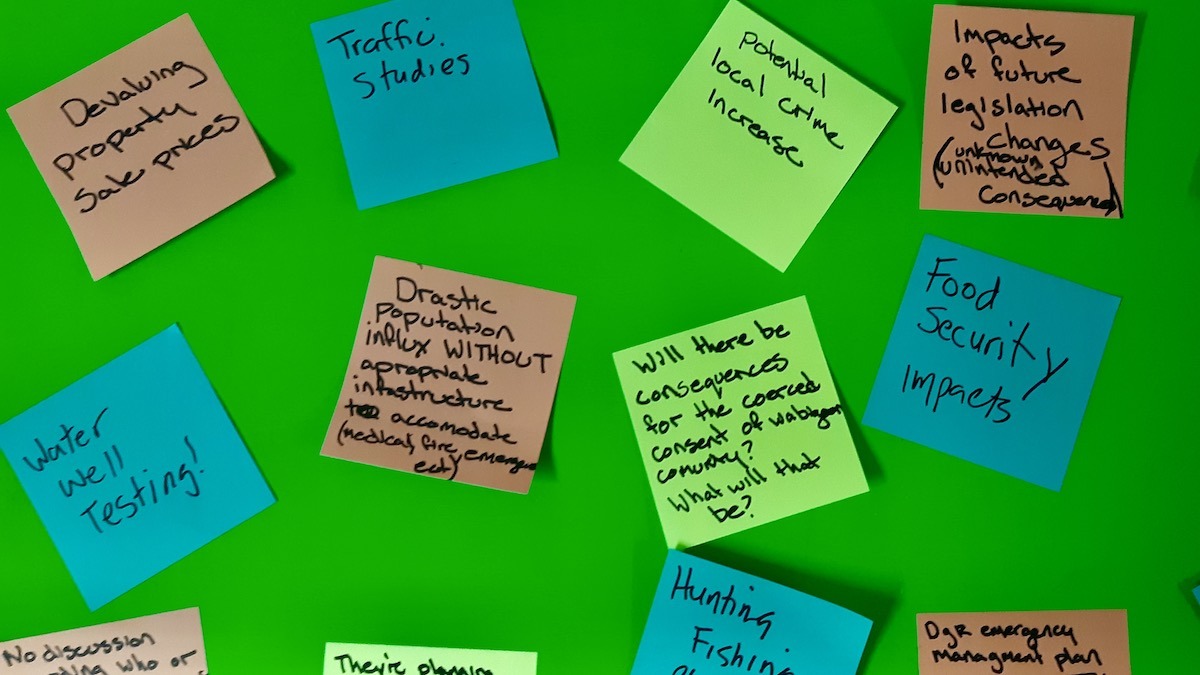
Community Consultations Held on Proposed Nuclear Waste Repository
Consultations, workshops, and information sessions were organized in the community throughout the month, bringing together a broad and inclusive range of perspectives including: The Nuclear Waste Management Organization, the Impact Assessment Agency of Canada, and the Canadian Nuclear Safety Commission, The Local Services Board of Melgund, arts and community groups like The Arts Incubator Winnipeg, Art Borups Corners, Melgund Recreation, Arts and Culture along with international organizations including the UK’s Nuclear Waste Services and environmental advocacy groups such as Northwatch and We The Nuclear Free North. Community engagement activities and dialogues were made possible with funding from the IAAC Participant Funding Program.
Special thanks to Maya Ekman for reporting on this important and developing regional story. Read the full story in The Winnipeg Sun and news outlets across Canada including: The Graphic Leader, The Kenora Miner and News, The Hamilton Spectator, Niagara Falls Review, The Penticton Herald, The Peterborough Examiner, St. Catharine’s Standard, Waterloo Region Record, Welland Tribune, Northwestern Ontario Newswatch and Thunder Bay Newswatch.
We also want to recognize the Government of Canada’s Local Journalism Initiative (LJI) for supporting journalism that makes stories like this possible. The Local Journalism Initiative is a federally funded program that supports the creation of original, independent local reporting focused on civic issues and underserved communities across Canada.