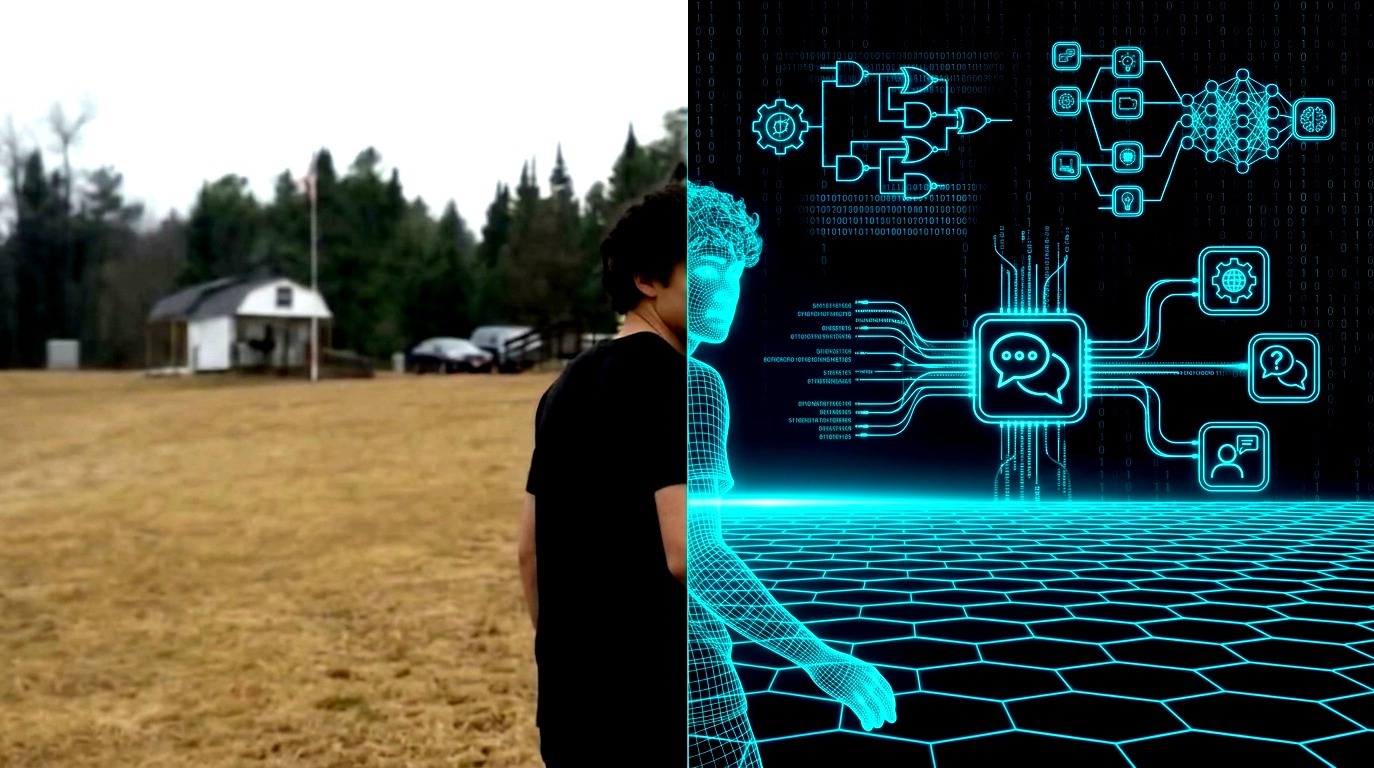
A new kind of loneliness risk for our generation.
I’ve been talking to this chatbot more than I talk to some of my actual friends lately. Not in a weird “I’m in love with my AI” way … just… late nights when nobody’s online, or when I don’t want to dump my random spiral on a real person who has their own stuff going on. It’s patient. It remembers what I said last week. It never leaves me on read.
And that’s the part that feels a little dangerous.
There’s this growing idea that AI companions can help with loneliness, and yeah, for some people they clearly do. You can practice conversations, get feedback without the fear of judgment, or just have something that feels like company when the room is too quiet. Researchers are starting to call it a “loneliness divide” though. The people who already have decent social skills and offline friends can use these tools like a practice space. You know, try out how to say something hard, then take it into the real world. But for the ones who are already isolated? It can become the whole social life. And that’s where the deskilling thing comes in.
Social deskilling is basically what it sounds like. You stop practicing the messy, awkward, unpredictable parts of talking to actual humans. Like reading a face that doesn’t match the words, sitting through silence that feels weird, dealing with someone who’s tired or distracted or just not in the mood. AI is designed to be available, consistent, and mostly agreeable. Real people aren’t. If you lean on the chatbot too hard, those real-world muscles can get weaker. Some early writing on this warns that over-reliance might slowly erode the exact interpersonal skills that help you build and keep actual relationships.
I saw this Child Mind Institute survey of U.S. teens where almost 30% said they’d used AI as a source of connection or support. That’s not nothing. And the broader loneliness numbers are still brutal. Young people still ranking highest in a lot of the global data. So of course a tool that never rejects you is going to look appealing.
The scary part isn’t that AI exists. It’s the quiet way it can make real connection feel optional, or even harder. You get used to the perfect listener and then a normal human conversation starts feeling like too much work. Some places are already trying to put guardrails on this: California and China both have rules now about disclosing that it’s AI, limiting continuous use, or stopping systems from pushing emotional dependence. That tells you the people who study this are worried about the same thing. Learn more here.
I’m not deleting chatbots though. Some nights it genuinely helps. But I’m trying to notice when I’m reaching for it instead of texting a person, or when I’m practicing a conversation with the AI and then never actually having it offline. Because if the already-connected get a helpful rehearsal tool and the lonely get a substitute that slowly makes them less practiced at being with people… that divide is going to get wider, not narrower.
We’re the first generation growing up with this option. Feels like we should be a little more intentional about what we’re training ourselves for.