Government officials consider funding defensive creative technologies to help independent human artists navigate market complexities.
In a striking tactical shift, federal heritage officials have revealed that the Canadian government is considering directly supporting and utilizing artificial intelligence as a defensive shield to protect human artists from digital piracy and copyright theft. The strategy, colloquially described as “fighting fire with fire,” marks a realization in Ottawa that purely legislative measures may move too slowly to defend the creative sectors from real-time corporate exploitation.
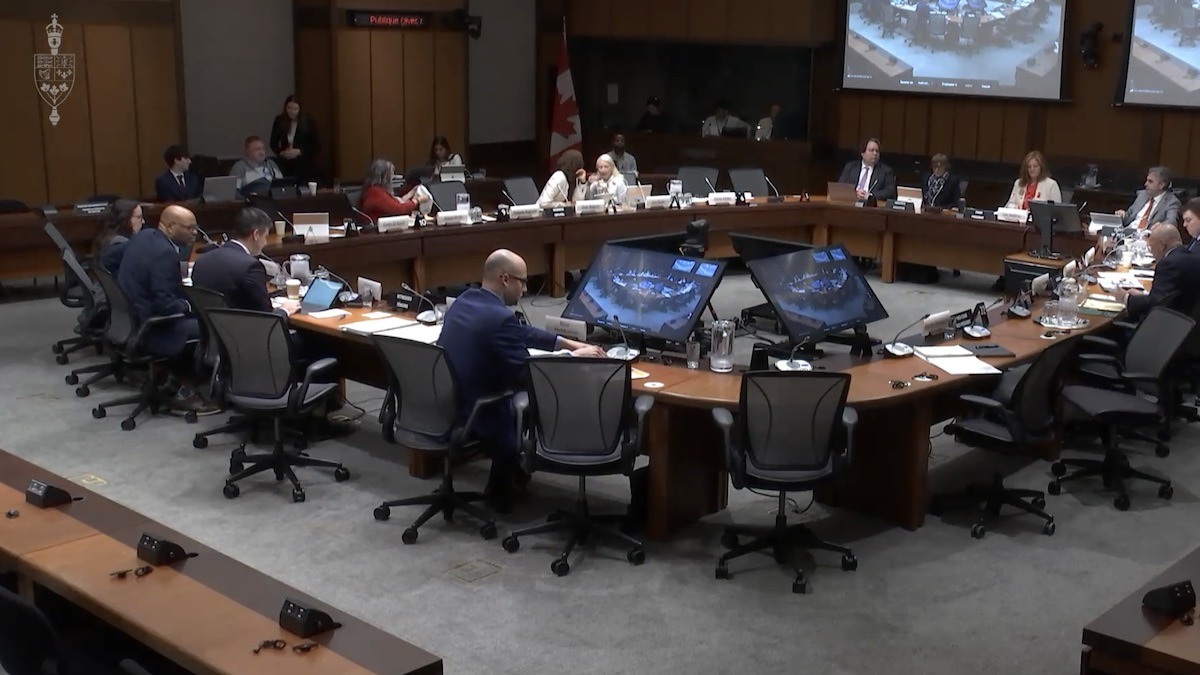
Testifying before the Standing Committee on Canadian Heritage on May 5, Associate Assistant Deputy Minister of Cultural Affairs Blair McMurren briefed lawmakers on a high-level digital summit where international tech platforms and creative advocates clashed over the future of intellectual property. While the legislative debate remains intensely contested, McMurren revealed that highly sophisticated, defensive technical practices are already emerging from within the cultural sector itself to combat algorithmic theft.
“You might recall that MusicAI was at the summit, talking about how they use AI themselves to police the infringement of copyright and to build a service that can help artists navigate the current complexities,” McMurren revealed to committee members. By employing machine learning models defensively, these specialized platforms can scan massive global streaming databases at blinding speeds, tracking down unauthorized deepfakes, synthetic voice clones, and unlicensed musical compositions that violate human artists’ intellectual property.
This technological counter-offensive has caught the serious attention of federal policymakers, who now see a major role for the state in bankrolling these defensive systems. “We think examples like that are great,” McMurren testified openly. “If there were opportunities to help support that form of creative technology, that could be a useful role for government, at the same time as we look to the legislative and regulatory piece, which is also our responsibility, of course.”
This dual-track approach represents a significant evolution in Canada’s cultural preservation strategy. Rather than relying solely on slow-moving regulatory bodies like the CRTC to enforce transparency after violations occur, the Department of Canadian Heritage is signaling its willingness to equip domestic artists with the automated tools required to defend their livelihoods in real time.
In combining robust federal funding with cutting-edge defensive code, Ottawa aims to turn the technological tools of the digital giants against them, ensuring human creativity remains viable in an increasingly synthetic world.