Bureaucratic Delays and Heavy Regulatory Restrictions Forcing Canada’s Primary Food Producers Out of Broken Support Systems
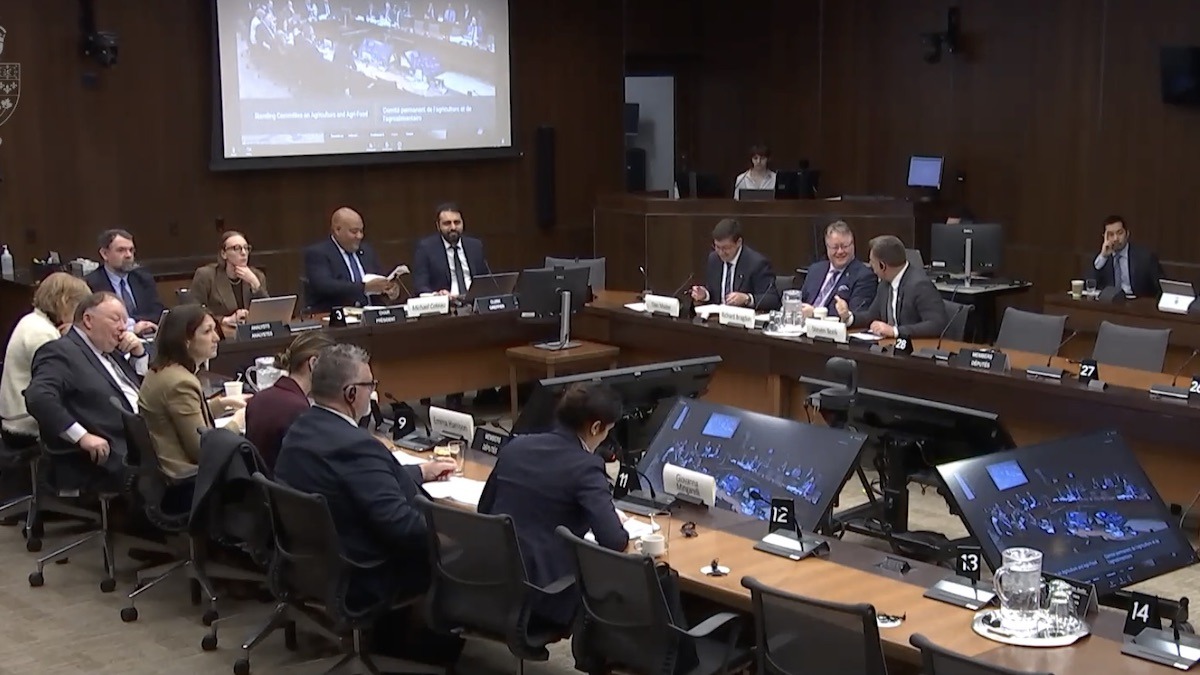
A toxic combination of government underfunding and aggressive corporate retail tactics is systematically dismantling Canada’s independent family farms. Testifying before the House of Commons Standing Committee on Agriculture and Agri-Food this April, industry experts and witnesses revealed that while peer countries view food production as a vital economic engine, a stunning funding gap has left Canadian producers entirely exposed to severe climate disasters and predatory corporate behavior.
Data brought forward by Catherine Lefebvre, President of the Association des producteurs maraîchers du Québec, reveals that public funding for agriculture in Canada has hit an unsustainable low. Internationally, developed G7 nations allocate an average of 2% of total government spending toward supporting agriculture. Canada, by stark contrast, allocates less than 1%. Lefebvre warned lawmakers that in a context where climate, economic, and geopolitical risks are intensifying, this deep funding gap is no longer sustainable for primary producers.
This severe lack of government backing leaves family-owned agricultural small and medium enterprises entirely defenseless against Canada’s highly concentrated grocery retail sector. Major corporate food retailers have engineered business models specifically designed to shift systemic financial risks and operational costs directly onto the backs of vulnerable vegetable growers.
As a pure price taker in a market controlled by a few massive, publicly traded grocery giants, the farming sector is being starved out. From 2021 to 2023, the net profit margins of local vegetable producers sharply declined across all categories, pushing the hardest against smaller family operations.
Compounding this corporate squeeze is a volatile climate reality. Market gardeners are suffering immediate financial trauma from severe droughts, late frosts, and catastrophic rainfall events. Yet, the primary federal tool intended for disaster relief, AgriRecovery, is facing scathing criticism for being an unworkable bureaucratic mess.
Tyler McCann, Managing Director of the Canadian Agri-Food Policy Institute, informed the parliamentary committee that AgriRecovery is fundamentally failing because it is being used to patch over structural flaws in other broken safety nets. McCann testified that AgriRecovery is not acting as a functional program, but rather as an inefficient agreement between governments that when a disaster happens, they will eventually try to do something. The problem is that it takes eighteen months to deliver aid, meaning Ottawa is managing negative outcomes rather than enabling better operational decisions.
To prevent a complete surrender of Canada’s regional food sovereignty, agricultural organizations are demanding an immediate, aggressive overhaul of federal support. Testifying alongside the associations, John Cranfield, representing the Deans Council of Agriculture, Food and Veterinary Medicine, confirmed that looming federal research cuts threaten to strip $27 million annually from public research centres. Cranfield highlighted that academic institutions do not possess the financial means to replace this lost public capacity, leaving farmers without the scientific innovations needed to mitigate climate risk.
In response to questions from Bloc Québécois Member of Parliament Sébastien Lemire regarding regional safety net flexibility, McCann recommended that the government double public investment to match the 2% international benchmark, focusing the capital directly into robust risk management programs.
Furthermore, Lessard and Bourgoin jointly recommended fixing AgriStability by raising the critical trigger threshold to 85% of the reference margin to instantly protect farms against catastrophic cost spikes and weather events. Finally, the witnesses emphasized that the system needs to eliminate the bureaucratic requirement for total provincial consensus, giving individual provinces the flexibility to deploy emergency cash when localized climate disasters strike before family farms go under.


).jpg)