Hunting for Real Art on Canadian Highways
We spend most of our year in Winnipeg staring at screens, running an arts program that lives almost entirely online. Because of that, whenever a project or a gig gets us out on the highway, we make it a rule to track down local community centres and art spaces to check out the great work they’re doing.
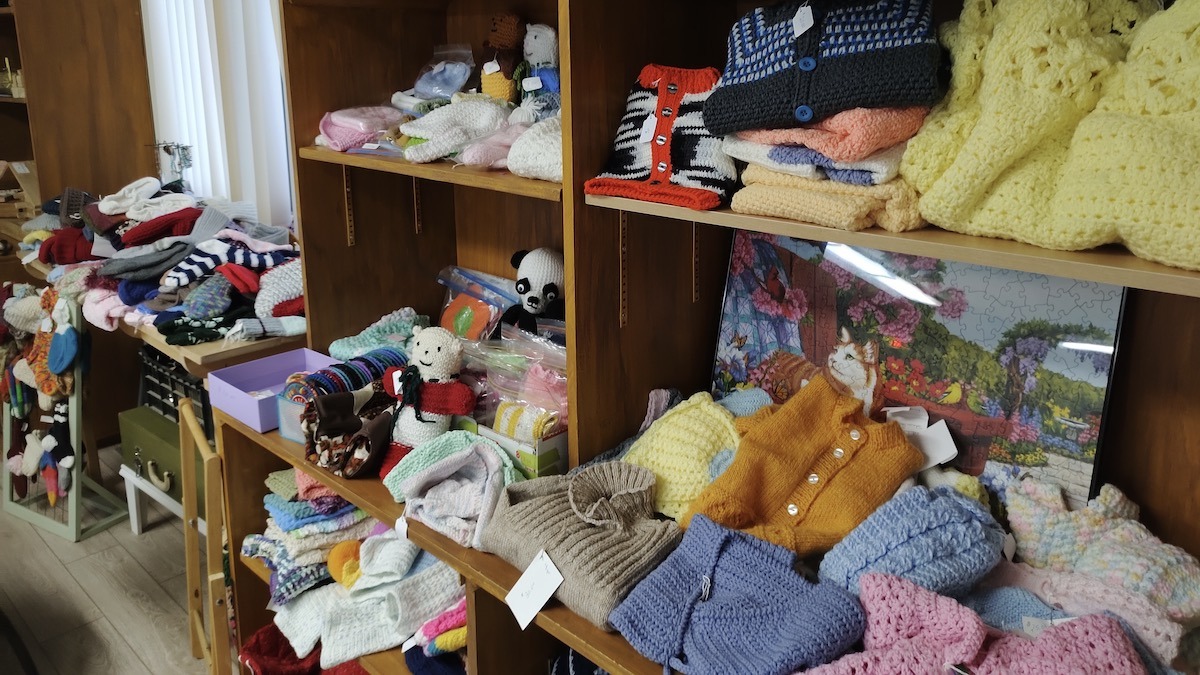
That is how we ended up spending some time at the Dryden Go Getters Seniors Centre in Northwestern Ontario. It’s a beautiful space. They have this small corner that is packed to the brim with handmade goods by local makers. Looking at those wooden shelves—loaded with knitted baby clothes, bright blankets, and stitched toys. You see the immediate care put into the work. For our team, since we work with so many crafters, finding a spot like this is pure creative fuel.
It also highlights a rough reality for artists right now. One thing we’ve been talking about, and that we’ve noticed is that it seems to be getting incredibly hard to find physical spaces to sell work outside of the internet. The big, well-funded urban galleries and programs have the space, but that is not who we mean. We are talking about the small towns we pass through and the artists who don’t have access to a lot of the big city venues, events and resources.
There used to be great little highway gift shops selling authentic traditional crafts—moccasins, mukluks, mitts, and beadwork. Now, so many of those spots are completely gone, replaced by roadside gas stations full of cheap, mass-produced junk.
Losing those physical counters hurts local artists and makers. It is why we happily agreed when we were asked to help arrange a ribbon skirt making workshop later this summer. It gets young people working with their hands, learning a real skill instead of staring at their phones. There’s a huge need to get the next generation learning, and more actively involved.
We need a serious, sustained investment in our youth artists, specifically through programs that train them in both the arts and creative entrepreneurship. It is not enough to just teach someone how to make something beautiful; we have to give them the tools, business literacy, and confidence to market their work and navigate this modern economy. Funding hands-on programs is needed to fill the gap between traditional crafting and practical business skills. And this kind of support does more than just keep cultural practices alive, it gives the next generation a viable, self-sustaining path to support themselves and their communities.
So every time we find a spot like the one in Dryden, we head straight for the craft tables. Keeping these independent organizations and artists supported is the only way to keep these traditions going.