Public comment period closes for proposed nuclear waste repository near Melgund Township along Highway 17
May 10 marks the final day for residents, organizations and interested members of the public to submit comments on two key federal planning documents tied to the proposed Deep Geological Repository (DGR) for Canada’s Used Nuclear Fuel Project.
The project, proposed by the Nuclear Waste Management Organization, would see millions of bundles of used nuclear fuel permanently stored underground at a site located just a few kilometres from Melgund Township along Highway 17.
If approved, the repository system would be designed to contain and isolate approximately 5.9 million bundles of used nuclear fuel deep underground over a project lifespan expected to stretch roughly 160 years, including site preparation, construction, operations, closure and long-term monitoring.
The federal impact assessment is being conducted jointly by the Impact Assessment Agency of Canada and the Canadian Nuclear Safety Commission.
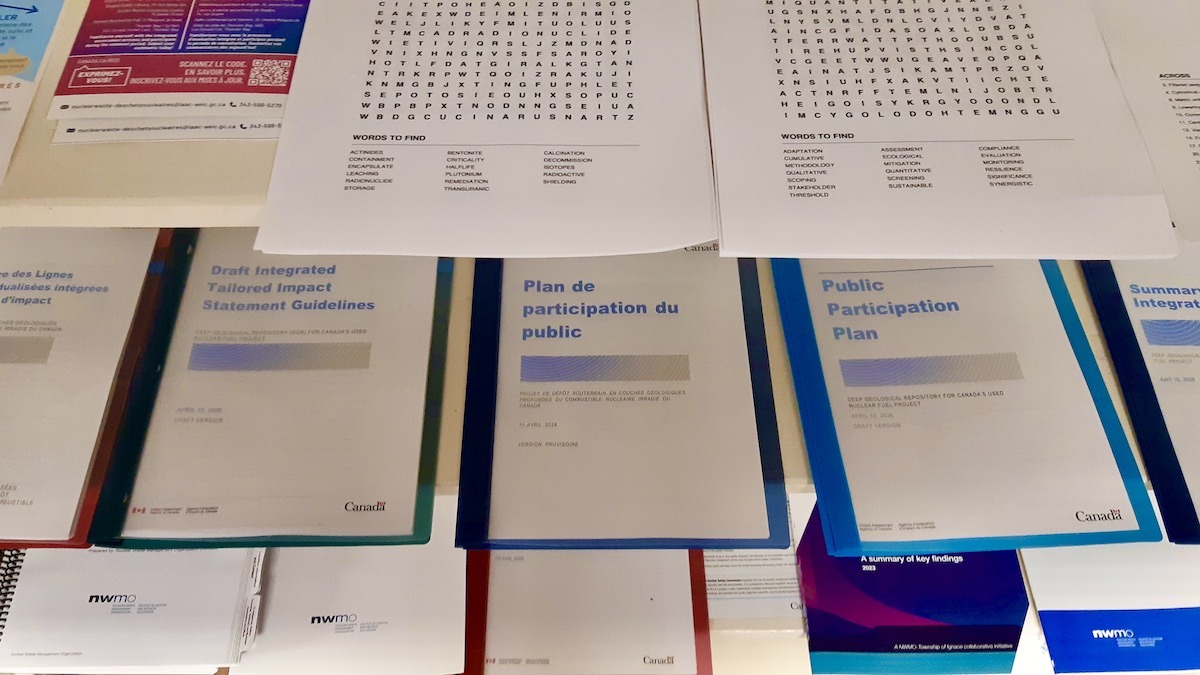
At the centre of the current comment period are two planning documents: the Draft Tailored Impact Statement Guidelines and the Draft Public Participation Plan.
The Tailored Impact Statement Guidelines are essentially instructions outlining what the NWMO must study, measure and explain in its future Impact Statement — the large technical document that will eventually examine how the project could affect people, water, wildlife, transportation, local infrastructure, Indigenous rights, the economy and the surrounding environment. The guidelines are meant to ensure the company studies issues that matter locally and provides enough detail for regulators and the public to properly evaluate the project.
The Public Participation Plan, meanwhile, lays out how residents, Indigenous communities, municipalities and organizations will be able to participate throughout the federal review process. It outlines opportunities for public input, consultation sessions, access to information and future engagement as the assessment moves forward.
Together, the documents help shape the scope of the entire review process before the full environmental and impact studies are completed.
The proposed nuclear waste repository program has already drawn significant attention and controversy across the region, with concerns raised over environmental protection, transportation risks, long-term containment, emergency preparedness, consultation processes and potential impacts on future generations.
Federal officials say the purpose of the Impact Statement process is to identify the project’s potential effects, determine who may be impacted, and examine what mitigation measures could reduce or address those impacts.
Comments can be submitted through the Canadian Impact Assessment Registry until the end of May 10.
For many residents, the deadline represents one of the earliest opportunities to influence how the federal review will unfold — before decades of studies, hearings and regulatory decisions begin to take shape.