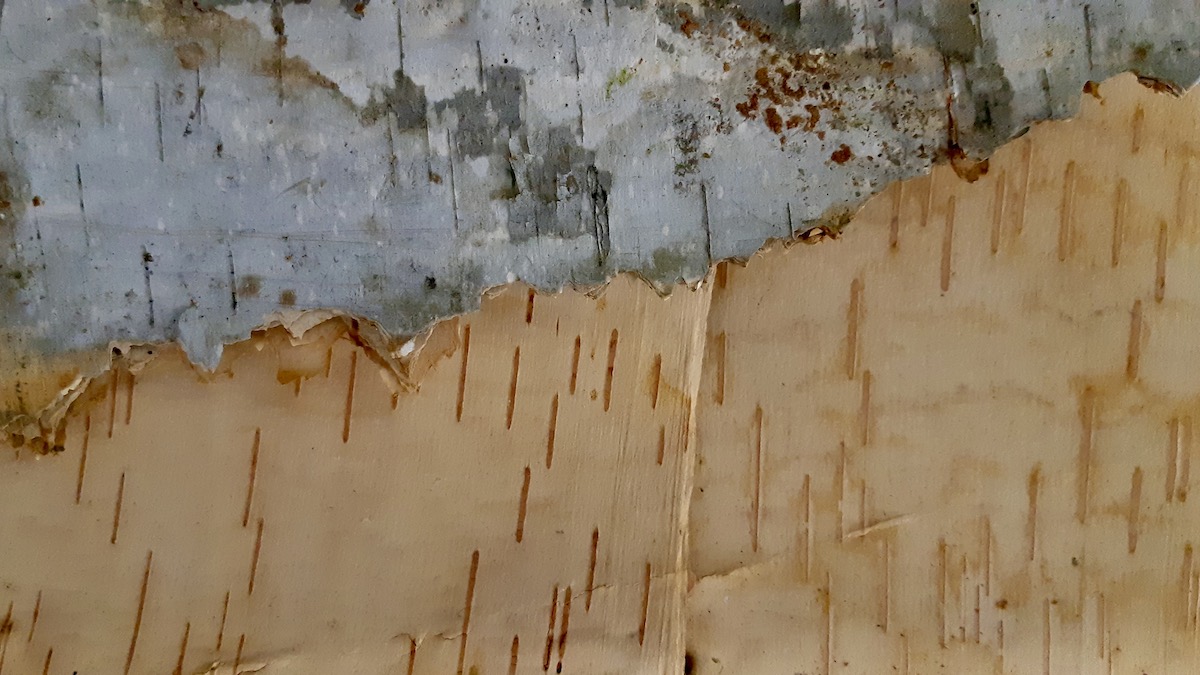
Birch harvested for winter firewood is also being prepared for fall pit firing, where bark and wood will support wild clay testing and pottery experiments.
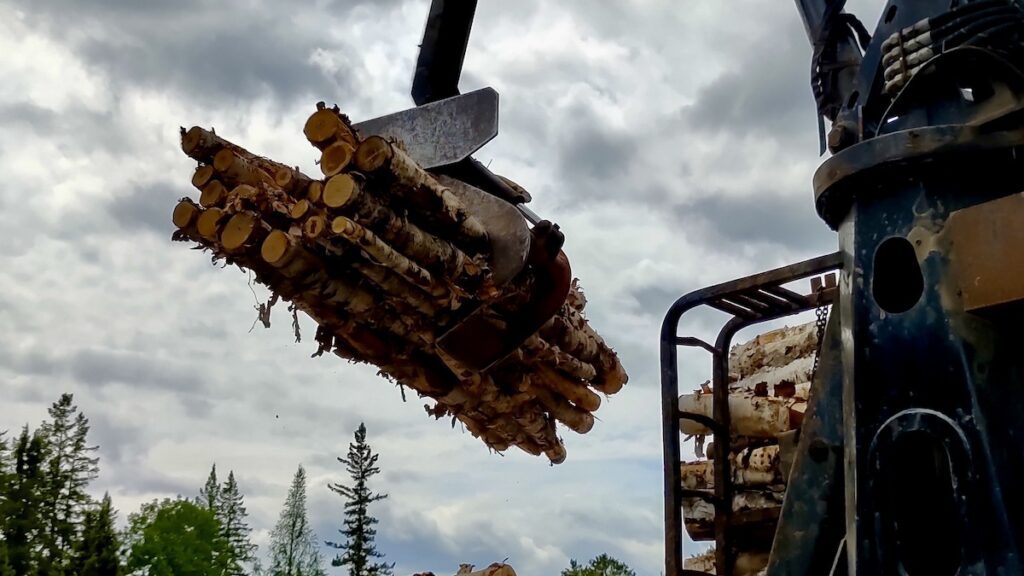
The birch stacks grow through the summer without much ceremony. It comes in, it gets split, and it disappears into firewood piles before you really think about it. That’s the main job. Heat for winter. No mystery there.
But birch always leaves something behind. Not waste, just the portions that don’t fit the immediate use. Too small, too irregular, or simply more than what the wood stove will ever need.
That’s what will be carried into our planned pit firing work this fall.
How Birch Behaves in a Pit Firing
What makes birch useful in pit firing isn’t just that it burns. It’s how it burns.
It lights easily, which matters when you’re building heat in an open ground firing rather than a controlled kiln environment. We’re not waiting for a chamber to stabilize. We’ll be working working with direct combustion and constant adjustment for a process we’re still largely unfamiliar with.
Birch also breaks down in a way that doesn’t create heavy, collapsing fuel beds. Some hardwoods form dense coals that can shift suddenly and damage work sitting in the pit. Like poplar, birch tends to move through flame into ash more quickly, which keeps the fire active without becoming structurally dangerous to the pieces inside it.
In practice, that means it should support longer firing periods without turning into something that has to be constantly rebuilt from scratch.
Birch Bark as an Active Material in Firing
The bark is not just a byproduct. It behaves like its own material system.
Birch bark separates from the wood in sheets during processing and ends up accumulating in piles of its own. Once it enters a firing environment, it reacts immediately. Like paper! In low oxygen conditions, it turns into dense carbon almost instantly, producing deep black surface contact wherever it sits against clay.
That makes it useful in more than one way. It can be layered into the pit to control smoke concentration in specific zones, wrapped loosely around pieces to create direct carbon marking, or scattered through the fuel bed to change how smoke moves through the firing.
The effect is not uniform. It can create sharp contrasts, uneven surfaces, and localized darkening that comes directly from where the bark sits during combustion rather than anything applied afterward.
Getting Ready to Pit Fire our Wild Clay
Running alongside all of this is our wild clay work that has been developing over the summer.
We’ve been collecting and processing wild clay at the land lab for most of this summer. We’ve never done it before, so it’s exciting! It’s processed in stages: broken down in water, slaked, screened, dried, and rehydrated as needed so we can test it out.
When fire restrictions lift and conditions settle in the early fall, we’ll shift from preparation into use.
The birch that was sorted for winter heat will become the fuel base for pit firing sessions. The surplus material we’re setting aside now is what will carry the firing process forward. The bark, branches, and smaller fuel pieces will all contribute different roles once they are in the ground.
At the same time, the processed wild clay will finally move into its first full firing tests. That’s the most exciting part we’re looking forward to. These won’t be controlled kiln trials. We’re going to be using old-fashioned, open pit conditions where temperature, oxygen flow, and fuel movement all interact directly with the clay and we have no idea how that will turn out yet.
Summer Arts Incubator Program at Borups Corners
All of this work is part of our Summer Arts Incubator program. Summer is spent working directly with what is available on site: collecting, processing, testing, and preparing materials that will carry into later work and projects. This year, exploring and experimenting wild clay is one of the main focus areas. We’ve never done it before, and no one knows how well the clay here works! It’s been a fun, and messy experience that we’re all enjoying. We can’t wait for the fall to be able to host our pit firings!
Stay tuned as we post more of our pottery adventures over the next few weeks.