Why Fresh Poplar Must Be Properly Seasoned Before It Can Be Used in Pit Firings
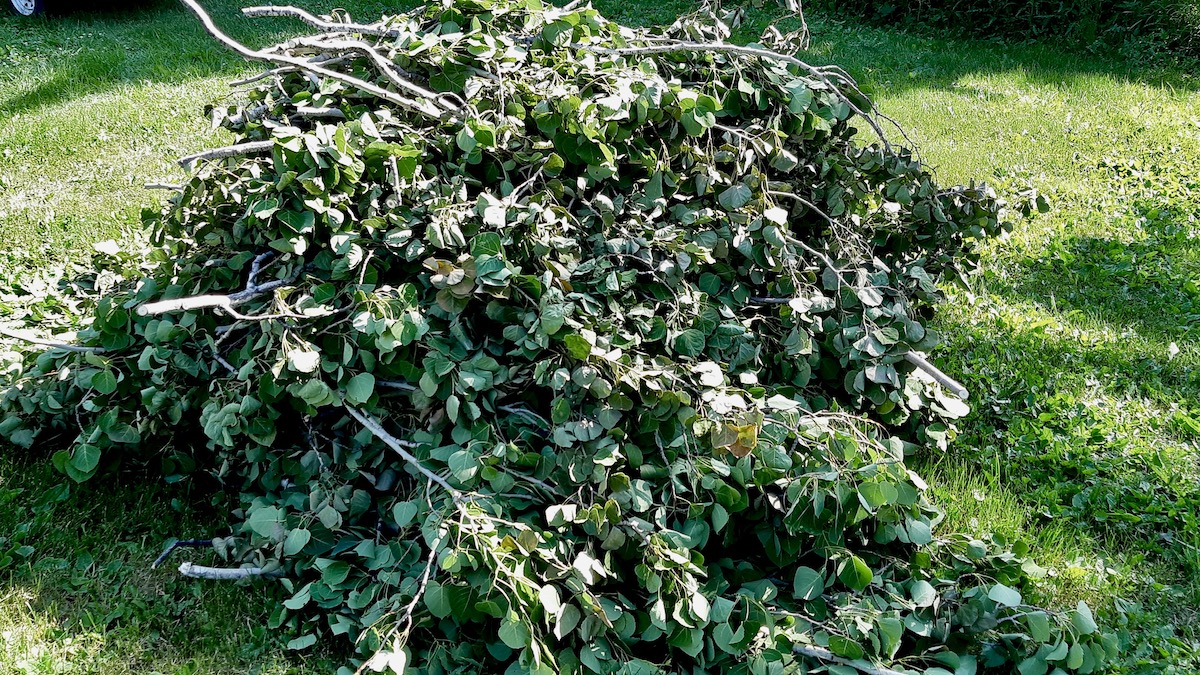
There’s a massive pile of poplar brush sitting out in the field right now. Branches, twigs, and leaves all heaped together and slowly baking under the summer sun. Normally it would be tempting to just burn it off and be done with it, but with hot, dry weather and fire restrictions across Northwestern Ontario, that’s not happening anytime soon. But for once, waiting isn’t a problem. It’s actually exactly what this pile of poplar needs.
Instead of treating it like waste, we’re getting it ready for a pit firing this fall. The bigger trunks have already been split and stacked for winter heat, so what’s left—the lighter brush, the leaves, the bark and branches are perfect firing material. It just needs time. Green wood is useless in a pit. It smokes too much, stalls the heat, and worst of all, can crack or even explode your pots.
Letting everything dry properly now is what makes the difference later.
Why Poplar Works So Well
Poplar is an odd one. It’s technically a hardwood, but it doesn’t behave like the heavy stuff. Once it’s dry, it lights fast and burns hot, which is exactly what you want when you’re trying to push heat quickly through a pit. We’re not looking for slow, controlled kiln conditions. We want movement, flame, and heat building in waves.
More importantly, it’s light. That matters more than people think. In a pit firing, clay pots are sitting right in the fire, not protected on shelves. Heavy woods like oak can turn into dense, collapsing chunks that crush everything underneath. Poplar breaks down into soft coals and ash. And as the fire settles, it shifts gently instead of dropping weight. It holds the work instead of destroying it.
Leaves, Bark, and the Good Marks
The real reason to keep all this brush isn’t just the burn … it’s what it leaves behind.
Poplar leaves and bark are full of organic material that reacts beautifully in a pit. When you pack dry leaves inside a pot or around it, you’re setting up carbon traps. As the fire burns and oxygen drops, those areas turn deep black, sometimes almost velvety. Around that, the smoke moves and stains the surface into shades of greys, silvers, and soft flashes of warmth.
No two pieces come out the same. We’ve never fired the clay here before, so we’re making a lot of guesses. We’ll probably get marks that feel like they belong to the fire itself, not something applied after. The whole process is raw, unpredictable, and that’s the whole point.
Letting the Season Do the Work
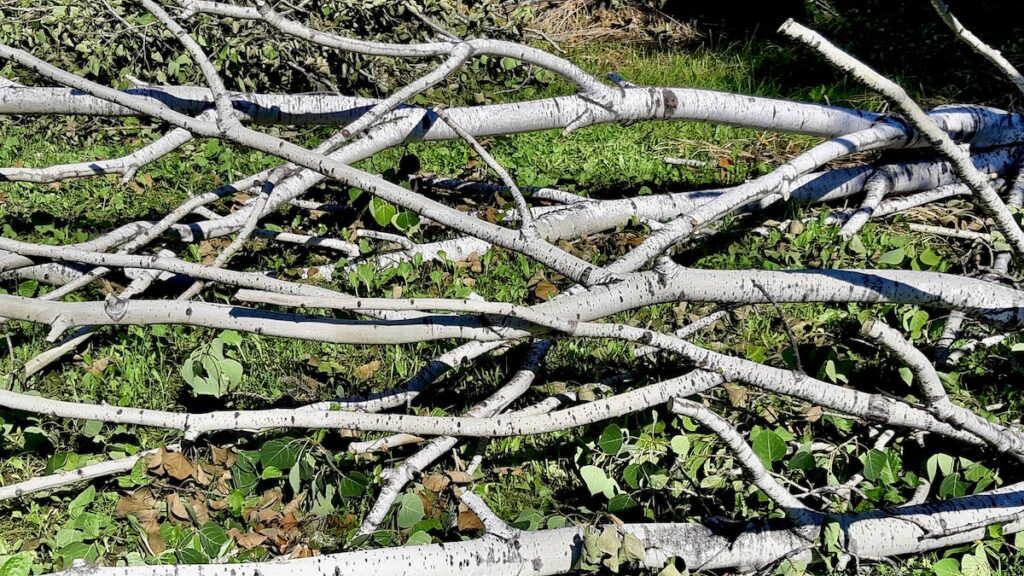
Right now, the job is simple: leave the pile alone and let it dry. By late summer, the leaves will be crisp and the branches will snap clean. That’s when we’ll know it’s ready.
And by early fall, when the fire restrictions are lifted and the air cools down, everything will line up. The fuel will be dry, the risk will be lower, and it will be a much better time to manage a long burn. We won’t be fighting heat or wind the same way we do in the middle of a hot, dry summer.
What started as clearing brush also turns into something useful. Nothing is ever wasted. The same material that needed to come off the land will become the fuel that finishes our experimental wild clay and pottery work.
That’s the plan for this next cycle: Cut, dry, fire, and see what comes out of it.
Summer Arts Incubator at Borups Corners
These activities are part of our Summer Arts Incubator program. During the summer months, we spend time working out of our small land-based lab in Northwestern Ontario, where the focus is hands-on, practical, and directly tied to the materials we can find and work with on the land.
This year, one of the main areas we’re focusing on is exploring the harvesting and processing of wild clay for use in pottery and ceramics. We’re testing what we can find locally, learning how to clean, refine, and prepare it, and eventually understanding how it behaves in different firing conditions. It’s a full process from ground to finished pieces, and we’re building that knowledge step by step as we go.
There’s no separation between learning and doing here. The brush piles, the clay testing, the firing preparation … it all connects. And almost all of it happens outside, in real conditions, with real materials. It’s straightforward work and a lot of fun. Stay tuned as we’ll post updates throughout the summer.