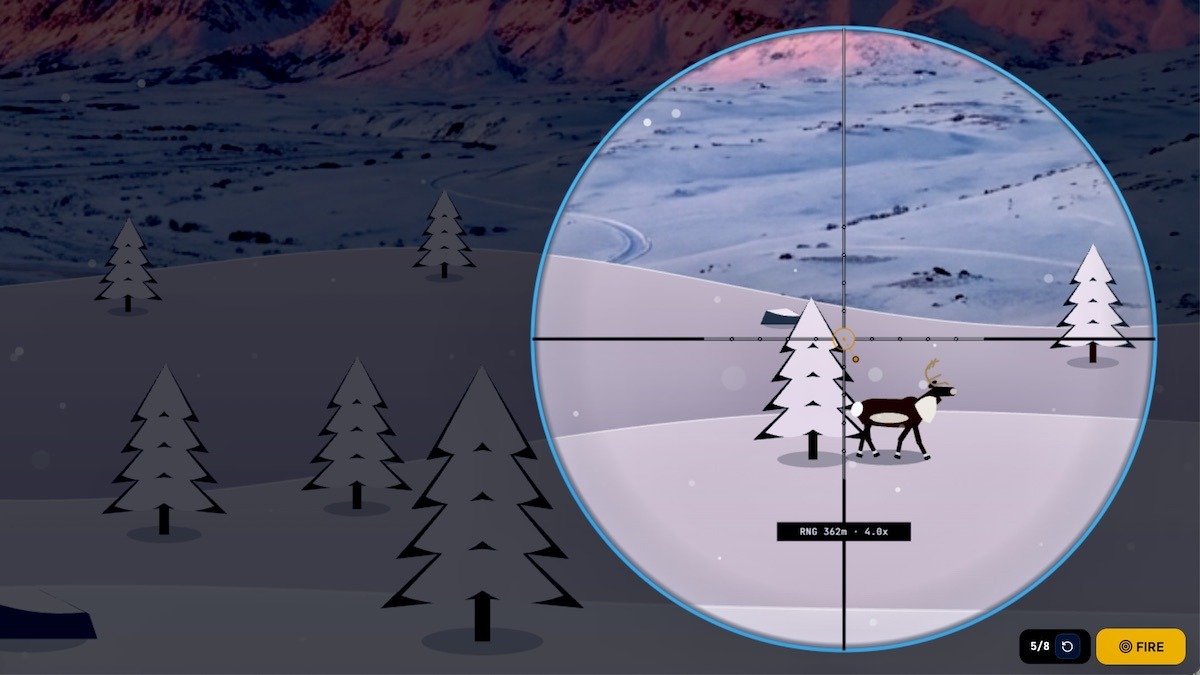
Exploring wind vector physics, optic reticles, and regional wildlife illustration in our favorite group activity.
Fall and winter always bring a distinct creative energy to our space. As the days shorten and the weather turns crisp, our workshop shifts into high gear around digital arts, creative coding, and interactive design. Few things bring a room together quite like taking a rough sketch on a tablet, writing the physics logic line by line, and watching it turn into a playable game right in front of you. Game design has easily become one of the absolute favorite activities in our program—it sits right at the intersection of visual story, math, sound design, and immediate, hands-on fun.
This week, we poured that energy into a brand-new project called Caribou Hunt. We wanted to build something that felt grounded in northern wilderness culture while giving players a satisfying, skill-based challenge. Set against three distinct northern environments—the spruce-lined corridors of Yukon Timberline, the vast open horizons of Brooks Tundra, and the shimmering icefields of Aurora Glacier—the game puts players in the boots of an arctic expedition marksman tracking woodland and trophy bull caribou across deep powder snowdrifts.
What started as a simple prototype quickly grew as everyone chipped in ideas. The visual team crafted realistic mountain backdrops and multi-layered parallax snow ridges, while the coding side focused on creating realistic ballistics. Rather than a simple point-and-click shooter, Caribou Hunt features dynamic easterly and westerly crosswinds, gravity bullet drop at long distances, a laser rangefinder, variable 1x, 4x, and 8x optical zoom levels, and a steady-breath mechanic complete with a visual stamina gauge and heartbeat audio. Players have to account for wind shear and distance lead before taking a shot, rewarding patience, precision, and vital-zone placement over blind rapid firing.
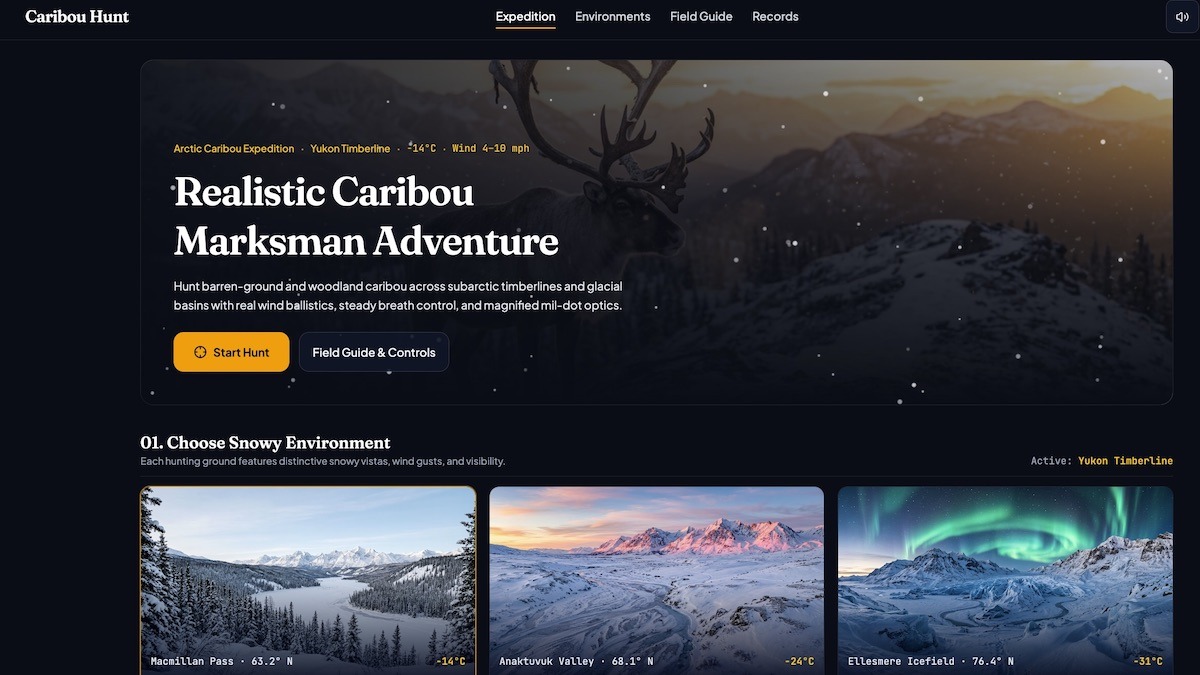
Beyond the shooting mechanics, we built out a complete expedition loop. Players progress through multi-stage quota challenges, manage their magazine reloads, track their vital hit streaks, and save their top scores into a local Lodge Records board. We also spent significant time making sure the game feels great across desktop monitors, tablets, and smartphones, designing floating touch controls and an adjustable vertical reticle offset so thumbs never block the target under the crosshair.
Building Caribou Hunt reminded us why game development is such a powerful tool for learning and community. It turns complex concepts like vector physics, canvas rendering performance, and responsive UI design into something tactile and rewarding. Most importantly, it gave us a chance to build something together that we genuinely love playing during our break time.
We would love for you to take Caribou Hunt for a spin and play the game directly in your browser. Give it a shot, test your aim against the northern winds, and let us know what you think. Should we keep expanding the project with new weather modes, seasonal animal behavior, or leaderboard features? Drop us a line—we’d love to hear your ideas as we keep building throughout the winter!