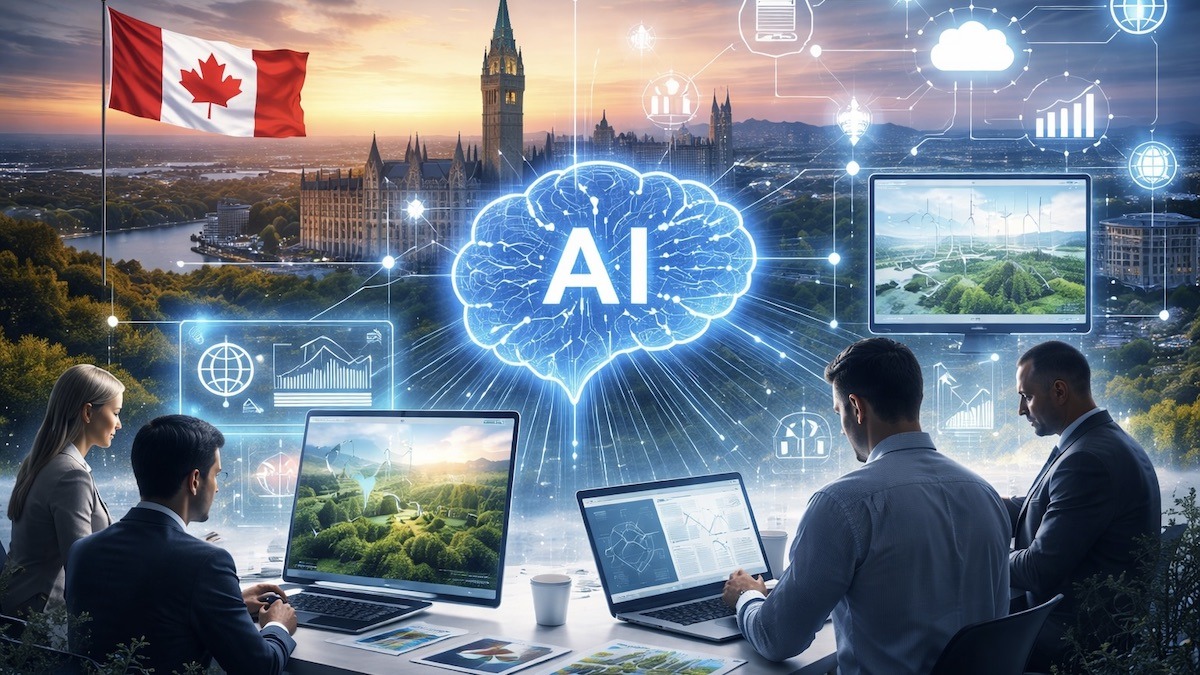
Grassroots organizations and Canada’s federal regulators are researching and integrating ethical AI technologies to streamline environmental reviews, Indigenous consultation, stakeholder analysis, and participatory regulatory engagement frameworks.
Canada’s Impact Assessment Agency 2026–27 digital modernization strategy includes deploying ChatGPT Enterprise and advanced automation to accelerate federal project reviews and regulatory efficiency.
Much like the global nuclear energy sector’s growing push toward securing, modernizing, and streamlining long-term infrastructure systems, the regulatory framework governing Canada’s major resource, infrastructure, and clean growth projects is undergoing its own sweeping digital transformation.
The Impact Assessment Agency of Canada (IAAC) has unveiled an ambitious strategy to integrate generative artificial intelligence into the federal impact assessment and environmental review system. Facing a strict federal mandate to complete comprehensive reviews of major designated projects within a compressed two-year timeline, the agency is leveraging AI-powered automation and digital transformation tools to reduce bureaucratic inefficiencies, lower rising technology costs, and strengthen strategic planning capacity.
According to the IAAC’s 2026–27 Departmental Plan, the cornerstone of this modernization initiative is the newly operationalized “Impact Lab.” This internal innovation incubator is tasked with developing, testing, and scaling AI-assisted workflows capable of processing vast environmental, economic, social, and regulatory datasets, helping transform the agency from a heavily manual processing system into a more agile, data-driven, technology-enabled oversight model.
The Internal Strategy: Increasing Productivity and Reducing Technology Costs
To build a more efficient and responsive federal impact assessment regime, the IAAC is introducing enterprise-grade artificial intelligence platforms, including ChatGPT Enterprise and Microsoft Copilot, directly into its operational workflows. Through the internal Impact Lab, the agency will focus simultaneously on individual productivity enhancement and enterprise-level automation systems designed to streamline document drafting, data synthesis, records management, and internal collaboration.
Federal officials anticipate that the deployment of AI technologies will generate measurable improvements in operational consistency, regulatory turnaround speed, and internal efficiency. Progress will be monitored through reductions in review timelines, decreased manual administrative workload, improved documentation consistency, and structured evaluation frameworks supported by pilot projects and user feedback surveys.
At the same time, the agency is positioning artificial intelligence as a strategic tool for reducing government operating expenses and shrinking its long-term digital overhead. Through process mapping, workflow automation, AI-assisted report drafting, and automated transcription of lengthy meetings and consultations, the agency aims to reduce documentation errors, minimize repetitive rework, and significantly accelerate regulatory processing timelines.
Notably, the IAAC also plans to utilize artificial intelligence to develop customized, license-free internal software solutions. This strategy is intended to reduce the federal government’s long-term dependence on commercial low-code and Software-as-a-Service (SaaS) platforms, helping lower third-party licensing costs and broader technology expenditures. The agency specifically notes that these cumulative technical efficiencies are expected to reduce employee overtime pressures, lessen reliance on temporary external staffing contracts, and reallocate personnel away from repetitive administrative processing toward higher-value analytical and policy-focused work.
Grassroots Innovation: Community-Based Research into Artificial Intelligence Adoption
While the federal government advances its top-down AI integration strategy, grassroots organizations are simultaneously developing parallel community-based frameworks to examine the social, ethical, and participatory dimensions of automated regulation. Regional creative innovation hubs such as Art Borups Corners and the Arts Incubator Winnipeg are actively researching how advanced machine learning technologies can support community-led participatory research into AI adoption within environmental and regulatory impact assessment processes.
Operating at the intersection of media arts, civic technology, digital literacy, environmental planning, and participatory research, these decentralized living labs are using community-based participatory research (CBPR) models to explore inclusive approaches to artificial intelligence adoption. Seeded in 2024–2025 through initiatives such as the OpenAI Researcher Access Program, the Arts Incubator Winnipeg and its Northwestern Ontario hub at Art Borups Corners are investigating how rural residents, Indigenous communities, artists, youth, and under-resourced populations can utilize generative AI tools to engage more effectively with complex federal impact assessment and regulatory systems.
By studying how northern, rural, and Indigenous communities adapt to AI-assisted documentation and automated regulatory environments, these independent research initiatives aim to ensure that machine learning technologies function as tools for community empowerment, environmental stewardship, digital inclusion, and local sovereignty rather than becoming barriers to meaningful public participation.
Re-Engineering Public Service Delivery and Regulatory Consultation
Beyond internal modernization and grassroots innovation, the integration of artificial intelligence is also positioned to fundamentally reshape how the IAAC manages public service delivery, stakeholder engagement, and regulatory communication. The Impact Lab is actively embedding AI-driven systems into workflows responsible for synthesizing large-scale industrial technical reports, generating automated records of decision, managing regional case backlogs, and improving information accessibility.
Within the 2026–27 fiscal cycle, the agency’s targeted applications for artificial intelligence include:
- Data Pattern Recognition: Scanning massive environmental and technical filings to identify emerging trends, automate repetitive administrative documentation, strengthen evidence synthesis, and streamline senior-level review and approval processes.
- Stakeholder Analytics: Utilizing AI-powered analytics to summarize extensive stakeholder feedback, identify emerging organizations and community groups relevant to the agency’s mandate, and generate aligned briefing documents, policy summaries, and executive speaking materials.
- Financial Program Administration: Applying machine learning tools to optimize internal budgeting processes while improving service standards connected to federal public participant funding and consultation programs.
Progress across these operational areas will be evaluated through the growing deployment and measurable performance of AI-enabled solutions integrated directly into the federal regulatory system.
The Human-Centred Mandate: Protecting Indigenous Consultation and Public Trust
Recognizing the complex constitutional, legal, and regulatory environment in which it operates—particularly regarding shared federal-provincial jurisdiction and the Crown’s Duty to Consult Indigenous Peoples—the IAAC is implementing a strict human-centred governance framework designed to address algorithmic risk, ethical accountability, and public transparency.
Through the Impact Lab, the agency is developing internal governance policies, AI readiness protocols, ethical safeguards, and data management standards intended to guide responsible artificial intelligence adoption. Importantly, the IAAC is requiring the use of standardized disclosure language across public-facing files whenever AI systems have been used to draft, edit, summarize, or compile official federal documentation. In parallel, a comprehensive bilingual training initiative is being implemented nationwide to ensure regional and headquarters staff can utilize emerging technologies safely, consistently, and ethically.
By delegating repetitive informational synthesis and administrative processing to machine learning systems, the agency expects to free up significant staff capacity for relationship-building and meaningful engagement with Indigenous communities. Rather than dedicating extensive time to summarizing consultations and preparing internal briefing documents, regulatory personnel will increasingly be able to focus on long-term collaboration, reciprocal engagement, and the integration of Indigenous Knowledge into final impact assessment outcomes.
Finally, the IAAC plans to pilot AI systems specifically designed to strengthen meaningful public participation within highly technical regulatory hearings and environmental review processes. By transforming thousands of pages of dense engineering, socio-economic, environmental, and health documentation into accessible plain-language summaries tailored for broader audiences, these AI tools aim to reduce longstanding informational barriers to participation.
Through clearer communication and simplified synthesis of complex material, federal officials anticipate that artificial intelligence could help foster more informed, transparent, inclusive, and equitable public dialogue surrounding Canada’s clean growth and resource development future.
About the Author