A look at the everyday maintenance keeping a regional arts collective running
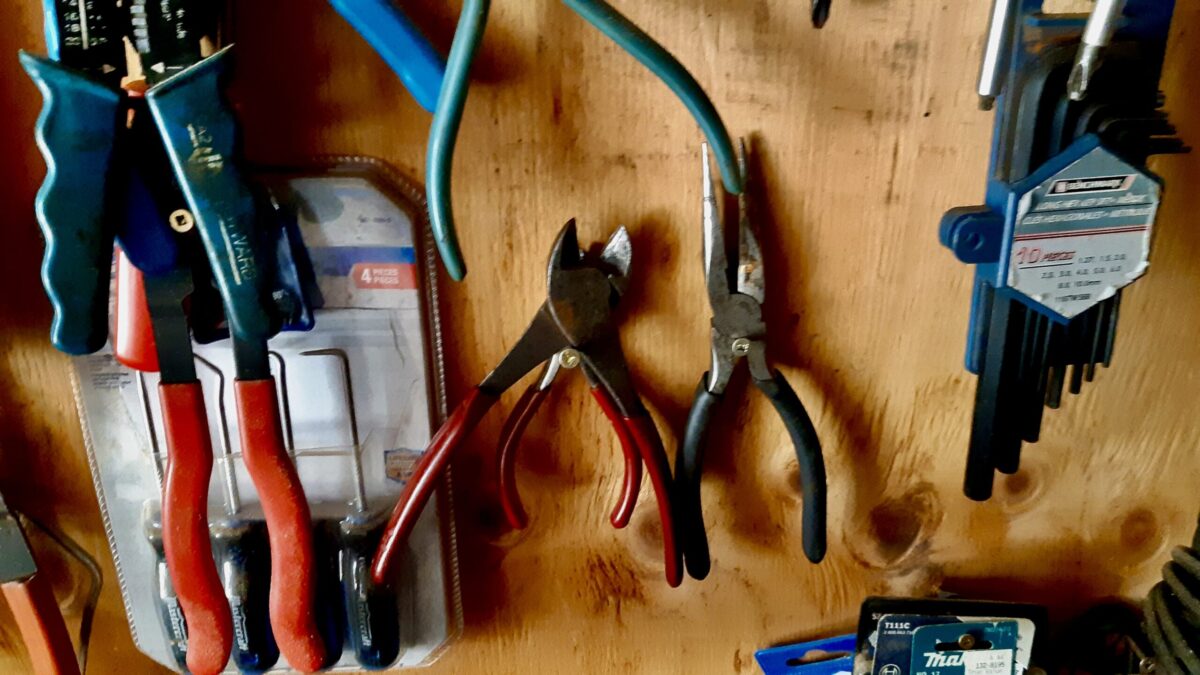
The tools hanging against the plywood wall of the shed are worn from use, their handles smudged with the grease and dirt of regular upkeep. Side cutters with faded red grips sit next to a pair of needle-nose pliers, while a plastic package of specialized hand tools and a set of Allen keys hang nearby. In a space that shifts between creative arts projects and community agriculture, these are the instruments that bridge the gap between the two.
While much of the public activity here centres on painting, mixed-media art, film, and digital storytelling, maintaining the physical infrastructure requires a different kind of labour. Keeping the facilities running is a constant, practical necessity. This weekend, the focus shifts entirely toward the community garden space, where the immediate task involves measuring materials and preparing to build a new set of raised planters.
Building planters is a straightforward response to the practical demands of food security in the region. It requires accurate measurements, sturdy construction, and basic carpentry tools rather than artistic theory. The work in the shed is quiet and methodical, centered on the physical realities of wood, hardware, and soil preparation before the planting season begins.