Exploring the history, harvest, and enduring warmth of Rhododendron groenlandicum.
If you’ve ever trekked across the wind-scoured tundra, spongy muskeg, or mossy forest floors across the North, chances are you’ve walked right past—or stepped directly on—one of the region’s greatest natural comfort foods. This weekend we’re having a blast with the team from Art Borups Corners berry picking and documenting wild plants.
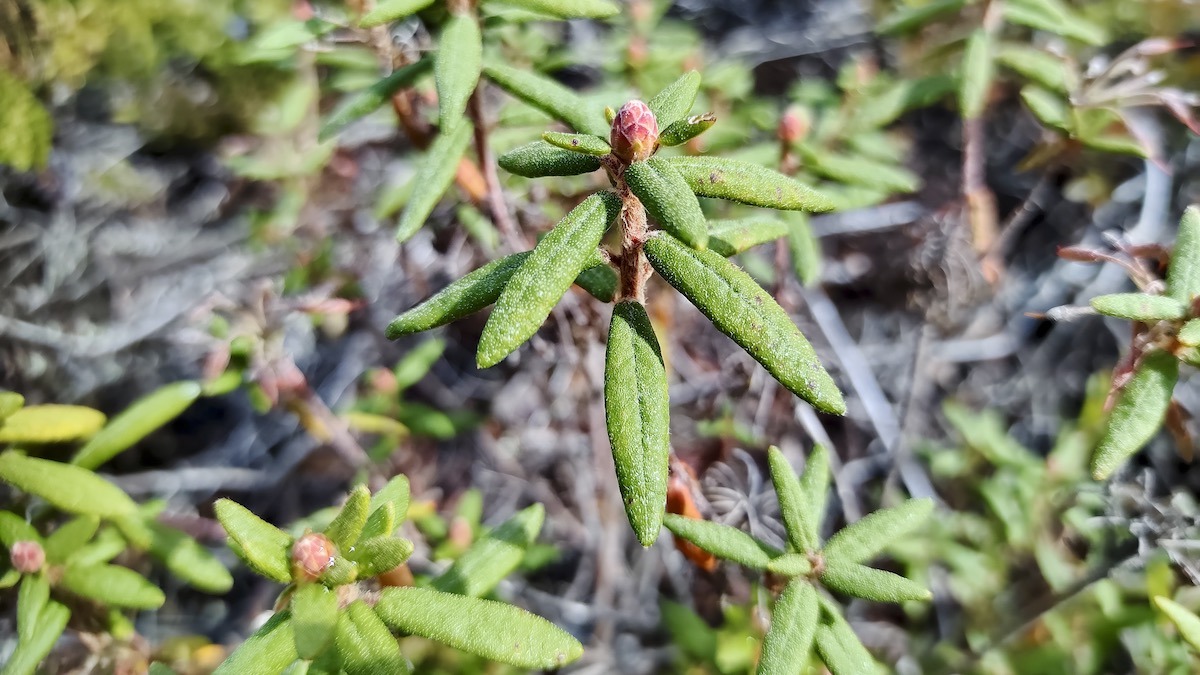
Tucked neatly alongside cushions of white reindeer lichen and thick beds of sphagnum sits Labrador Tea (Rhododendron groenlandicum). It doesn’t look like much at first glance: just a low, tough little shrub with narrow, dark green leaves. But flip a leaf over, and you’re greeted by a thick layer of fuzzy, rust-orange wool. That cozy fleece isn’t just for show—it’s nature’s built-in Arctic parka, engineered to trap moisture and help the plant survive brutal polar winds and sub-zero freezes that would turn lesser flora into slush.
For centuries, Indigenous peoples across Arctic and subarctic regions—Inuit, First Nations, and Métis communities alike—recognized that this resilient evergreen was a lifeline. Gathered carefully in late summer or during quick tundra thaws, the leathery leaves were dried and steeped into a rich, amber brew. The taste? Pure northern wilderness. It hits you first with a soft, woody sweetness, followed by an earthy, resinous pine kick that warms you straight down to your wool socks.
During the fur trade era, northern trappers, traders, and explorers quickly adopted the habit, often ditching expensive imported black teas in favor of what became known as “Hudson’s Bay Tea.” It was an indispensable trail companion—lightweight to carry, free for the picking, and loaded with the kind of grounding warmth needed after a long day hauling sleds or paddling freezing waterways.
Even today, harvesting Labrador Tea remains a quiet, cherished annual ritual. Across northern towns, outposts, and remote camps, heading out onto the land to gather a pouch of leaves is a reason to slow down and stay connected to traditions that stretch back countless generations.
Making a cup is simple, though it comes with classic northern foraging rules: pick respectfully, leave plenty behind, and always double-check for that telltale orange fuzz beneath the leaves (to avoid accidentally plucking its toxic lookalike, Bog Laurel). Steep a small handful in hot water for five to ten minutes, add a spoonful of honey if you have it, and take a sip. You aren’t just drinking tea—you’re tasting thousands of years of northern endurance.