Modest legislative strides pulled Manitoba out of the D-range, but policy gaps in rental assistance and northern food security continue to trap households.
Manitoba provincial grocery tax cuts and childcare fee relief trigger minor progress, yet food banks see record demand
WINNIPEG — Manitoba has emerged as one of the top-performing provinces in a national evaluation of poverty reduction, though frontline advocates warn that structural failures continue to leave the province’s most vulnerable residents in severe distress.
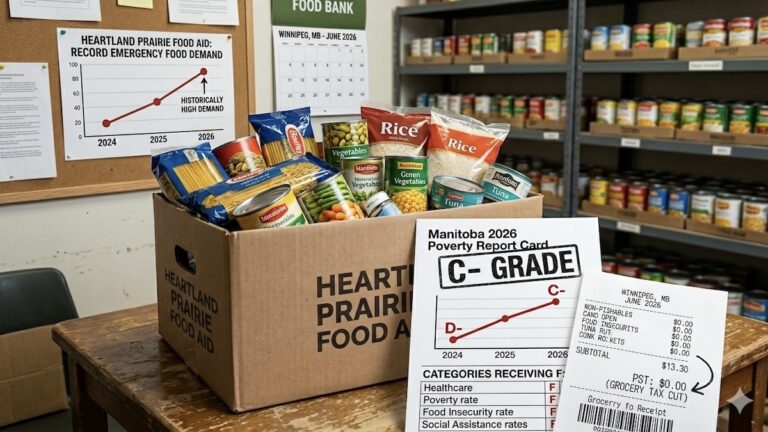
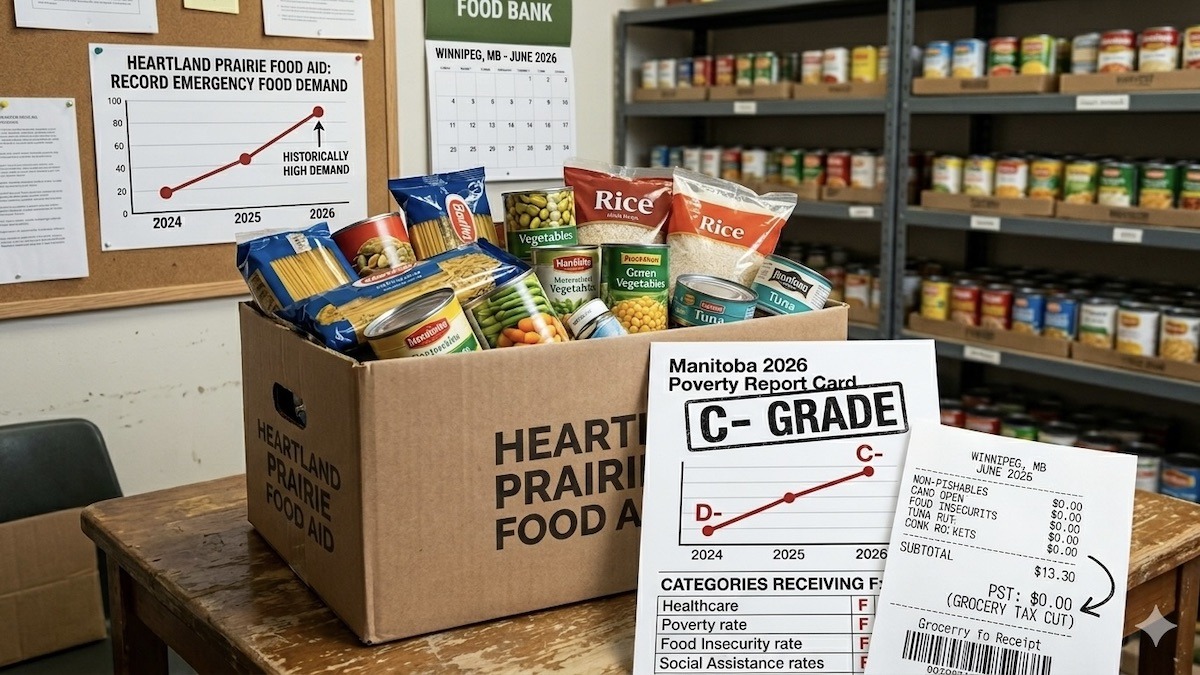
According to the Food Banks Canada 2026 Poverty Report Cards, Manitoba secured a C- grade, ranking as the second-highest provincial score in the country behind only Quebec, which received a C grade. This mark represents a notable multi-year upward trajectory for the province, which had plummeted to a dismal D- baseline in 2024. The turn-around earned Manitoba a strong B grade for legislative progress this year.
The report attributes Manitoba’s elevated standing to several decisive legislative steps enacted by the provincial government, specifically highlighting the elimination of the provincial sales tax (PST) on groceries effective July 1, 2026, and the complete removal of childcare fees for low-income families. This landmark childcare policy affects approximately 3,500 families and 5,000 children, marking the first time any Canadian government has made childcare entirely free for those who need it most.
However, frontline hunger relief networks stress that these policy victories have not stopped the influx of citizens requiring emergency assistance. Local food banks are still battling historically high demands. Advocacy groups emphasize that a C- grade should not be treated as a political triumph, as everyday affordability pressures mean even individuals with full-time employment are increasingly unable to keep pace with basic costs.
Manitoba’s underlying social volatility is exposed in the report card’s specific sub-categories, where the province received a straight F grade across four critical areas: access to healthcare, the overall poverty rate, the food insecurity rate, and the utter inadequacy of provincial social assistance rates.
Most alarming is Manitoba’s healthcare system performance: a staggering 56 per cent of Manitobans report having difficulty accessing healthcare, which represents the worst rate for this indicator in the entire country. Furthermore, Manitoba’s food insecurity rate remains locked at a failing 27.9 per cent, and its provincial poverty rate stands at 12.3 per cent, both tracking well above the national averages.
The vast majority of people currently accessing emergency food services in Manitoba are recipients of the province’s low-indexed Employment and Income Assistance (EIA) framework. Critics note that the provincial government has frozen core EIA rates for a fourth consecutive year. Over this exact four-year period, food costs have spiked by approximately 20 per cent, meaning the 30,000 households reliant on provincial welfare have experienced a compounding decline in real purchasing power. Currently, Manitoba’s social assistance covers a meager 39 per cent of the poverty line for single adults, while disability assistance covers 59.6 per cent.
Despite these deep income gaps, Manitoba stands out as a national bright spot for housing affordability and material well-being. Only 33 per cent of Manitobans spend 30 per cent or more of their income on housing—earning a C- and securing the best result of any province in Canada. Additionally, households spend 53.2 per cent of their income on fixed costs outside of housing, which is the lowest in the Prairies and a massive drop from the 62.12 per cent recorded in 2025. This positive shift is mirrored in Manitoba’s Material Deprivation Index, which rose to a B-. Severe deprivation fell to 18 per cent (the second-lowest in Canada behind Quebec), while moderate deprivation dropped sharply from 34 per cent down to 26 per cent, representing the single sharpest drop in the country.
To bridge the remaining structural gaps, Food Banks Canada has put forward five targeted recommendations for Manitoba: immediately improving provincial rental assistance programs by raising Rent Assist thresholds by 20 per cent, expanding EIA earnings exemptions while strengthening the Rewarding Work Allowance, designing a dedicated youth employment and training strategy, establishing targeted interventions for northern food insecurity, and drafting a comprehensive poverty reduction strategy tailored to single adults and Indigenous populations.
About the Author