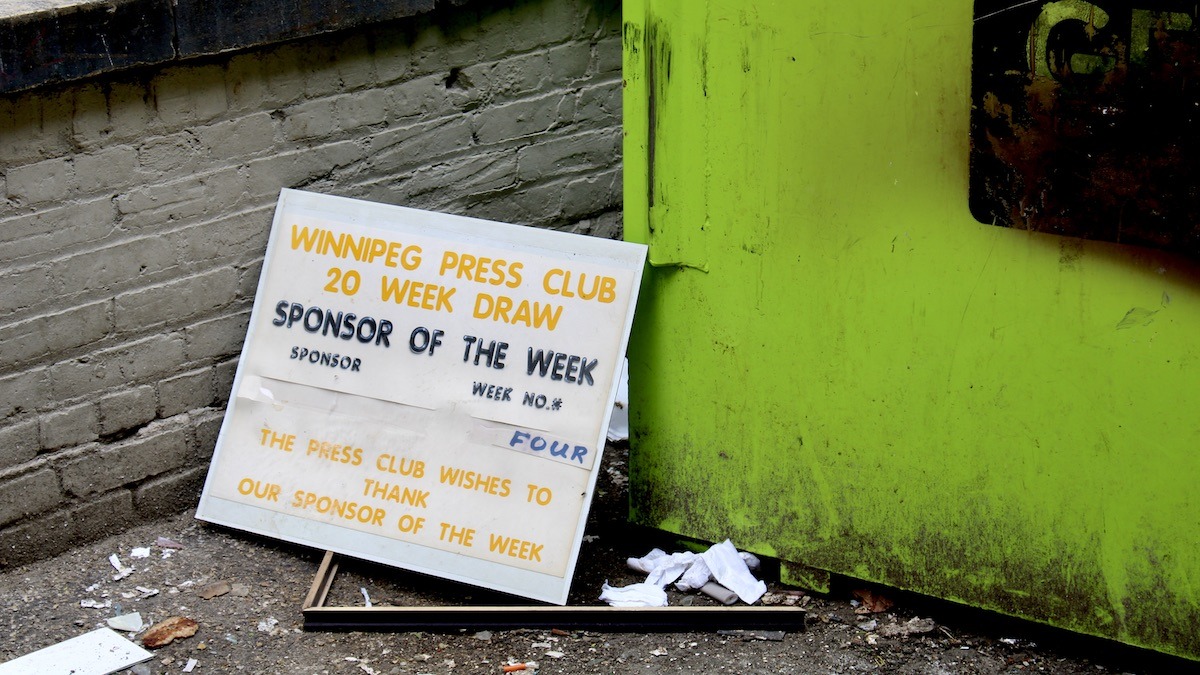
How a stack of abandoned signage beside a downtown dumpster tells the final, heartbreaking story of the historic Winnipeg Press Club.
The stories that shaped Western Canada didn’t start in sterile newsrooms or corporate boardrooms; they were hammered out in a haze of tobacco smoke, cheap draught beer, and late-night arguments.
For over a century, the Winnipeg Press Club was the rowdy, brilliant heart of the city’s media landscape. Established in 1887, it stood as the oldest institution of its kind in Canada—a sanctuary where fierce rivals from competing broadsheets could drop their guards, talk shop, and roast the politicians they covered by day.
This wasn’t just a bar; it was a cultural crucible. Legendary figures held court there, including a young Winston Churchill, who famously spoke to the club as a war correspondent in 1901 just as news arrived of Queen Victoria’s death. From pioneering women reporters fighting for desk space to generations of investigative titans, the club fostered a relentless standard of Canadian journalism that bound the community together through floods, strikes, and wars.
That proud legacy makes this sight beside a downtown dumpster feel like a physical gut punch.
The club survived decades of changing media, moving from home to home before finally winding down its permanent operations in the late 2000s and fading into history. Seeing these hand-lettered raffle boards and sponsor placards tossed into the alleyway garbage like obsolete office junk is a tragic reminder of how casually we discard our own social fabric.
When an institution like the Press Club vanished, we didn’t just lose a venue; we lost the living memory of the people who held power to account. Leaving these artifacts to rot in the rain is an insult to the generations of storytellers who built Winnipeg’s identity, proving that the most dangerous threat to a city’s heritage isn’t time—it’s collective amnesia.