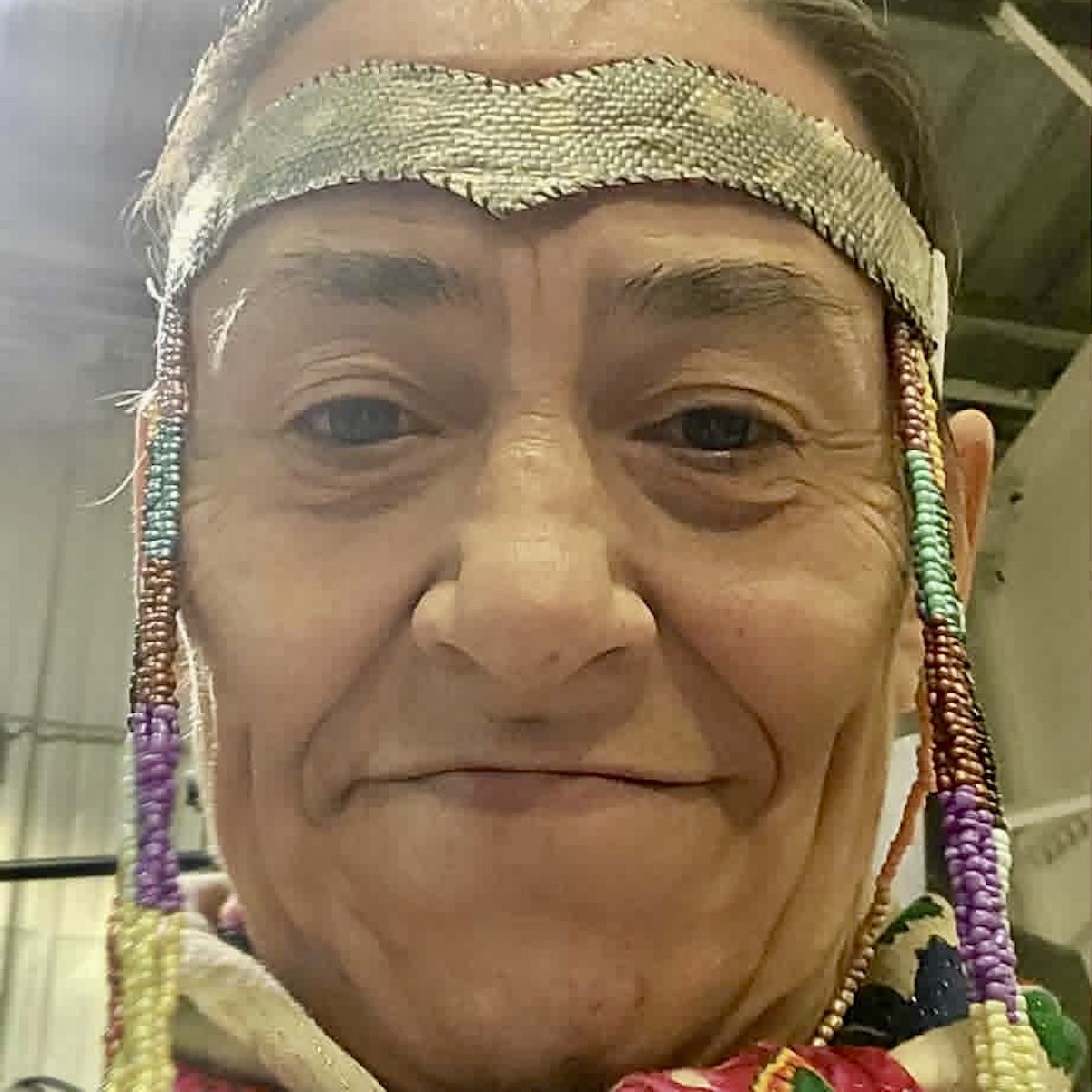
Honoring the Whole Catch: The Art of Fish Skin Crafting
For generations, Inuit have lived by a deeply respectful philosophy: when you take something from nature, you use every single part of it. Nothing goes to waste.
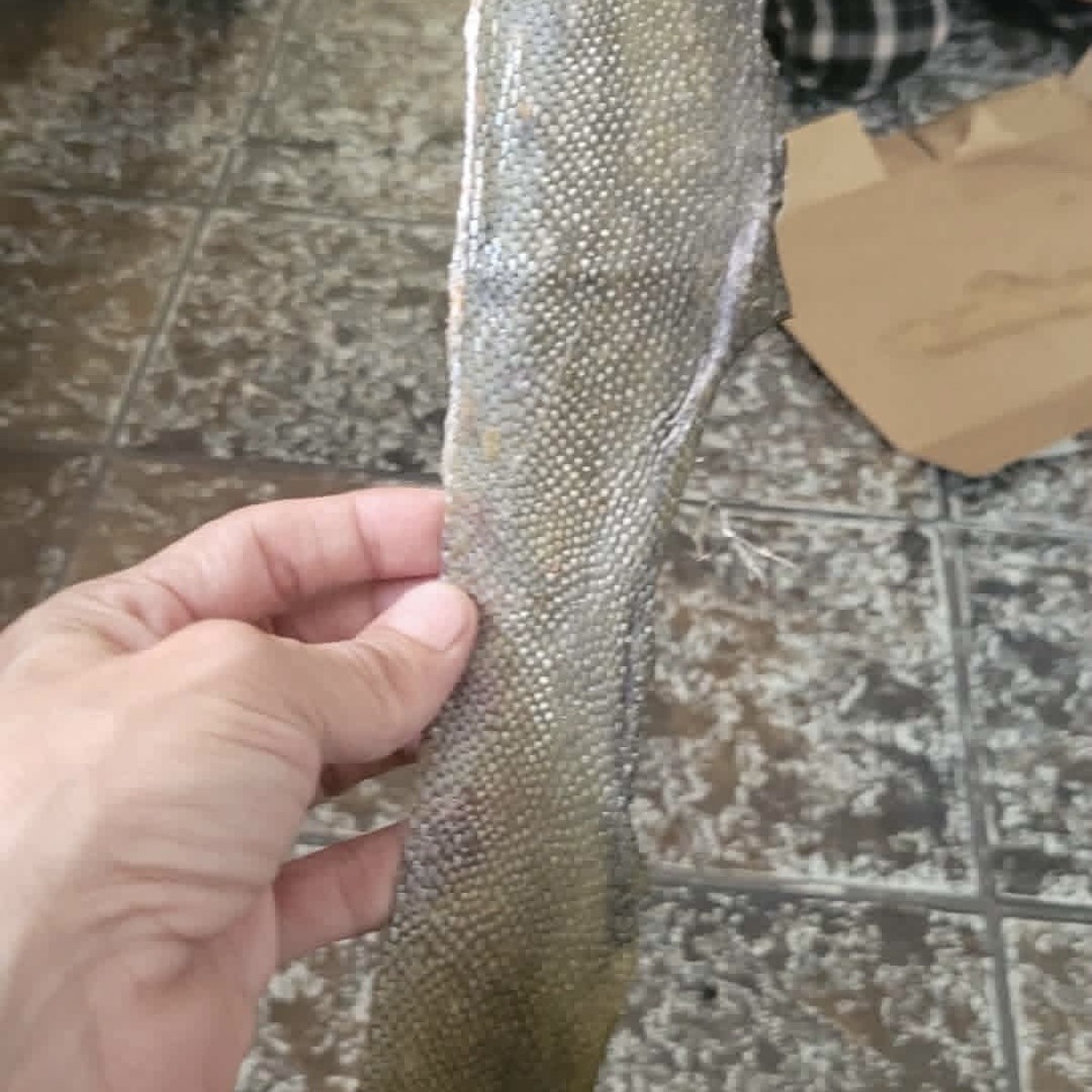
While most modern kitchens throw the skin of a fish straight into the garbage after dinner, traditional practices look at that same skin as a valuable, durable resource. Learning to make qairuti—traditional headbands—out of fish skins is a beautiful way to reconnect with this mindset. While Arctic char is perfect for this because of its strength and texture, you can actually use all sorts of different fish depending on what is local to your area.
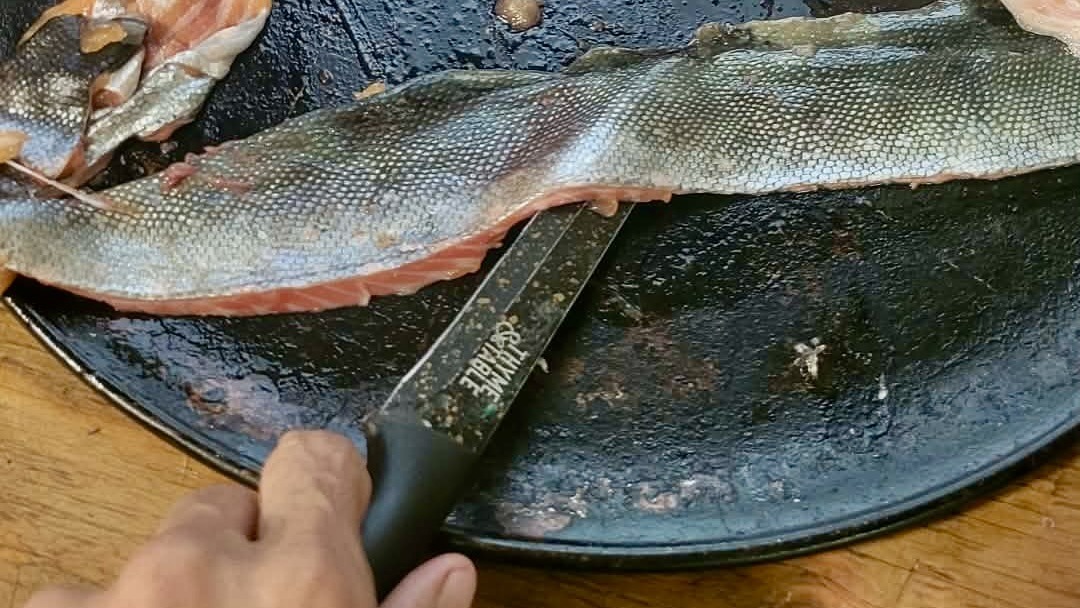
The process is incredibly straightforward, requiring patience rather than expensive tools. The first step begins right after the fish is caught (or as you’re eating it!). Using a sharp knife, you carefully cut the skin away from the meat, keeping the strip as whole and intact as possible.
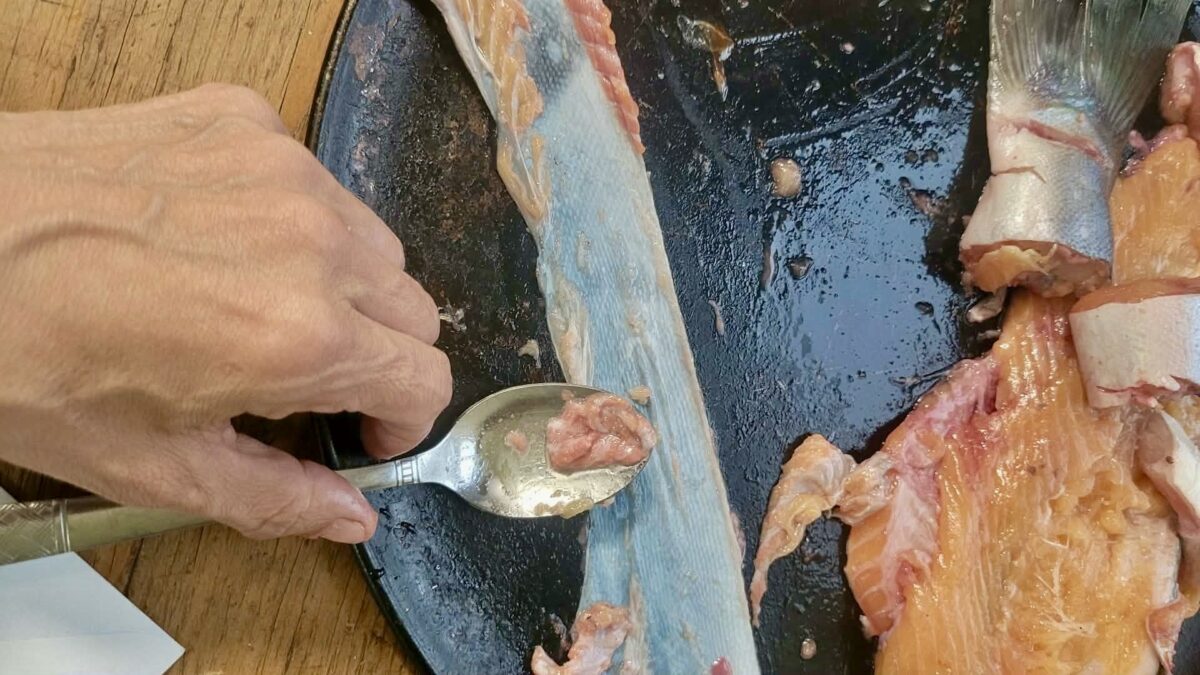
Once the skin is separated, the real preparation begins. You take a simple kitchen spoon and gently but firmly scrape away any remaining bits of pink flesh or fat from the inside of the skin. This step is important because leaving any meat behind will cause the skin to spoil.
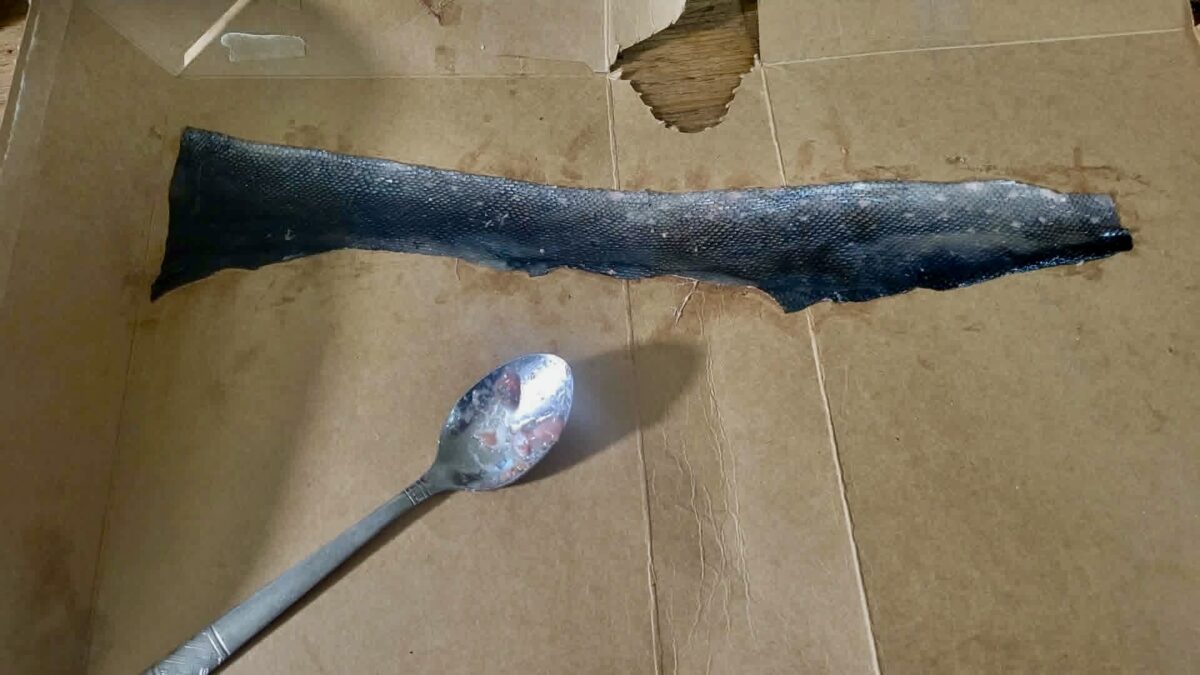
Once the skin is completely clean and smooth, it needs to dry. Laying the strip flat on a clean piece of cardboard allows the cardboard to absorb the moisture evenly from underneath while the air dries the top. Over time, as the moisture evaporates, the skin transforms. What started as a slippery, delicate piece of fish skin cures into a tough, flexible, and surprisingly strong strip of material that is ready to be used.
What makes fish skin so incredible is just how versatile it is. Long before modern synthetic plastics and waterproof fabrics existed, many northern Indigenous cultures relied on fish skins for survival. Beyond making things like qairuti, people crafted entirely waterproof boots, heavy-duty storage bags, mittens, and even lightweight summer clothing. Because fish scales and skin fibres overlap in a natural cross-hatch pattern, the material is remarkably strong, wind-resistant, and naturally water-repellent when treated properly.
Passing on Traditional Skills for Artists
As we look toward the future, teaching these skills to younger generations is about more than just preserving history. It is about shifting how we think about the world around us. Nature already provides us with elegant, functional solutions to our everyday needs.
For future artists and creators, learning these traditional crafting skills opens up a whole new world of raw, texture-rich media to experiment with, connecting modern creativity directly to ancestral roots. This is a truly fantastic project to try at home, in a classroom, or in a studio, revitalizing a remarkably resilient resource that has been relied upon for thousands of years.
Crafting with fish skin is entirely low-cost, relies on a byproduct that many people often throw away, and requires absolutely zero store-bought chemicals or non-biodegradable plastics. By looking back at these ancient practices and passing them on, we can find a truly sustainable path forward—one that honors the earth, reduces waste, and inspires the next generation of mindful makers.