Wild Clay Processing and Pit Firing Research Continues Despite Fire Restrictions
Like many people across Northwestern Ontario, our summer plans have been shaped by an exceptionally active wildfire season. Ongoing fire restrictions have meant that our first pit firing experiments, and the opportunity to test our wild-harvested clays, have been postponed until at least September.
While we’re anxious to begin firing, safety comes first, and the current conditions make open firing inappropriate.
The delay, however, has not slowed us down! Instead of standing still, we’ve been using the summer to gather, process, and organize the materials that will eventually make up our first boreal pit firings. By the time fire restrictions are lifted, we will have built a substantial collection of local resources and will be ready to begin our series of carefully planned experiments.
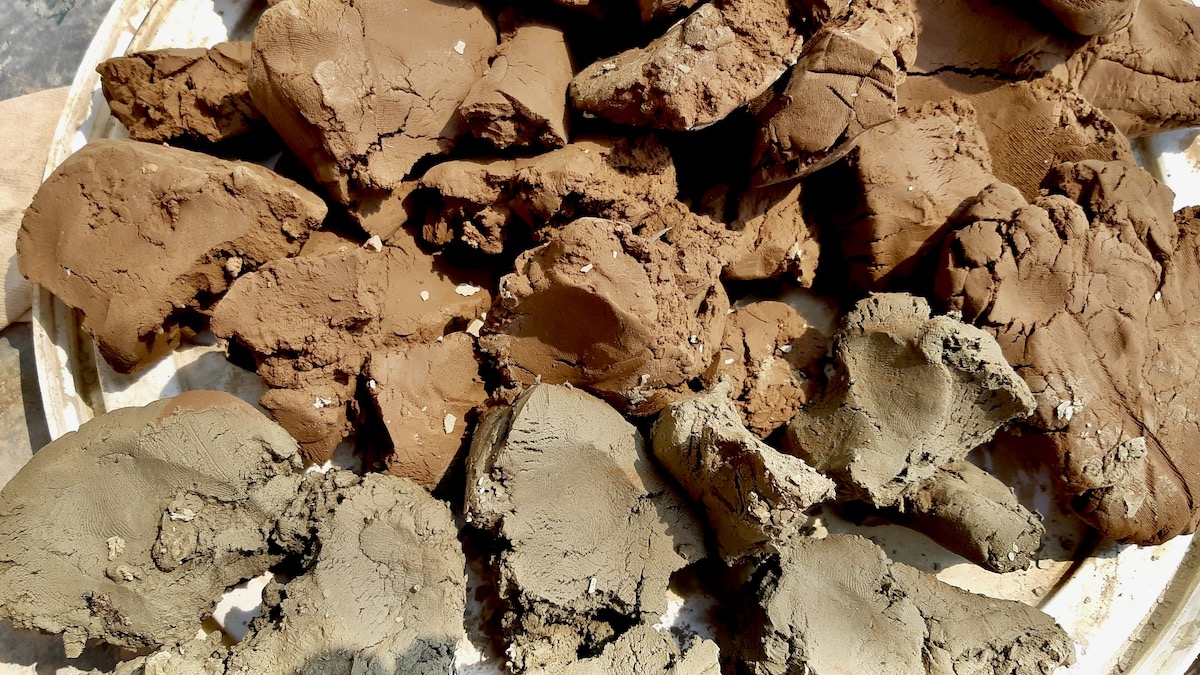
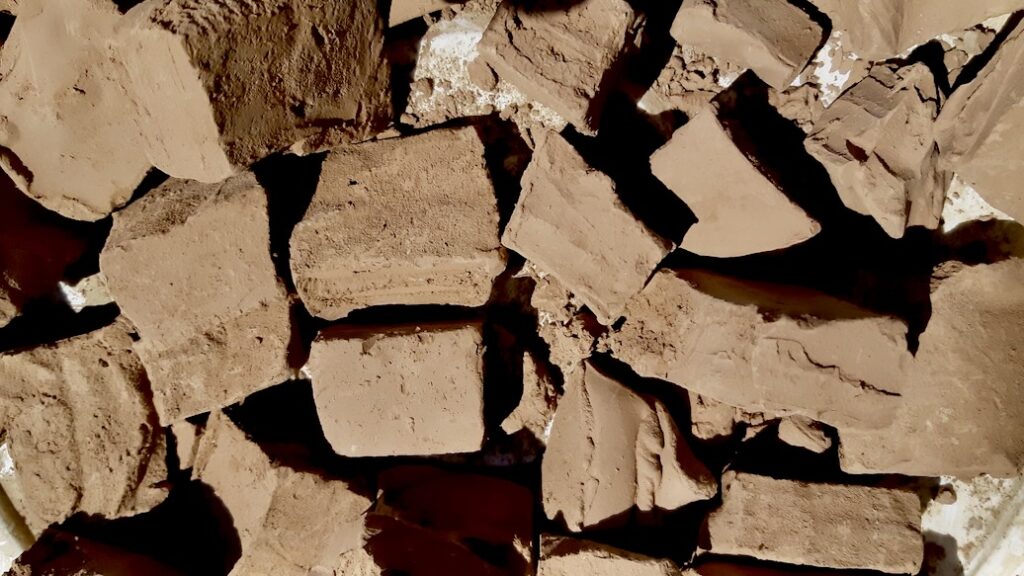
In fact, this has become one of the largest hands-on projects our arts incubator and living lab program have undertaken this summer, and one of the most enjoyable. Our team has been involved in every stage of the process, from harvesting multiple samples of grey and varved (red) glacial clays, to slaking the clays in water, straining out roots and stones, allowing it to dry, and finally crushing it into a fine powder for long-term storage. Along the way, we’ve learned how different clays behave, compared their plasticity and texture, and begun building an inventory for future ceramic work. The project has been equal parts scientific experiment, artistic exploration, and an opportunity to spend time outdoors learning directly from the landscape. It’s also been a lot of fun!
Birch Bark and Sawdust
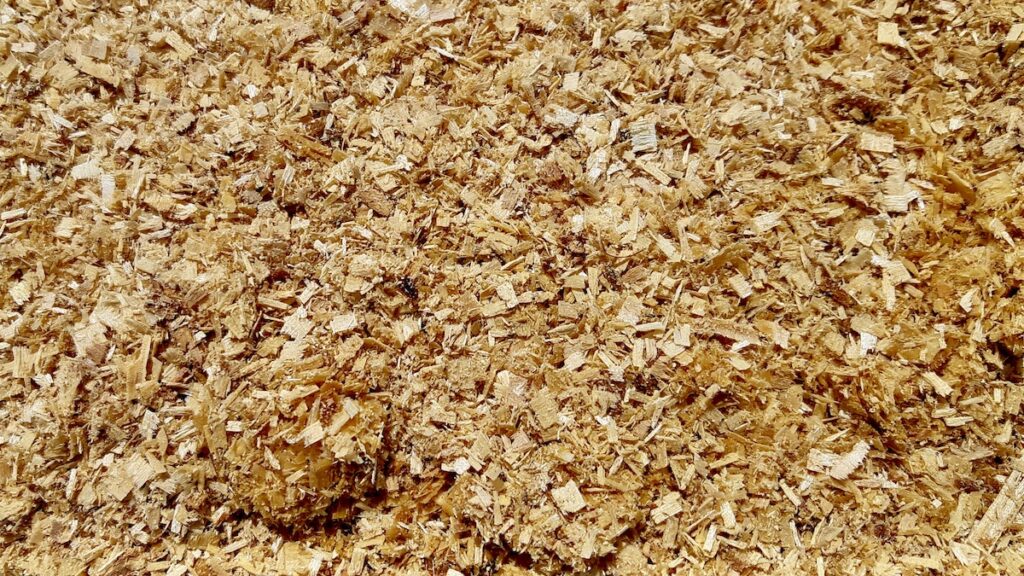
One of the biggest milestones has been the collection of roughly 200 litres (about 7 cubic feet) of birch bark sawdust and loads of birch bark. Birch is an excellent material for pit firing. It burns readily, produces dense smoke, helps create reducing conditions around pottery, and can leave distinctive carbon markings on ceramic surfaces.
Alongside the sawdust, we’ve collected about 4 cubic feet of mixed poplar and pine wood ash. Wood ash has long been used in ceramic traditions around the world. Rich in minerals such as calcium and potassium, it acts as both an insulating material and a source of natural surface variation during firing. Even when it doesn’t melt into an ash glaze, it can contribute subtle textures and colours that can’t be replicated with manufactured materials.
Our fuel supply is also steadily growing. We have access to abundant birch, poplar, and pine firewood, as well as leaves and other forest materials that can be incorporated into experimental firings. Each species burns differently. Birch produces steady heat and excellent smoke, pine ignites quickly because of its natural resins, and poplar provides a longer, more even burn. Leaves and other organic materials can create localized smoke effects, carbon trapping, and unique surface patterns where they come into contact with the clay.
Everything is Local
Perhaps most exciting is that all of these materials will be paired with our own wild-harvested local clays collected right here in Borups Corners. Rather than relying entirely on commercial clay bodies and purchased firing materials, we are gradually developing a ceramic process rooted in our own local environment. The clay, the firing fuels, the ash, and many of the organic materials all come from our community.
This transforms our project from just making pottery into an investigation of place. Each firing will become an opportunity to learn how these local clays respond to local materials. How does birch compare with poplar? Does pine produce different carbon patterns? How does a thick layer of wood ash differ from a deep bed of birch bark sawdust? How do different firing atmospheres influence our grey and varved clays?
These questions can’t be answered from books alone. They require experimentation, careful observation, and repeated testing.
Many published pit-firing techniques are based on deserts, grasslands, or temperate hardwood forests. Comparatively little has been documented about ceramic firing with the materials of Canada’s boreal forest. So this project offers us an opportunity to explore that relationship and to develop knowledge grounded in the landscapes of Northwestern Ontario.
Although we are still waiting for the right conditions to light our first pit fire, the work is already well underway. Every bucket of birch bark sawdust, every shovel of wood ash, every piece of locally harvested firewood, and every batch of processed wild clay represents another step toward a ceramic practice built from the forests, soils, and geological history of our local surroundings.