Federal committee members voted to spend more than $54,400 visiting southern Ontario nuclear hubs, leaving northwestern Ontario—and the communities facing 1,700 kilometres of waste shipments—off the itinerary.
OTTAWA — Federal MPs studying the future of Canada’s nuclear sector have approved more than $54,400 in public funds to tour nuclear hubs across southern Ontario—while scheduling zero stops in the northwestern Ontario communities slated to store the industry’s most toxic radioactive waste forever.
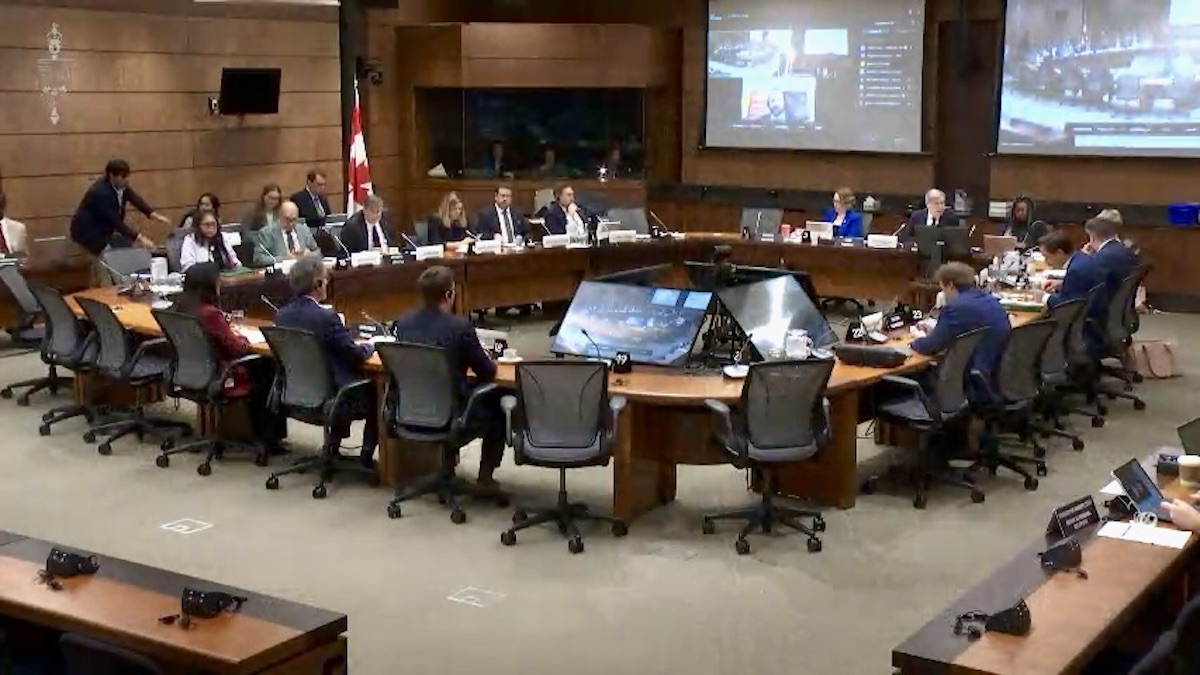
During routine business at the House of Commons Standing Committee on Natural Resources on Monday, November 16, 2026, MPs adopted a $54,453.60 travel budget to visit facilities in Toronto, Kincardine, and Hamilton as part of their ongoing study of Canada’s nuclear industry.
Moments later in the very same meeting, committee members sat down to question Nuclear Waste Management Organization (NWMO) CEO Derek Wilson over the agency’s $26-billion plan to bury roughly 5.9 million used nuclear fuel bundles at the Revell site between Ignace and Dryden—and haul that waste an average of 1,700 kilometres north along Trans-Canada Highway and rail corridors.
Southern Stops, Northern Blind Spot
The approved itinerary takes MPs straight to the heart of southern Ontario’s nuclear power and research corridor—home to Bruce Power in Kincardine, McMaster University’s nuclear reactor in Hamilton, and corporate headquarters in Toronto.
Noticeably absent from the travel budget are Ignace, Dryden or the directly adjacent unorganized Melgund Township communities of Dyment and Borups Corners—all of which sit along the proposed burial site, the downstream English-Wabigoon watershed, or the undivided two-lane highway and rail routes expected to carry thousands of radioactive shipments.
For critics across northwestern Ontario, the lopsided itinerary captures a long-standing grievance: southern Ontario generates the electricity and reaps the industrial jobs, while northwestern Ontario is expected to absorb the permanent geological and transportation risks without receiving the same face-to-face scrutiny from federal decision-makers.
High Stakes as Ottawa Weighs Fast-Tracking
The committee’s southern-only travel plans come at a critical juncture in Ottawa. The NWMO is currently pushing to have its northwestern Ontario dump designated a “Project of National Interest” under the federal Building Canada Act, a designation regional councils and First Nations warn could compress environmental reviews into a rigid one-year clock.
Downstream municipalities including Dryden and Thunder Bay, the Northwestern Ontario Municipal Association (NOMA)—which represents 37 northern councils—and major Indigenous organizations including Grand Council Treaty #3, Nishnawbe Aski Nation, the Anishinabek Nation, and the Chiefs of Ontario have all raised serious objections over missing regional consent, unassessed transport hazards, and the lack of municipal emergency-response funding.
During his testimony, Wilson acknowledged that hauling radioactive waste across the province falls outside the NWMO’s direct mandate—leaving northern communities questioning who will answer for highway and rail safety once shipments begin.
While Ottawa is fixated on designating the dump itself as a fast-tracked “Project of National Interest,” federal lawmakers are ignoring the far broader footprint introduced under Bill C-39: Regions of National Interest (RONIs)—geographic zones where Ottawa can pre-clear sweeping industrial and infrastructure corridors under compressed timelines. If the federal government is preparing to lock northwestern Ontario into a multi-generational radioactive burial and transport corridor, visiting the region is not optional—it should be mandatory.
Canada cannot legislate a Project or Region of National Interest from a boardroom in Toronto or a reactor tour in Kincardine. MPs must see firsthand the single-lane Trans-Canada Highway bottlenecks, the volunteer-staffed municipal recreation halls, the unorganized townships like Melgund with no municipal council to speak for them, and the interconnected rivers of the English-Wabigoon watershed before handing cabinet permanent powers to fast-track nuclear waste across northern Ontario.
With $54,453.60 earmarked to hear from nuclear operators in southern Ontario, northwestern residents are left watching from afar as MPs tour the power plants—but bypass the communities expected to live with the waste.