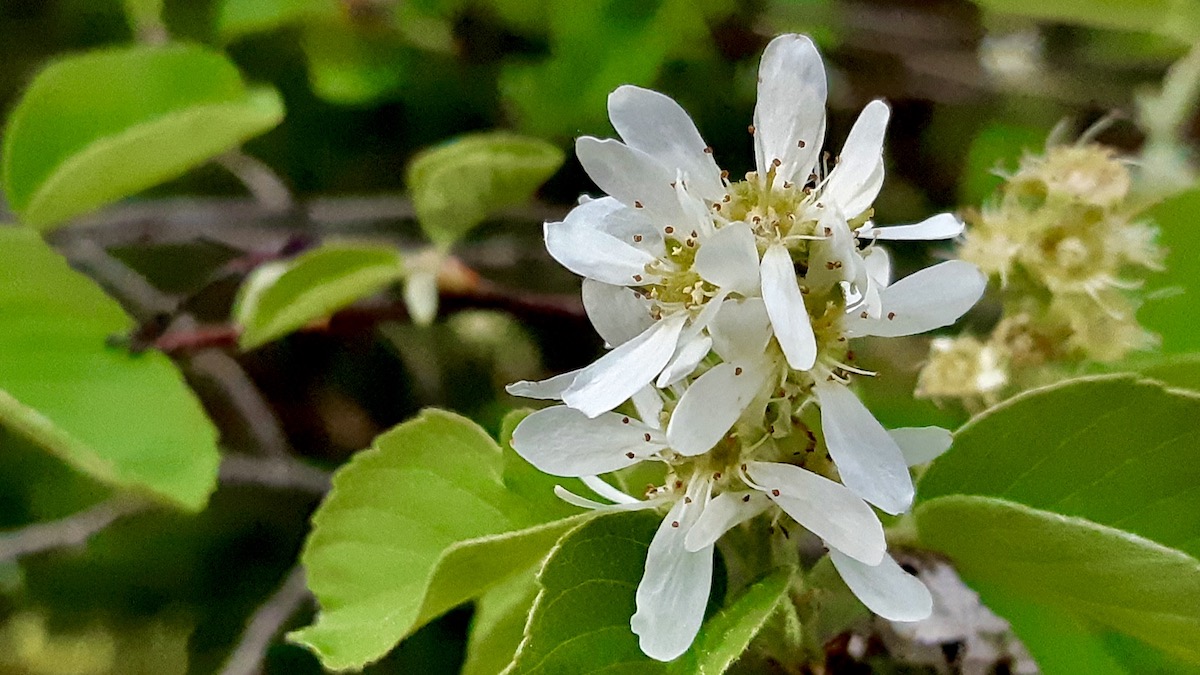
Celebrating the Late Bloom of Our Saskatoon Berries
The arrival of the Saskatoon berry blossoms is one of the most anticipated signs of spring in Northwestern Ontario. This year, the wait was a little longer than usual, with the snowy white petals making their appearance nearly two weeks behind schedule. In a region where winters linger, watching these resilient shrubs finally burst into bloom is a true milestone. It signals that the warm weather is genuinely here to stay, sparking excitement for anyone who loves foraging and watching the local landscape wake up.
Tracking the shifting timelines of our local flora is a rewarding way to connect with the seasons. While the delayed flowering might mean a slightly shifted calendar for the upcoming harvest, these hardy native plants are remarkably well-adapted to the unpredictable rhythms of the northern climate.
From Shaggy Blossoms to Deep Purple Bounties
The delicate, strap-like petals currently on display will soon give way to the main event. Over the next couple of months, those pollinated flowers will transform into clusters of small, round fruit. Watching this progression is a masterclass in nature’s timing. The berries start out small and green, blush into a vibrant red, and eventually deepen into a rich, dusty purplish-black when they hit peak ripeness in mid-to-late summer.
Though they look remarkably like blueberries, Saskatoon berries are actually more closely related to apples and pears. This botanical connection gives them a distinct, complex flavor profile. They are sweet and earthy, with a subtle, almond-like hint that comes from the tiny seeds inside the fruit.
Saskatoon Berries: A Northern Staple for Kitchens and Wildlife
Saskatoon berries hold a legendary status in Canadian baking and history. Indigenous peoples have gathered them for millennia, traditionally using them as a vital ingredient in pemmican, as well as for medicine and dyes. Today, a successful foraging trip yields the raw materials for some of the best comfort foods the north has to offer. They make incredible pies, tarts, jams, and syrups, often requiring a bit less sugar than other wild berries due to their natural sweetness.
Humans are far from the only ones keeping a close eye on the bushes this year. The high-protein, antioxidant-rich berries are a crucial food source for the local ecosystem. Songbirds, small mammals, and black bears all rely on the summer bounty to fuel up. Finding a patch bursting with fruit is a shared victory for us and the wildlife we share the woods with, making the current bloom a beautiful promise of the sweet summer days ahead.