Ottawa Accused of Allowing Foreign Big Tech Networks to Execute the Systematic Erasure of Quebec Culture
The historic battle over French-language discoverability in the digital age has reached a boiling point during last month’s House of Commons Standing Committee on Canadian Heritage session, as lawmakers slammed global streaming platforms for using opaque mathematical models to systematically bury domestic Quebec culture.
Despite the implementation of high-profile online streaming regulations, parliamentary critics reveal that independent regional creators and local broadcasters remain functionally invisible to consumers on dominant tech networks.
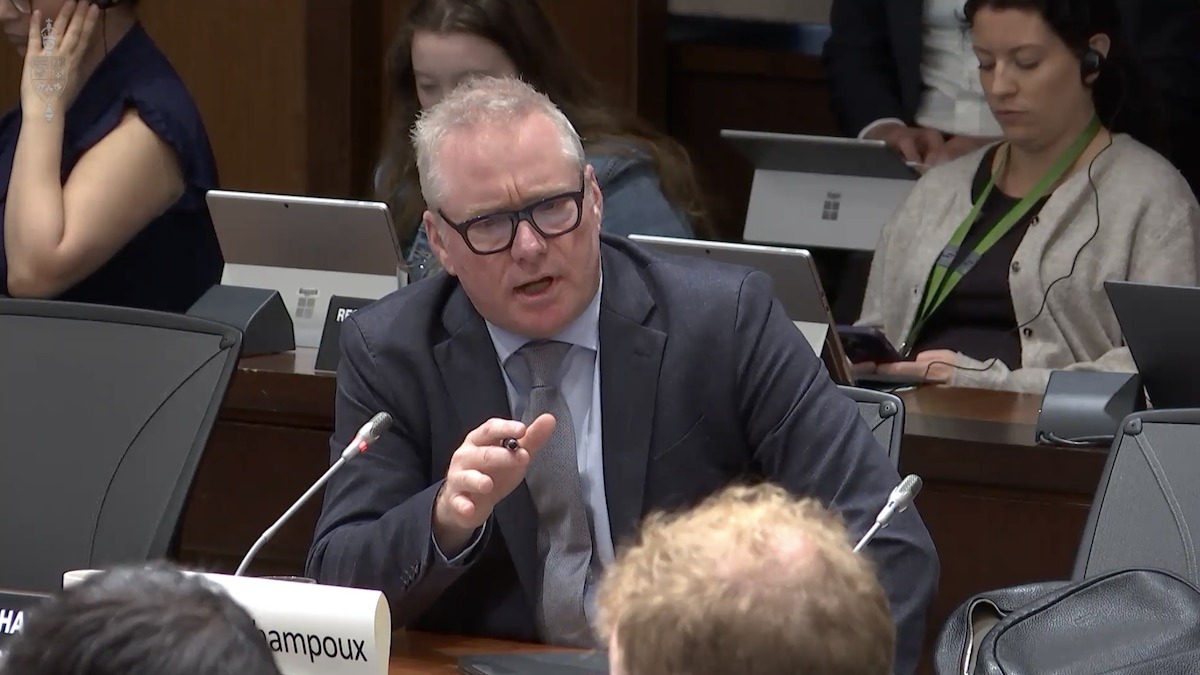
Bloc Québécois Vice-Chair Martin Champoux led a fierce, unyielding line of questioning, stripping away diplomatic pleasantries to target the tech monopolies directly. “We all agree that they are thugs and do not make life easy for us. Something must be done,” Champoux declared aggressively, refusing to tolerate corporate evasion.
Champoux highlighted that these platforms are actively undermining Canadian oversight, noting that they are “currently challenging our recent laws in court”. He demanded to know if federal enforcement strategy had completely stalled, asking: “Do you have any leads that would suggest that one formula or another could be considered to ensure that digital giants contribute and accept the reality that, when you make billions of dollars in a country, it is only fair to contribute to its ecosystem?”
Minister Marc Miller joined the opposition member in a blistering critique, acknowledging that the platforms’ continuous resistance “is an argument being raised in court”. However, Miller redirected the structural blame toward political gridlock within Parliament, accusing partisan rivals of intentionally stalling regulatory safeguards meant to rein in international web cartels.
“People are entitled to question the effectiveness of legislative measures resulting from Bills C‑11 and C‑18, but those bills took an inordinate amount of time to pass,” Miller fired back. “People may criticize the CRTC, but the fact remains that the Conservatives are to blame for how long it took the Senate to pass these bills. I think this is the longest it has ever taken for bills to be passed in our history. They should have gone through much earlier,” the minister revealed, exposing the legislative friction that left domestic media vulnerable.
The consequences of these prolonged delays have left Canada’s domestic cultural sectors bleeding out while massive financial resources remain locked away in administrative gridlock. “So, here we are. There are hundreds of millions of dollars that could be freed up specifically to support our creative sector, the media sector, which is struggling,” Miller lamented to the committee.
“Yes indeed, every time I talk to these people, I talk to them about discoverability and I tell them how wonderful it would be if we could see where the puck is going so that we can discover our local stories. Look, I don’t want to call anyone a thug, but—” at which point Champoux interrupted to remark with biting satisfaction: “I can get away with it—you, less so”.
Miller conceded the adversarial dynamic, replying: “I know. You’re a member of the opposition”.
Despite the ongoing regulatory warfare, Miller pointed out that domestic francophone content possesses immense commercial viability when international gatekeepers are forced to afford it proper placement.
“However, I can offer the example of the Vitrerie Joyal series, which was released over the weekend and is a huge hit. It’s produced by Prime Video,” Miller observed, showing that regional stories can dominate the market. “Yes, the production received tax credits from Canada and Quebec, but it’s a huge hit, and it’s by Prime Video,” he added, emphasizing that international networks are capitalizing on public subsidies while resisting fair structural integration.
Ultimately, Miller delivered his most devastating rhetorical blow against the technical and semantic excuses utilized by Silicon Valley executives to bypass domestic content laws.
“These platforms are here to stay. However, I want them to operate fairly. I want our local content to be discoverable,” the minister asserted with raw frustration. “I want them to stop telling me that all we have to do is select French in the settings to see what we’re entitled to see if we want to view francophone Quebec culture. I don’t want to hear their bogus argument about the integrity of their algorithms anymore. Anything is possible online, and I think we have every right to demand Canadian culture from the people who are making money at the expense of Canadian taxpayers,” Miller concluded, signaling a fierce federal pushback against corporate algorithmic sovereignty.
Recognizing the immense high-stakes tension of this regulatory standoff, Champoux concluded his intervention by emphasizing that federal authorities must maintain a relentless, uncompromising pressure campaign against foreign streaming monopolies. “The important takeaway for me is that you are in ongoing dialogue with these companies. The lines of communication are not severed,” Champoux observed, assessing the state of the cultural siege.
“There is hope to be found in the new products being released. We can reasonably expect that at some point, they will decide to get on board,” the Bloc lawmaker finalized, cementing a definitive demand for total cultural protection.