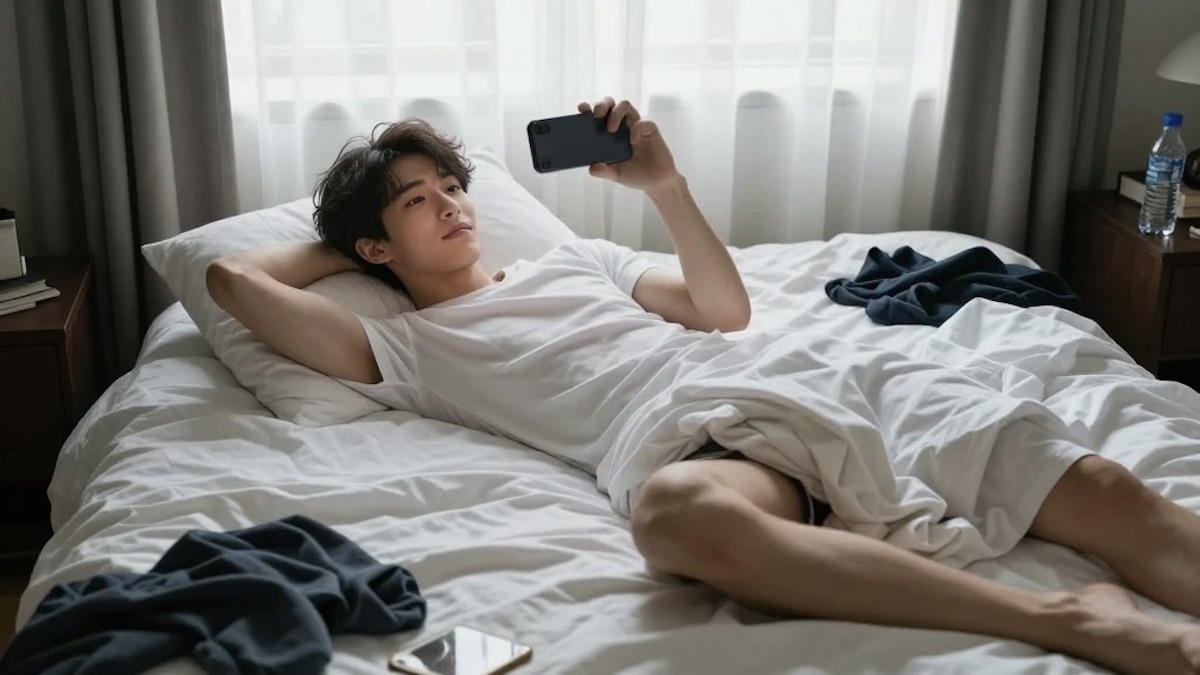
Balancing Mental Health and the Bed Rotting Phenomenon
TikTok loves to rebrand things we have been doing for years, and the latest term taking over everyone’s feed is “bed rotting.” The name sounds pretty intense, but the actual practice is incredibly familiar. It’s basically the art of staying under the blankets for a whole day, ignoring your responsibilities, eating snacks, and doomscrolling until your phone battery hits zero.
With life feeling increasingly overwhelming, people are looking for permission to just stop. In a busy world where everyone is constantly juggling work, life, and community projects, a day of absolute stillness feels like a luxury. It’s a loud pushback against a culture that says you always have to be doing something productive, replacing that pressure with a whole lot of nothing.
For a lot of younger folks, this isn’t just about being lazy. It is a conscious choice to drop out of the daily grind for twenty-four hours to protect whatever mental energy they have left. When the outside world feels loud and chaotic, your bedroom becomes a safe little bubble where the rules of the regular day simply don’t apply.
Why Creative Exhaustion Hits Differently
Creative people and community organizers hit a very specific kind of wall when they experience burnout. Making art, coordinating local markets, or running neighborhood programs takes a massive amount of emotional energy. You aren’t just clocking in and out; you are pouring your actual self into your daily work, and that leaves your brain completely fried.
Hiding away in bed offers an immediate escape from the constant decisions and endless human interaction. It sets a hard boundary between you and the stream of notifications, emails, and group chats. For people who balance multiple seasonal gigs or try to keep grassroots initiatives afloat, this extreme downtime feels like a survival tactic.
When your job involves constantly giving pieces of yourself to other people, doing the absolute least becomes a form of self-defense. It is a way to stop the leaks in your energy bucket before you completely run dry.
What the Science Says About Bed Rotting and Digital Burnout
While hiding under a duvet feels amazing in the moment, recent research suggests that pairing your physical rest with endless screen time might actually block your recovery. A 2025 study by researchers Alya Mukhbita Tasya Nur Aysi, Amanda Rahma Firdaus, Surya Marcello Pangestu, and Hanggara Budi Utomo examined the exact toll this behavior takes. Their literature review, titled Short-Form Content, Brain Rot, and Bed Rot: A Literature Review of the Impact on University Students and published in the International Conference on Social Science and Humanity, revealed that heavy social media use can physically reduce prefrontal cortex density, directly impairing attention and memory.
The numbers behind digital overconsumption paint a challenging picture for anyone trying to stay sharp. The researchers found that in-class digital distractions cause about a 30% drop in information retention. On top of that, individuals who spend more than three hours a day on social media report significantly higher rates of procrastination and lower academic performance.
This means that when we think we are resting by lying in bed and scrolling, we are actually overstimulating our brains. Instead of recovering from a long week of nonprofit work or artistic creation, we are forcing our minds to process a chaotic flood of short-form videos.
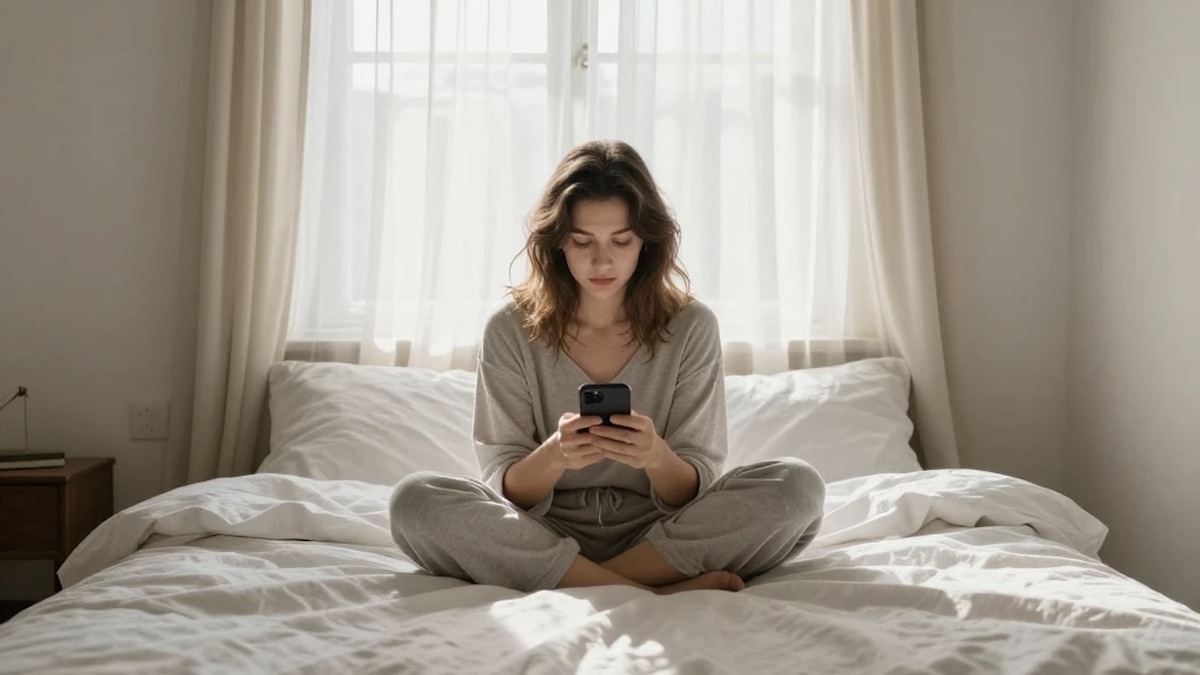
The Danger of the Infinite Scroll
There is also a distinct biological reason why pulling yourself out of bed becomes a massive struggle once you start. The 2025 exploratory review synthesized critical data across 30 curated primary studies published between 2015 and 2025 to map out how digital habits systematically dismantle mental health. The report tracks how short-form platforms hook the brain through a reward-based dopamine feedback loop that closely mimics clinical addictive patterns. Every notification or quick video triggers a hit of instant gratification, conditioning your brain to prefer these low-effort inputs.
The consequences of this conditioning are stark: the research establishes that individuals who pass the threshold of spending more than three hours per day on social media suffer from significantly lower GPAs and vastly higher rates of chronic procrastination. This constant app-switching and multitasking behavior leads to intense cognitive overload, actively blocking your brain’s ability to process, retain, and integrate complex information.
The neurological impact goes much deeper than simple laziness. Synthesized neuroimaging data cited in the study reveals that heavy digital media consumers exhibit a physical reduction in gray matter volume within the prefrontal cortex—the precise area responsible for decision-making, impulse control, and critical planning. Behaviorally, this structural change locks individuals into a state of “shallow thinking,” where they actively avoid cognitively demanding tasks in favoUr of mindless scrolling.
Spending your entire day scrolling in the exact spot where you are supposed to rest also completely destroys your basic sleep hygiene. The researchers emphasize that late-night exposure to blue light heavily disrupts circadian rhythms and degrades overall sleep quality. This is particularly dangerous because poor sleep directly impairs attention, mood regulation, and memory consolidation the following day. Ultimately, replacing face-to-face contact with digital feeds creates a compounding loop of physical stagnation, social withdrawal, and heightened depressive symptoms.
Checking in with yourself helps determine if you are actually recharging or if you are just hiding from something you do not want to deal with. True rest should make you feel lighter, not heavier, and it certainly shouldn’t leave you feeling worse than when you started.
Better Ways to Recharge Your Battery
Real recovery usually needs a little more intention than just melting into a mattress for a whole weekend. If you constantly feel the urge to shut down completely, it is usually a sign that your daily life is missing sustainable boundaries. Setting hard limits on your screen time, saying no to extra projects, or taking a quiet walk through local green spaces can keep you from reaching that point of absolute exhaustion.
If you do decide to spend a rainy Sunday bed rotting, try to change how you do it. Put down the infinite scroll that leaves you feeling bad about yourself and put on a comfort movie, read a physical book, or just daydream without a screen in your hand. Turning a passive escape into a mindful break changes the whole experience.
Protecting your creative spark means finding rest that actually leaves you feeling lighter. Communities everywhere need vibrant artists and energetic organizers, but they need them healthy and whole, not running on fumes.