Committee: Generative platforms now seize over thirty percent of active streaming catalogs, aggressively stealing intellectual property from local artists.
Canada’s independent creative industry is locked in an existential battle against an unregulated artificial intelligence machine that is systematically plundering intellectual property and robbing local artists of their livelihood. The scale of this technological piracy dominated proceedings at the House of Commons Standing Committee on Canadian Heritage, where lawmakers reviewed a massive $471 million budget allocation earmarked specifically for arts and culture programming.
Liberal Member of Parliament David Myles sounded the alarm on the rapid, unchecked infiltration of generative AI into commercial streaming networks, exposing a catastrophic drop in revenue for human creators. “We had a really robust study on artificial intelligence and its effect on the creative industry. We heard a lot of concerns, particularly around the protection of intellectual property and the importance of copyright. Now they’re saying that it’s up to 30% or 35%,” Myles revealed to the committee, detailing the alarming percentage of active digital streaming content that has been completely taken over by AI-generated material.
This algorithmic takeover has left Canadian musicians, writers, and digital artists stranded, forced to compete against infinite artificial assets that are trained directly on their stolen works.
The heritage department found itself on the defensive over its sluggish legislative response to this multi-million-dollar intellectual property heist. Deputy Minister Francis Bilodeau conceded that current copyright laws are completely ill-equipped to handle the automated scraping of human talent by global tech platforms. “What does that mean with regard to regimes around copyright? How should we be thinking about them, both in how AI systems can ingest copyrighted or copyrightable materials and in how they might be used in production?” Bilodeau questioned, acknowledging the systemic gaps in Canada’s legal architecture.
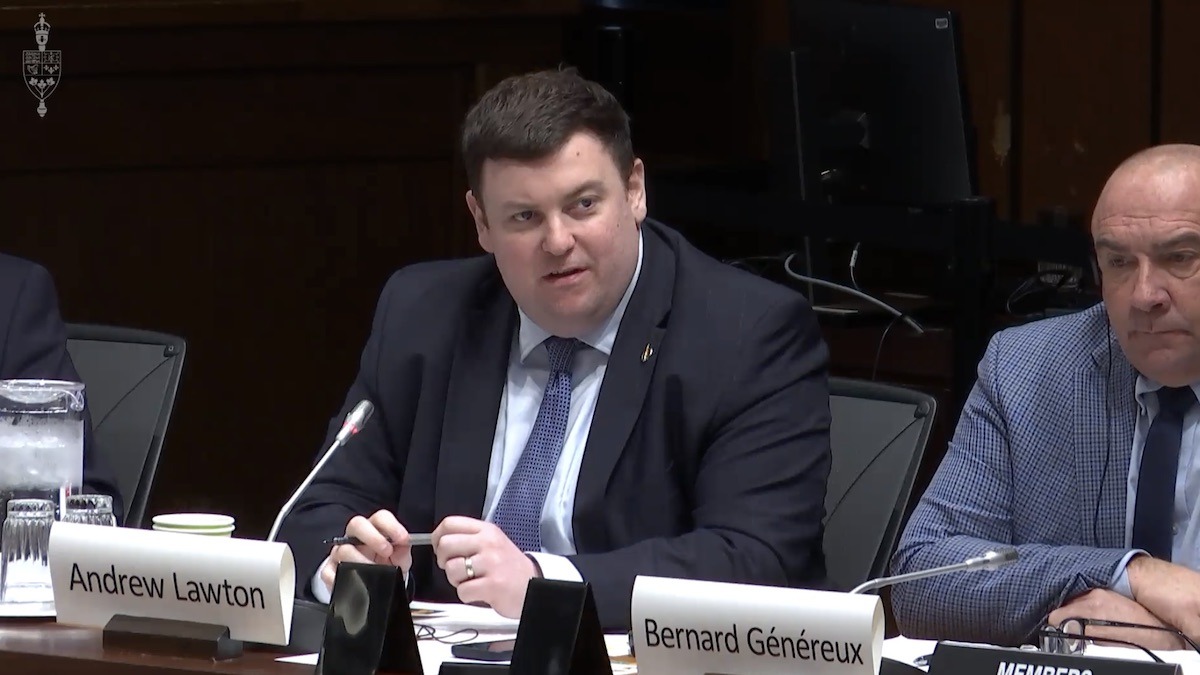
While Minister Marc Miller attempted to reassure the committee by highlighting the department’s $471 million arts fund, opposition lawmakers slammed the government’s strategy of throwing public money at the sector while failing to protect basic ownership rights. Conservative MP Andrew Lawton blasted the government’s separate Creative Export Canada program, pointing out that Ottawa is wasting hundreds of thousands of dollars subsidizing niche indie video games while the entire foundational copyright ecosystem is left entirely unprotected.
With Associate Assistant Deputy Minister Blair McMurren admitting that crucial legislative adjustments are still stuck in internal government discussions, industry advocates warned that Canada’s creative class faces total economic destruction before the federal government ever passes a single line of enforceable algorithmic regulation.