Speculative Design Is Basically “What If?” Turned Into Art
What if your fridge judged your personality? What if museums only existed online because climate disasters made physical buildings impossible? What if your future job interview was conducted entirely by artificial intelligence analyzing your emotions in real time?
These kinds of weird, uncomfortable and oddly believable questions sit at the center of speculative design — one of the most interesting movements happening across contemporary art, design and culture right now.
Speculative design is basically the art of imagining possible futures. Instead of creating products or experiences meant to immediately solve problems, speculative designers create concepts that make people think differently about the world around them. Sometimes the ideas feel futuristic and exciting. Sometimes they feel dystopian and deeply cursed. Usually, they land somewhere in between.
The goal is not predicting the future perfectly. It is about opening conversations. Speculative design asks people to pause for a second and think, “Wait… what direction are we actually heading in?”
Turning Future Anxiety Into Creativity
A huge reason speculative design has exploded in popularity is because the future genuinely feels unpredictable right now. Artificial intelligence is reshaping creative industries overnight. Climate anxiety is everywhere. Technology keeps evolving faster than society can emotionally process it.
Speculative design takes all that uncertainty and transforms it into something visual, interactive and surprisingly human.
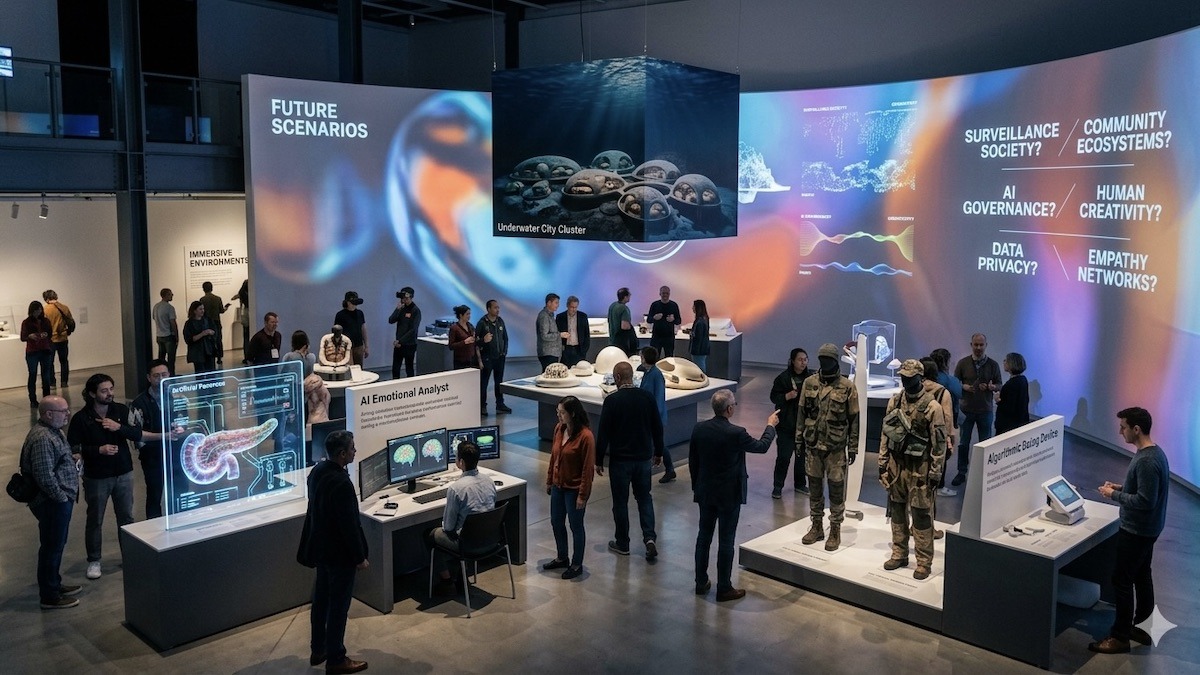
Instead of reading another depressing headline about data privacy, you might walk into an exhibition featuring fictional products from a future where corporations literally sell personalized emotions. Instead of debating climate change abstractly, you might experience an immersive installation imagining grocery shopping during global food shortages.
That mix of creativity and critical thinking is what makes speculative design feel so powerful. It turns giant complicated issues into experiences people can actually emotionally connect with.
Why Artists Love It
Speculative design sits in a really interesting space between art, storytelling, technology and social commentary. Artists love it because there are basically no rules. A project can look like a fake advertisement, a futuristic prototype, a short film, an installation or even a fictional government policy.
Some speculative designers create imaginary devices that critique modern technology addiction. Others invent fictional future brands or redesign everyday objects for bizarre future societies. There are projects imagining underwater cities, AI therapists, algorithm-controlled dating systems and post-climate-collapse fashion trends.
And honestly? Some of it feels way too realistic.
That tension is intentional. Good speculative design often makes audiences slightly uncomfortable because it reflects real fears and possibilities already starting to emerge in society today.
More Than Just Sci-Fi Aesthetics
One thing people sometimes misunderstand is that speculative design is not just about making things look futuristic. It is not simply neon lights, chrome textures and robots everywhere.
The deeper point is asking questions.
Who controls technology? What happens when convenience becomes surveillance? How might social media shape human relationships fifty years from now? What kinds of futures are we accidentally building without realizing it?
Speculative design uses imagination almost like a tool for cultural investigation. Instead of giving audiences clean answers, it encourages curiosity, discussion and critical thinking.
That is why speculative projects often show up in galleries, museums, design festivals and even universities. They create spaces where people can safely think through complicated future scenarios before they become reality.
Why It Matters Right Now
Speculative design feels especially relevant because people are exhausted by constant uncertainty. Everyone knows massive changes are happening socially, environmentally and technologically, but very few people know exactly what comes next.
Art cannot solve every problem, obviously, but speculative design gives people language and imagery for discussing those changes in creative ways. It helps audiences imagine possibilities instead of just reacting passively to whatever happens next.
And honestly, it is fun too.
There is something incredibly engaging about walking through an exhibition full of fictional future objects or seeing a project that feels half joke, half terrifying prediction. It pulls people into conversations they might normally avoid.
At its best, speculative design reminds people that the future is not fixed. Systems can change. Technology can evolve differently. Society can make different choices. The future is still something people collectively shape — and speculative design gives artists a way to creatively participate in that conversation.