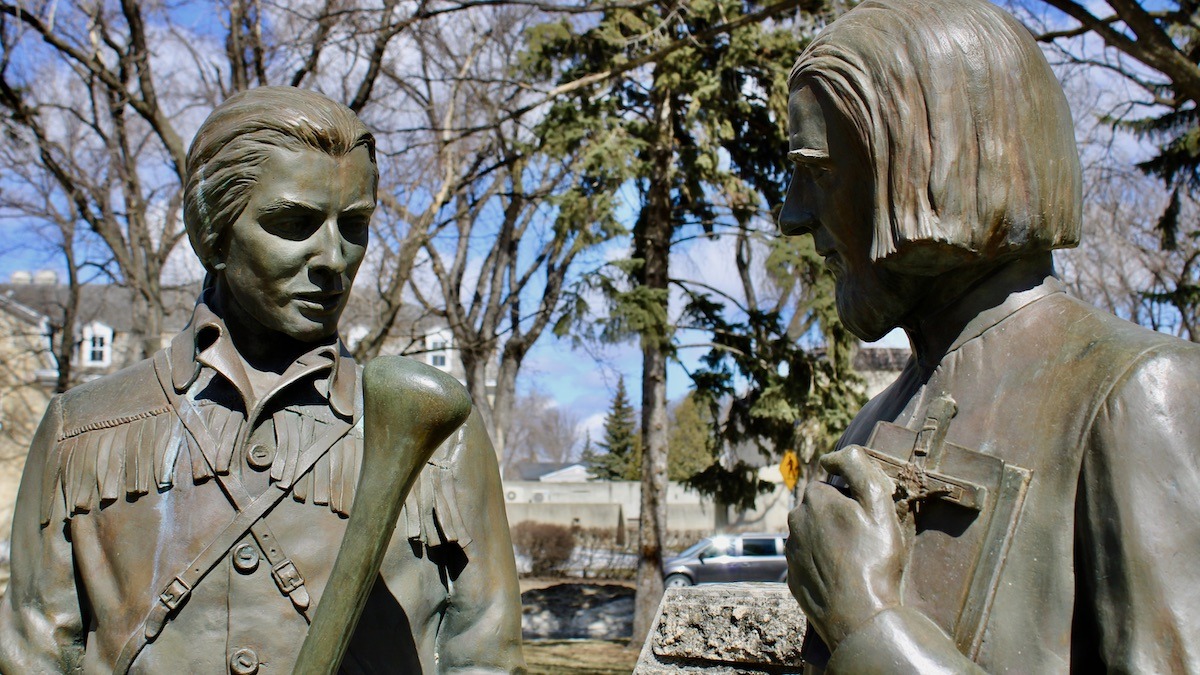
A Bronze Tribute to the Fallen of the 1736 Lake of the Woods Expedition
For many of us, we enjoy walking through the streets of Winnipeg, soaking in the unique sights and sounds that define our prairie city.
Whether it is the rustle of the ancient elms or the distant chime of church bells, these strolls often lead us to hidden corners where the past feels remarkably close at hand. One such place is the historic St. Boniface district, where the quiet paths of the cathedral cemetery offer more than just a scenic view; they provide a doorway into the harrowing stories of the explorers and missionaries who first navigated this vast landscape centuries ago.
Nestled within the hallowed grounds of the St. Boniface Cathedral Cemetery in Winnipeg stands a monument that bridges the gap between the living and the long-dead. Unlike the towering obelisks common to historical sites, the Aulneau-La Vérendrye Memorial brings history down to earth—literally.
A Ground-Level Encounter
Inaugurated on June 6, 1976, this bronze masterwork by local artist Helen Granger Young depicts two pivotal figures from the year 1732: the Jesuit missionary Father Jean-Pierre Aulneau and the young explorer Jean-Baptiste de La Vérendrye.
The sculpture is striking for its approachable design. Positioned at ground level, the life-sized figures invite visitors to walk among them. The attention to detail is meticulous:
- La Vérendrye is garbed in the rugged buckskins of a voyageur, clutching an oversized paddle that symbolizes the grueling water routes of the West.
- Father Aulneau stands in his traditional Jesuit robes, holding a crucifix, representing the spiritual mission that accompanied the exploration of the continent.
A Sculpture and a Tomb
The memorial is more than a piece of art; it is a literal tomb. Following a tragic 1736 massacre at Lake of the Woods, where 21 members of the expedition were killed, their remains were eventually recovered. A sealed box containing the surviving bones of these men is permanently interred within the base of the sculpture.
Preserving Franco-Manitoban History
Located just a short distance from the grave of Louis Riel, the monument serves as a poignant reminder of the perils faced by early French explorers and missionaries. It stands as a testament to the Franco-Manitoban community’s dedication to honoring their ancestors, ensuring that the names of those lost in the wilderness of the 18th century are never forgotten.
For those visiting the historic St. Boniface district, the memorial offers a quiet, tactile moment of reflection on the high price paid for the mapping of Western Canada.