Executive Summary
The federal impact assessment process for the Revell Site Deep Geological Repository (DGR) has elicited significant opposition from a broad spectrum of stakeholders, including First Nations, local residents, and environmental organizations. Commenters frequently characterize the federal government’s role as detached, non-transparent, and dismissive of the inherent jurisdictional authority of Indigenous Nations. A recurring theme is the perceived failure of the Impact Assessment Agency of Canada (IAAC) to adequately scope the project, particularly regarding the exclusion of nuclear waste transportation from the assessment process.
Detailed Analysis
Jurisdictional and Procedural Concerns
A primary concern raised by the Grand Council Treaty #3 (GCT3) and other Indigenous groups is the disregard for inherent Indigenous laws, such as the Manito Aki Inaakonigewin (MAI), and the failure to harmonize these with the federal Impact Assessment Act (IAA) [Comment Ref: 705, 660]. Commenters argue that the Crown is in breach of its constitutional and statutory duties by failing to recognize the Nation-to-Nation relationship and the requirement for Free, Prior, and Informed Consent (FPIC) as mandated by the United Nations Declaration on the Rights of Indigenous Peoples (UNDRIP) [Comment Ref: 627, 596].
Scope of Assessment
There is widespread criticism regarding the exclusion of nuclear waste transportation from the project’s regulatory scope. Commenters argue that the transportation of 5.9 million bundles of used nuclear fuel over 50 years is an ‘incidental activity’ that is inseparable from the project’s environmental impact [Comment Ref: 660, 485]. The Trans-Canada Highway (Highway 17) is frequently cited as a high-risk corridor due to frequent accidents, winter conditions, and limited emergency response capacity in remote areas [Ref: 623, 603, 561].
Evidence from Public Registry
- Indigenous Opposition: Multiple First Nations, including Eagle Lake, Grassy Narrows, and the Mississaugas of Scugog Island, assert that the project violates their treaty rights and traditional territories [Ref: 627, 439, 466].
- Public Distrust: Commenters describe the 30-day review period as ‘insufficient’ and ‘a mockery of democratic engagement,’ arguing that it prevents meaningful public participation in a project with a 160-year lifecycle [Ref: 207, 126].
- Exploitation Concerns: Many residents of Northwestern Ontario feel the region is being treated as a ‘sacrifice zone’ for the benefit of Southern Ontario’s energy needs, with little regard for the long-term environmental risks to northern watersheds [Ref: 604, 572, 388].
Technical Deficiencies & Gaps
Our internal technical review identifies significant gaps in the proponent’s handling of the following:
- Hydrogeological Modeling: The reliance on limited borehole data to characterize the Revell Batholith is insufficient for a project of this permanence [Analysis: 14.2.3].
- Emergency Response: The proponent assumes reliance on regional municipal services, failing to account for the total absence of professional emergency infrastructure in the unorganized territories of Melgund [Analysis: 15.7].
- Socio-Economic Baseline: The use of aggregated regional data masks the specific vulnerabilities of unincorporated communities like Dyment and Borups Corners [Analysis: 15.9].
Recommendations & Mandates
We strongly recommend that the IAAC mandate a comprehensive, integrated Impact Assessment that explicitly includes the transportation of used nuclear fuel as a core Valued Component. The proponent strongly recommends establishing a formal ‘Jurisdictional Harmonization Agreement’ that defines how Indigenous laws and federal statutes will be reconciled. Furthermore, we strongly recommend that the proponent provide a ‘Regional Infrastructure Resilience Plan’ that funds and constructs necessary emergency response capacity in unorganized territories prior to any site preparation activities.
Conclusion
The current regulatory process is perceived by the public as a top-down imposition that prioritizes project momentum over genuine consultation and safety. To restore public trust and ensure the project’s long-term viability, the federal government must expand the scope of the assessment, respect Indigenous jurisdiction, and provide concrete, site-specific safety guarantees for the communities most directly impacted by the repository and its transportation corridors.
About the Deep Geological Repository (DGR) for Canada’s Used Nuclear Fuel Project
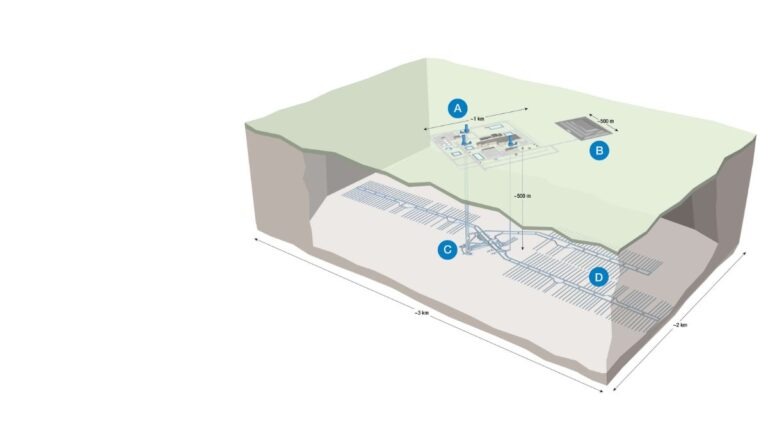
The Nuclear Waste Management Organization (the NWMO) is proposing a new underground deep geological repository system designed to safely contain and isolate used nuclear fuel. Wabigoon Lake Ojibway Nation (WLON) and the Township of Ignace have been selected as the host communities for the proposed project, which is located 21 kilometres southeast of the WLON and 43 kilometres northwest of the Town of Ignace, Ontario along Highway 17. As proposed, the Deep Geological Repository (DGR) for Canada’s Used Nuclear Fuel Project would provide permanent storage for approximately 5.9 million bundles of used nuclear fuel. The project is expected to span approximately 160 years, encompassing site preparation, construction, operation and closure monitoring. The project assessment is being conducted in collaboration with the Canadian Nuclear Safety Commission.
Learn more about the Integrated Impact Assessment process which is led by the Impact Assessment Agency of Canada and Canadian Nuclear Safety Commission.
- Read the Summary of Issues (February 16, 2026)
- Read the Summary of the Initial Project Description (January 5, 2026)
- Read the Initial Project Description (January 5, 2026)
- Learn More about the Melgund Integrated Nuclear Impact Assessment (MINIA) Project
- Learn More about the Nuclear Waste Management Organization (NWMO)
About the Author