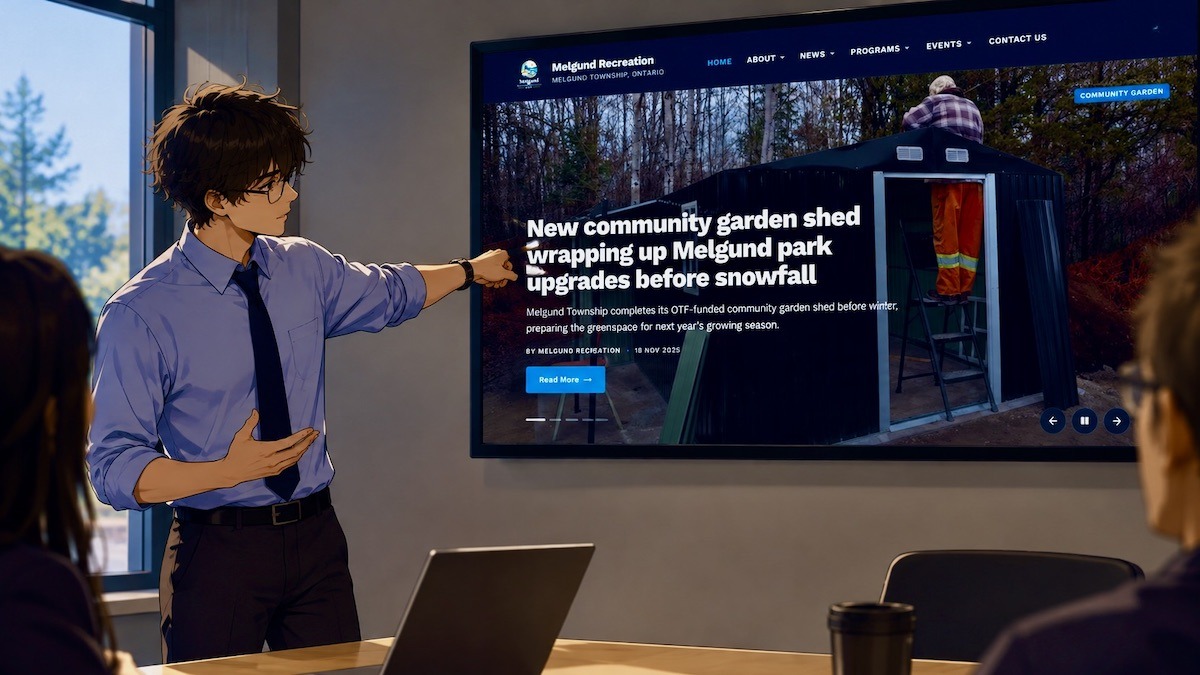
How Sharing Local Moments Turns Website Visitors into Neighbours and Participants
When someone visits a local nonprofit’s website, they usually want to know what’s happening in the community. Who is involved? What projects are underway? Are there activities they can take part in? They might be looking for an upcoming event, a local artist or a community initiative they’ve heard about. A story-first website makes those connections easier by putting real people and local activities where visitors can find them.
Rather than making people work through layers of menus to understand what an organisation does, a story-first website puts its activities, projects and people front and centre. A workshop, community gathering, new garden or local exhibition can tell visitors more about an organisation than several paragraphs of general information. Photographs, interviews and short project updates give people a reason to spend time on the website, share what they find and return to see what’s happening next.
Why Leading With Stories Works
Community organisations spend much of their time doing the actual work. They’re organising workshops, putting together exhibitions, maintaining recreation programmes, supporting local artists and bringing people together. Website updates can easily become an afterthought. Before long, the homepage no longer reflects what’s happening in the community, and important projects are difficult for visitors to find.
A story-first approach to nonprofit website design makes better use of the work that’s already taking place. Instead of treating website content as another separate task, organisations can share what they’re doing as they go. A workshop recap, a conversation with a local maker or photographs from a community event all provide useful material. These updates give people something current to read, but they also build an archive of the organisation’s activities and achievements over time.
That growing collection of stories has value beyond the people who attended an event. Someone considering a partnership can see the kinds of projects an organisation takes on. A potential funder can find examples of its work. A newcomer can get a sense of the people involved and the opportunities available. Residents who couldn’t attend can still follow what’s happening. Each article also creates another opportunity for people searching online for local activities, community projects and organisations to find that work.
Over time, the website becomes a useful record of community life rather than a collection of static pages that only gets revisited when something needs updating. It also gives organisations more material to share through newsletters, social media, partner networks and community directories.
Turning Visitors into Neighbours
People often get involved because they see something that interests them or recognise someone taking part. A photograph from a craft workshop, a story about a community garden or an introduction to a local musician can make an organisation feel much more approachable. It gives visitors a sense of what participation actually looks like, rather than simply telling them that activities are available.
That matters particularly for smaller communities, where an invitation from someone familiar can make all the difference. Someone might read about an art activity, notice that it’s happening at the local hall and decide to come along. Another person might share the story with a neighbour who would enjoy getting involved. What begins as a website visit can turn into a conversation, a new connection or a volunteer contribution. This is community engagement in a very practical sense.
Stories can also connect work happening across different organisations. A community project might involve local volunteers, an arts group, a recreation committee, a school and a regional partner. When their contributions are documented and linked together, people can see how these relationships work and where there might be opportunities to participate. Sharing one another’s work also helps smaller organisations reach audiences they might not otherwise connect with.
Of course, the practical information still matters. Event dates, locations, contact details and registration information should be easy to find. A story might introduce someone to an activity, but they need to know where to go and how to take part. The best community websites bring these things together, making it straightforward to move from reading about a project to becoming involved in it.
For community arts and recreation groups, a website should reflect the life of the community it serves. That means making room for local voices, unfinished projects, small achievements, upcoming activities and the people who make things happen. Not everything needs to be a major announcement. Sometimes the most useful thing an organisation can share is simply what happened last Saturday and who’s getting together again next week.