Executive Summary
The discourse regarding the potential benefits of the Deep Geological Repository (DGR) at the Revell Site is characterized by a profound dichotomy between institutional projections and localized skepticism. Proponents and the Nuclear Waste Management Organization (NWMO) frame the project as a multi-generational solution for nuclear waste that supports Canada’s net-zero goals, provides high-paying employment, and fosters Indigenous reconciliation [Analysis: B. PROJECT INFORMATION]. However, public testimony and internal technical reviews reveal significant concerns regarding the distribution of these benefits. Residents in unorganized territories, specifically Melgund Township (including Dyment and Borups Corners), argue that the benefits are concentrated in distant municipal hubs like Ignace, while the immediate neighbors bear the disproportionate risks of proximity, stigma, and infrastructure degradation [Analysis: 16. HEALTH, SOCIAL, AND ECONOMIC CONTEXT]. Critics frequently characterize financial incentives as “economic coercion” or “bribes” designed to exploit economically vulnerable regions [Comment Ref: 595, 231].
Detailed Analysis of Potential Benefits
Economic Revitalization and Employment
Proponents assert that the DGR will act as a massive economic engine for Northwestern Ontario. Anticipated benefits include the creation of long-term, well-paying jobs in engineering, construction, and operations [Comment Ref: 653, 539]. The NWMO projects that the repository will revitalize the regional economy, providing opportunities for local youth to remain in the area rather than migrating for work [Comment Ref: 101]. Technical filings suggest increased business and contracting opportunities for local suppliers and new revenue for municipal, provincial, and federal governments through taxation [Analysis: 19.2.3.12 NON-INDIGENOUS ECONOMIC CONDITIONS].
Climate Change and Net-Zero Alignment
The project is frequently framed as a prerequisite for a sustainable nuclear energy sector, which is deemed essential for Canada’s transition to a net-zero economy by 2050 [Analysis: 7. PURPOSE OF AND NEED FOR THE PROJECT AND POTENTIAL BENEFITS]. Supporters argue that providing a permanent disposal solution removes the primary environmental objection to nuclear power, thereby enabling the continued use of low-carbon baseload electricity [Comment Ref: 672, 154].
Indigenous Reconnection and Sovereignty
The Wabigoon Lake Ojibway Nation (WLON) has characterized the decade-long engagement process as a catalyst for community healing, identity reclamation, and the return of displaced members to their traditional territory [Analysis: iii. Wabigoon Lake Ojibway Nation Story]. The NWMO emphasizes that the project respects Indigenous sovereignty through the integration of the WLON Regulatory Assessment and Approval Process (RAAP) [Analysis: Executive Summary – Introduction].
Intergenerational Equity
A core ethical benefit cited by proponents is the removal of the waste burden from future generations. By transitioning from active interim storage at reactor sites to a passive, permanent underground repository, the project aims to fulfill a moral obligation to manage the waste produced by the current generation [Analysis: Executive Summary – Why the Project Is Needed].
Evidence from Public Registry
Public sentiment regarding these benefits is sharply divided:
- Supportive Views: Some residents express confidence that the DGR is a “responsible and necessary solution” that will bring prosperity to Ignace [Comment Ref: 341, 74]. One retired geologist noted that the project is a societal responsibility that utilizes the geological stability of the Canadian Shield [Comment Ref: 268].
- Skeptical and Opposed Views: Many commenters challenge the “benefit” narrative. A resident of Sioux Lookout characterized the NWMO’s ‘learning funds’ as bribery [Comment Ref: 595]. Others argue that the project creates a “sacrifice zone” where Northwestern Ontario bears the risk for electricity consumed primarily in Southern Ontario [Comment Ref: 388, 399].
- Inequity in Distribution: Residents of Melgund Township, located less than 10 km from the site, highlight that they receive no direct financial support or hosting agreements, unlike the Township of Ignace, which is located 43 km away [Comment Ref: 192, 391].
Technical Deficiencies & Gaps
Internal technical analysis has identified several critical gaps in the proponent’s benefit-risk framework:
- Lack of Disaggregated Data: The NWMO’s socio-economic baseline focuses primarily on municipal contexts (Ignace, Dryden), effectively erasing the specific vulnerabilities and lack of service capacity in unorganized territories like Melgund [Analysis: 15.7 Infrastructure and Services].
- Dutch Disease and Inflation: The economic assessment fails to model the potential for “Dutch Disease,” where high-paying project jobs could displace workers from existing local industries (e.g., forestry, tourism) and drive up the cost of living for fixed-income seniors [Analysis: 19.2.3.12 NON-INDIGENOUS ECONOMIC CONDITIONS].
- Stigma Effect: The proponent dismisses the potential for property devaluation and the loss of the “wilderness brand” as mere “perceptions,” failing to provide a quantitative assessment of how the stigma of a nuclear repository affects local land values [Analysis: Executive Summary – Initial Screening of Potential Impacts of the Project].
- Emergency Service Reliance: The project relies on regional hubs for emergency services, yet the baseline data admits that these services (e.g., Ignace ambulance) are already operating at capacity and facing burnout [Analysis: 15.3 Access to Community Health Care].
Recommendations & Mandates
To ensure that the proposed benefits are equitable and that risks are properly mitigated, we provide the following recommendations:
- Socio-Economic Mitigation for Unorganized Territories: We strongly recommend that the proponent develop a specific ‘Neighbor Impact Mitigation Plan’ for Melgund Township. This plan should include a legally binding Property Value Protection Program and a dedicated community fund to offset the lack of municipal tax benefits [Analysis: Acknowledgment of Truths].
- Infrastructure Front-Loading: We strongly recommend that the NWMO fund the expansion of regional healthcare and emergency response facilities at least three years prior to construction. This is necessary to prevent the project from displacing local residents’ access to essential services [Analysis: 15.7 Infrastructure and Services].
- Emergency Response Self-Sufficiency: We strongly recommend that the proponent demonstrate 100% on-site self-sufficiency for fire, medical, and spill response. The current reliance on volunteer-based services in unorganized areas is insufficient for a Class 1B nuclear facility [Analysis: 9.5 Construction].
- Quantitative Economic Modeling: We strongly recommend a comprehensive ‘Negative Economic Externality Analysis’ to model the impacts of project-induced inflation on vulnerable populations and the regional tourism sector [Analysis: 19.2.3.12 NON-INDIGENOUS ECONOMIC CONDITIONS].
Conclusion
While the NWMO and project supporters emphasize the DGR’s role in economic growth and climate leadership, these benefits are not universally accepted or equitably distributed. The residents of Melgund Township and several Indigenous Nations view the project as an involuntary imposition of risk that lacks a commensurate local benefit. The failure to provide granular data for unorganized territories and the reliance on qualitative assurances of safety undermine the project’s social license. Moving forward, the proponent must transition from promotional narratives to binding, site-specific commitments that protect the health, safety, and economic stability of the project’s most immediate neighbors.
About the Deep Geological Repository (DGR) for Canada’s Used Nuclear Fuel Project
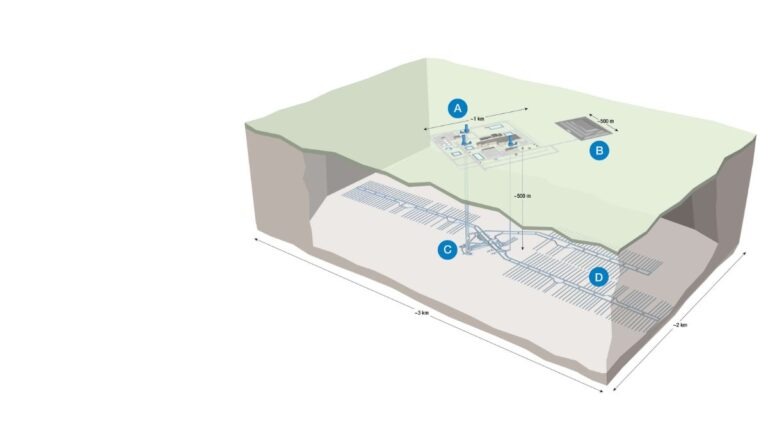
The Nuclear Waste Management Organization (the NWMO) is proposing a new underground deep geological repository system designed to safely contain and isolate used nuclear fuel. Wabigoon Lake Ojibway Nation (WLON) and the Township of Ignace have been selected as the host communities for the proposed project, which is located 21 kilometres southeast of the WLON and 43 kilometres northwest of the Town of Ignace, Ontario along Highway 17. As proposed, the Deep Geological Repository (DGR) for Canada’s Used Nuclear Fuel Project would provide permanent storage for approximately 5.9 million bundles of used nuclear fuel. The project is expected to span approximately 160 years, encompassing site preparation, construction, operation and closure monitoring. The project assessment is being conducted in collaboration with the Canadian Nuclear Safety Commission.
Learn more about the Integrated Impact Assessment process which is led by the Impact Assessment Agency of Canada and Canadian Nuclear Safety Commission.
- Read the Summary of Issues (February 16, 2026)
- Read the Summary of the Initial Project Description (January 5, 2026)
- Read the Initial Project Description (January 5, 2026)
- Learn More about the Melgund Integrated Nuclear Impact Assessment (MINIA) Project
- Learn More about the Nuclear Waste Management Organization (NWMO)
About the Author