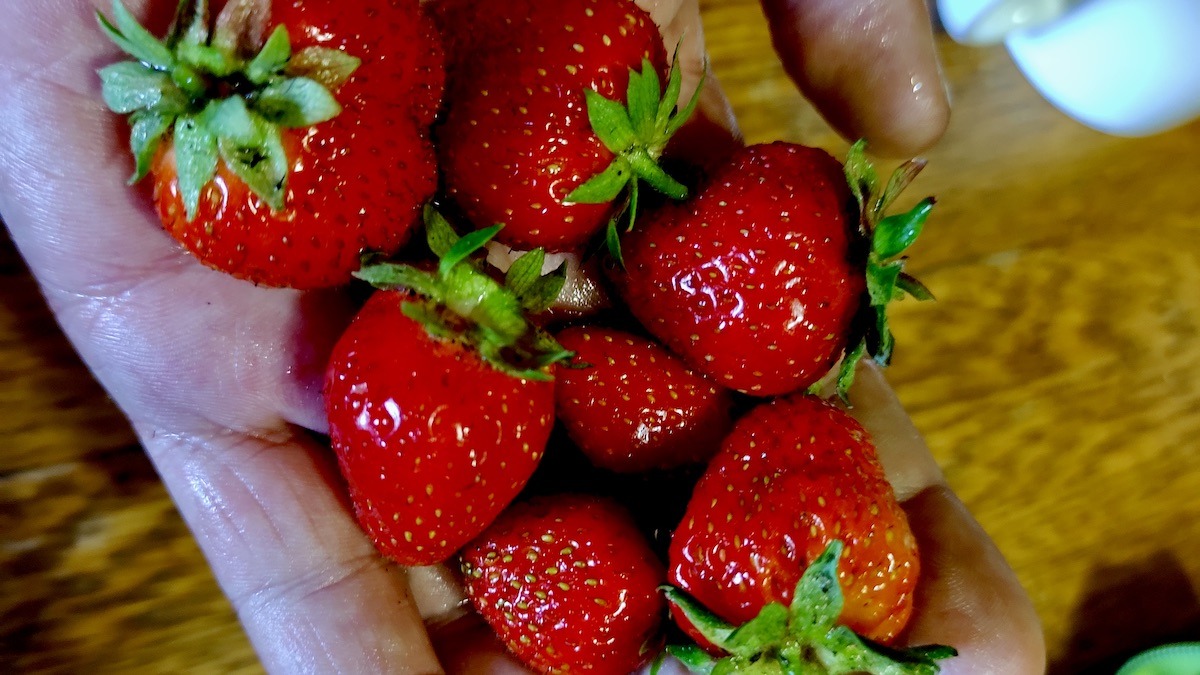
Confused about how often to water strawberries? Get expert advice on managing container moisture, adjusting for raised beds, and preventing split fruit.
Growing a prolific berry patch is a highlight of home gardening, but maximizing your harvest depends entirely on a single, vital habit: learning how often to water strawberries. These popular berries are notoriously sensitive to moisture fluctuations. Because they possess an incredibly shallow root system that primarily occupies the top six inches of soil, they cannot reach deep underground for hydration during dry spells. Conversely, over-watering easily triggers root rot and results in bland, waterlogged fruit. Striking the ideal balance is the ultimate secret to heavy yields of sweet, firm berries.
The Base Standard: The One-Inch Rule
When establishing a baseline for how often to water strawberries, the universal benchmark for standard garden plots is one inch of water per week. This requirement rises significantly to approximately two inches per week during periods of intense summer heat or when the plants are actively swelling and ripening fruit.
Rather than relying strictly on a rigid calendar countdown, determining how often to water strawberries should be guided by direct soil inspection. The objective is to keep the soil consistently damp—resembling a thoroughly wrung-out sponge—but never muddy. Gardeners can easily check conditions by inserting an index finger roughly one inch into the earth near the base of the plant. If the soil feels dry, it is time to irrigate; if it remains moist, check again the following day.
Adjusting Frequency Across Growth Cycles
Understanding how often to water strawberries requires adapting your routine as the plants transition through different developmental stages. Newly planted runners need immediate, consistent moisture to help their fresh roots establish, requiring brief watering sessions every one to two days to prevent the shallow topsoil from baking dry.
Once the root systems are fully established in the spring, the strategy shifts. You can scale back how often to water strawberries to one or two deep drenching sessions per week, which encourages deeper root growth. However, when the plants begin flowering and setting fruit, frequency must increase to two or three times a week. Maintaining consistent moisture during this critical fruiting phase prevents the berries from stunting, dropping early, or splitting open from sudden water surges.
Managing Containers, Baskets, and Raised Beds
The rules dictating how often to water strawberries shift dramatically if you are cultivating your crop in pots, hanging planters, or raised beds. Container soil is exposed to air on all sides, causing it to heat up rapidly and drain far faster than natural garden plots.
During scorching mid-summer stretches, figuring out how often to water strawberries in containers usually results in a daily routine. In compact pots or during extreme heat waves, you may even need to water twice a day. Raised beds offer slightly better moisture retention than standalone pots, but they still dry out days ahead of traditional in-ground rows, requiring a careful eye and more frequent irrigation.
Techniques to Maximize Moisture Efficiency
Perfecting how often to water strawberries is only half the battle; how you apply that water matters just as much. Overhead watering should be strictly avoided. Instead, direct your hose or drip irrigation lines directly at the soil beneath the foliage canopy. Keeping the leaves dry dramatically reduces the risk of destructive fungal diseases like powdery mildew and grey mold.
To optimize the timing of your routine, always aim to irrigate early in the morning. This schedule allows the soil to fully absorb moisture before the midday sun causes rapid evaporation, while ensuring any accidental splashes on the foliage dry completely before nightfall. Finally, laying a two-inch layer of clean straw or pine needles around your plants will lock in soil moisture, vastly reducing how often to water strawberries while keeping the low-hanging fruit clean and off the damp ground.