Executive Summary
The Township of Ignace occupies a central yet contentious role in the Nuclear Waste Management Organization’s (NWMO) proposed Deep Geological Repository (DGR) at the Revell Site. While designated as a “host community” and signatory to a $170 million Hosting Agreement, public sentiment reveals a deep schism between municipal leadership and regional stakeholders. Supporters view the project as a vital economic lifeline for a declining resource-based town [Comment Ref: 672, 74]. Conversely, significant opposition stems from the project’s location in unorganized territory 43 km from Ignace, leading to allegations that the “host” designation is a political convenience that excludes more proximate residents in Melgund Township and multiple Treaty #3 First Nations [Comment Ref: 705, 192]. Technical reviews highlight that the NWMO’s reliance on Ignace’s “willingness” obscures critical data gaps in the immediate vicinity of the Revell Site, particularly regarding emergency response capacity and hydrogeological baselines for unorganized territories [Analysis: Executive Summary – Initial Screening of Potential Impacts of the Project].
Detailed Analysis of Ignace’s Role
The Hosting Agreement and Economic Revitalization
Ignace’s role is primarily defined by its 2024 Hosting Agreement, which aims to build capacity in infrastructure, health, and social services [Analysis: Executive Summary – Site Selection and Community Engagement]. Public comments from residents suggest that support is often rooted in economic necessity, with the project framed as a catalyst for growth in a community facing youth out-migration and a shrinking tax base [Comment Ref: 89, 101]. However, former council members have characterized the $170 million agreement as “unfair” when compared to the multi-billion dollar figures discussed for Indigenous partners, raising concerns that Ignace may lack the financial resources to manage the secondary impacts of a 160-year project [Comment Ref: 183].
The “Host Community” Designation Dispute
A recurring theme in the public registry is the challenge to Ignace’s status as the primary host. The Grand Council Treaty #3 (GCT3) and the residents of Melgund Township point out that the Revell Site is located 43 km from Ignace but only 10-13 km from the unorganized communities of Borups Corners and Dyment [Comment Ref: 705, 192]. This geographic reality has led to claims of “environmental racism” and procedural unfairness, as the residents most physically proximate to the potential radiological and seismic risks were not granted the same “willingness” vote or compensatory framework as the more distant Township of Ignace [Comment Ref: 604, 116].
Evidence from the Public Registry
Concerns Regarding Transportation and Infrastructure
The most pervasive concern voiced by the public involves the transport of 5.9 million fuel bundles along Highway 17. Residents describe this stretch of the Trans-Canada Highway as the “Highway of Fears,” citing frequent winter closures, transport truck rollovers, and a lack of divided lanes [Comment Ref: 258, 272]. There is a profound lack of trust in the ability of local volunteer fire departments in unorganized areas to respond to a radiological incident, with commenters noting that Ignace’s own fire station does not meet current building codes [Comment Ref: 231, 15.7 Infrastructure and Services].
Indigenous Opposition and Jurisdictional Conflict
The Iskatewizaagegan No. 39 Independent First Nation and GCT3 have explicitly stated that the project lacks Free, Prior, and Informed Consent (FPIC). They argue that the NWMO’s site selection process ignored traditional Anishinaabe laws (Manito Aki Inaakonigewin) and that the Crown has failed in its constitutional duty to consult [Comment Ref: 624, 660]. The exclusion of the 50-year transportation phase from the federal Impact Assessment scope is viewed by many Indigenous groups as “project splitting” designed to avoid scrutiny of risks to sacred watersheds [Comment Ref: 485, 605].
Technical Deficiencies and Gaps
Internal analysis identifies several critical failures in the proponent’s documentation regarding Ignace and the surrounding region:
- Data Erasure of Unorganized Territories: The NWMO admits that its socio-economic baseline does not fully represent populations in unincorporated communities like Melgund, yet it draws “low risk” conclusions for these areas [Analysis: 15. Health, Social & Economic Context].
- Subjectivity of ALARA: The proponent relies on the “As Low As Reasonably Achievable” (ALARA) principle, which allows safety measures to be balanced against “economic and practical” considerations. This provides a loophole to prioritize project costs over absolute containment for the residents of the Ignace-Dryden corridor [Analysis: Executive Summary – Safety and Environmental Protection].
- Hydrogeological Uncertainty: The safety case for the Revell Site is built on only six deep boreholes for a 40 km by 15 km rock unit. The claim of stagnant groundwater below 600m is currently unsupported by sufficient site-specific hydrogeochemical data [Analysis: 14.6 Groundwater and Surface Water].
Recommendations and Mandates
To address the profound social and technical risks identified, we provide the following recommendations:
- Emergency Response Self-Sufficiency: We strongly recommend that the proponent demonstrate 100% self-sufficiency for fire, medical, and security services at the Revell Site and along the Highway 17 transport corridor. The project must not rely on the limited capacity of volunteer services in Ignace or unorganized townships [Analysis: WG TASKS – 9.5 Construction].
- Inclusion of Melgund in Governance: We strongly recommend that the Local Services Board of Melgund be elevated to “Involve” status, granting them the same collaborative rights and infrastructure support as the Township of Ignace [Analysis: 4.5 Plan for Future Public and Interested Parties Engagement].
- Baseline Well Testing: We strongly recommend a comprehensive, independent well-water sampling program for all residents within a 15 km radius of the site to establish pre-project baselines for uranium and other radionuclides [Analysis: WG TASKS – 4.3.2 Areas of Focus].
- Transportation Risk Integration: We strongly recommend that the Impact Assessment Agency of Canada (IAAC) mandate the inclusion of off-site transportation risks within the formal project scope to address the “project splitting” concerns raised by the public and Indigenous Nations [Analysis: 10. ACTIVITIES, INFRASTRUCTURE, STRUCTURES, AND PHYSICAL WORKS].
Conclusion
The role of Ignace in the DGR project is a flashpoint for regional tension. While the Township provides a political anchor for the NWMO, the registry evidence demonstrates that this “willingness” does not extend to the broader Treaty #3 territory or the immediate neighbors in Melgund. The technical reliance on distant data and the exclusion of transportation risks from the assessment scope represent significant regulatory vulnerabilities. Moving forward, the project’s legitimacy depends on the proponent’s ability to move beyond municipal agreements and address the acute safety and environmental anxieties of the unorganized and Indigenous communities that will bear the actual physical burden of the repository.
About the Deep Geological Repository (DGR) for Canada’s Used Nuclear Fuel Project
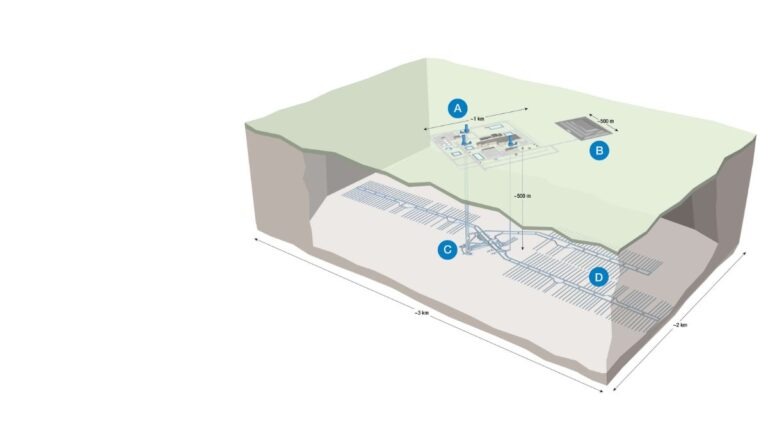
The Nuclear Waste Management Organization (the NWMO) is proposing a new underground deep geological repository system designed to safely contain and isolate used nuclear fuel. Wabigoon Lake Ojibway Nation (WLON) and the Township of Ignace have been selected as the host communities for the proposed project, which is located 21 kilometres southeast of the WLON and 43 kilometres northwest of the Town of Ignace, Ontario along Highway 17. As proposed, the Deep Geological Repository (DGR) for Canada’s Used Nuclear Fuel Project would provide permanent storage for approximately 5.9 million bundles of used nuclear fuel. The project is expected to span approximately 160 years, encompassing site preparation, construction, operation and closure monitoring. The project assessment is being conducted in collaboration with the Canadian Nuclear Safety Commission.
Learn more about the Integrated Impact Assessment process which is led by the Impact Assessment Agency of Canada and Canadian Nuclear Safety Commission.
- Read the Summary of Issues (February 16, 2026)
- Read the Summary of the Initial Project Description (January 5, 2026)
- Read the Initial Project Description (January 5, 2026)
- Learn More about the Melgund Integrated Nuclear Impact Assessment (MINIA) Project
- Learn More about the Nuclear Waste Management Organization (NWMO)
About the Author