What Is Common Wood-Rush? Spotting This Native Ontario Plant
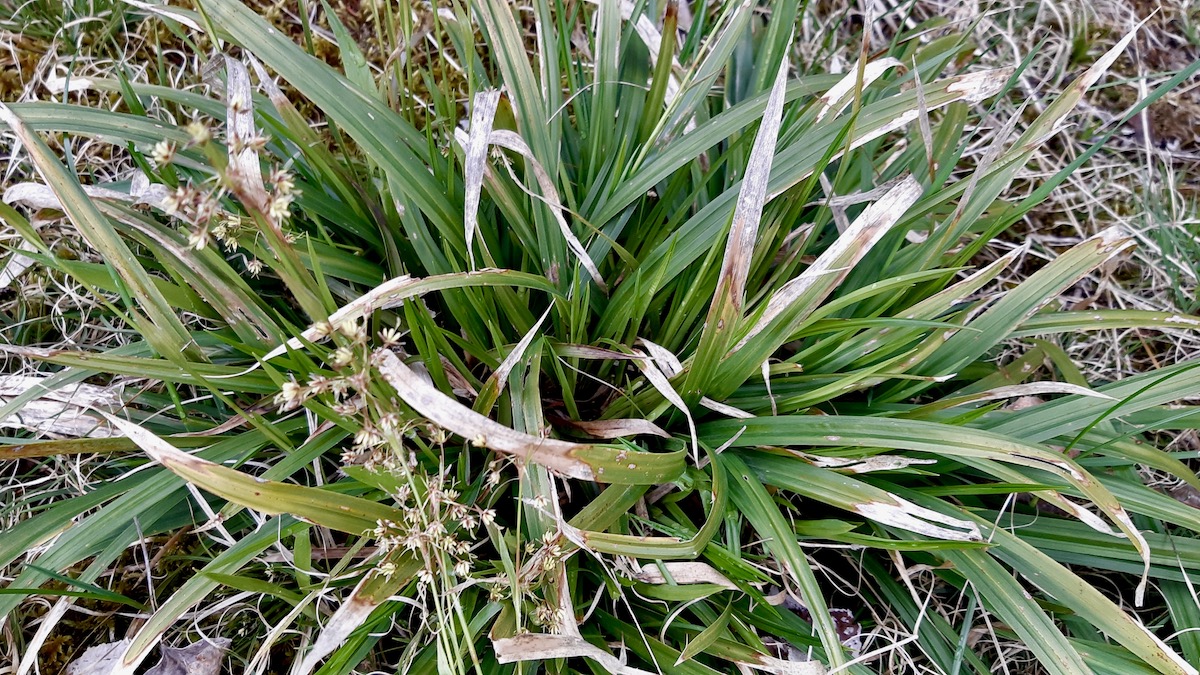
This weekend, we were asked what this plant is. If you’ve been looking closely at our land lab in Northwestern Ontario lately, you might be wondering the exact same thing. These stubborn clumps are popping up right along the bush line, looking like a patch of regular yard grass that went rogue, grew way too fast, and sprouted tiny, brownish, star-shaped flower clusters on thin stalks.
It’s a total imposter. This thing isn’t actually a grass at all. It’s Common Wood-rush, a native perennial that belongs to the rush family. It loves the damp, acidic, nutrient-poor soil found all over the Canadian Shield. You’ll usually find it lurking in the shade under jack pines or birches where regular lawn grass throws a fit and refuses to grow.
Spotting the features is easy if you get right up close to the flowers blooming right now. True grasses have feathery, subtle seed heads. Wood-rush is actually a distant cousin of the lily, and it shows. A single blossom opens up into a perfect little six-pointed star with tiny yellow pollen bits in the middle. If you look incredibly closely right at the center stem just below the blossoms, you can even spot a tiny, camouflaged bug hanging out on the plant.
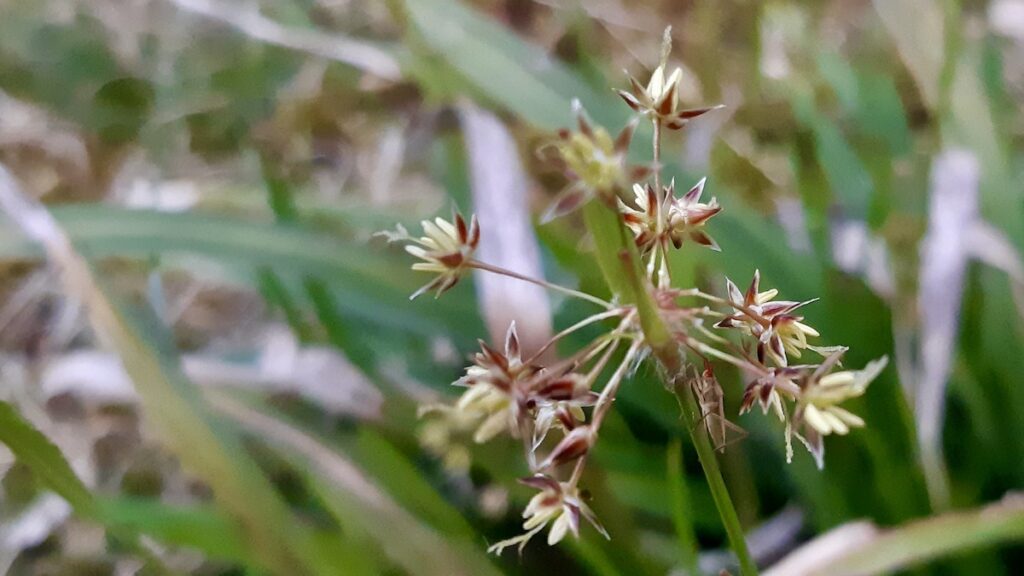
The leaves have another dead giveaway: the edges are fringed with fine, long, silky white hairs. Regular lawn grass is smooth, not hairy. Plus, instead of blending in to form a nice, flat carpet, this stuff grows in tight, distinct mounds that break up the texture of the ground. Those bleached-out brown tips on the leaves are just the leftover scars from surviving a brutal northern winter under the snow.
Out here on the land lab, this plant is exactly where it belongs. Rather than a weed to be managed, it’s a highly valuable, native component of our local ecosystem. It provides critical, early-season cover for invertebrates—just like the tiny bug hitched to the stem in the photo—and it drops nutrient-rich seeds that native songbirds rely on for food this time of year. It’s a tough, stubborn northern survivor doing its part to keep our local biodiversity intact.