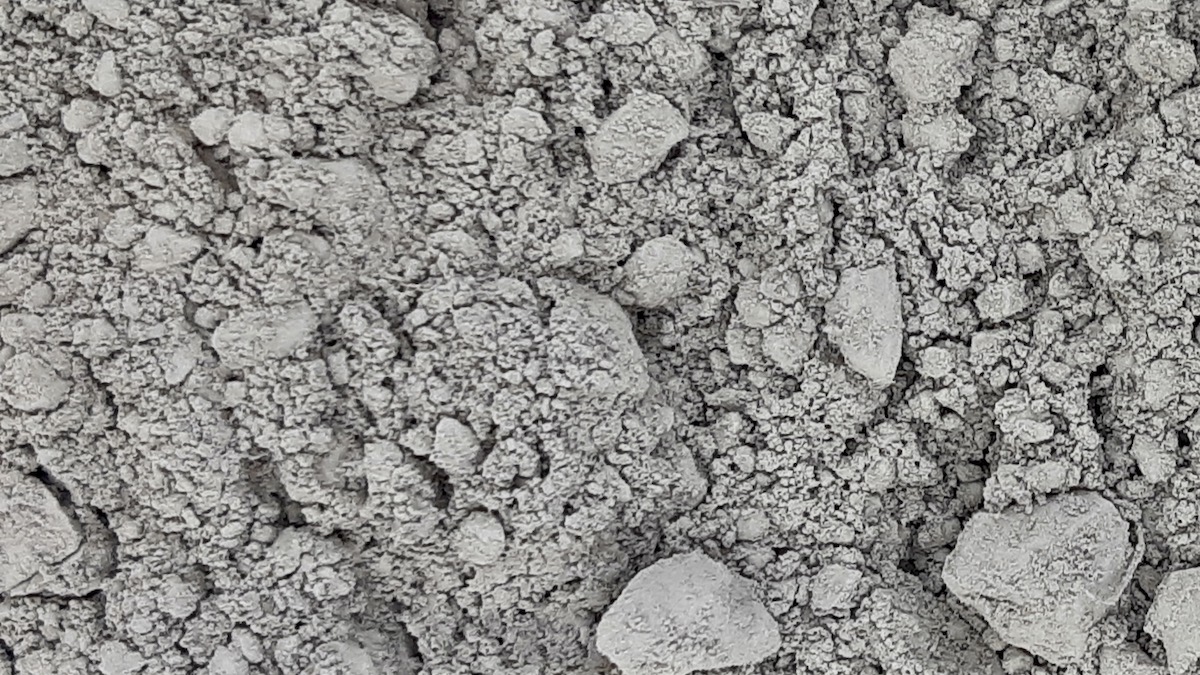
We spent the weekend turning sun-dried wild clay into powder using simple tools most people already have at home.
One of this summer’s most enjoyable arts projects has been learning how to harvest and process wild clay right here in Melgund Township. Instead of buying commercial pottery clay, we’ve been exploring local Northwestern Ontario clay deposits, learning how they behave, and discovering the traditional steps needed to turn raw earth into workable clay.
It’s also been a first for us. Although we’ve lived and worked in the community for years, we’d never actually harvested or processed clay from Melgund Township before! Every step has been a learning experience—from finding promising deposits to experimenting with different processing methods—and it’s been one of the most rewarding hands-on projects we’ve taken on this summer.
Melgund Township sits on the ancient Canadian Shield, where glaciers left behind a rich mix of clays, silts, sands, and weathered minerals. That means no two clay deposits are exactly alike. Some are smooth and naturally plastic, while others contain more sand or mineral fragments that give them their own character.
Learning what each deposit needs is all part of the process.
This weekend, we completed another important stage by crushing our thoroughly dried clay into a fine powder. If you’d like to try harvesting and processing your own wild clay, here’s the simple method we used.
Before You Begin
Before crushing your clay, you should have already:
- Harvested your wild clay.
- Soaked (slaked) it in water until it completely broke down.
- Strained it several times to remove roots, leaves, stones, and other debris.
- Allowed it to dry completely until it became hard and brittle.
If the clay still feels damp, let it dry longer. Dry clay crushes much more easily.
What You’ll Need
- Completely dried wild clay
- An old cotton T-shirt or other sturdy cloth
- A flat rock or other hard surface
- A larger rounded rock for crushing
- A zip-top bag or airtight container
- Safety glasses
- A dust mask or respirator recommended when working with fine clay particles
What You’re Trying to Do
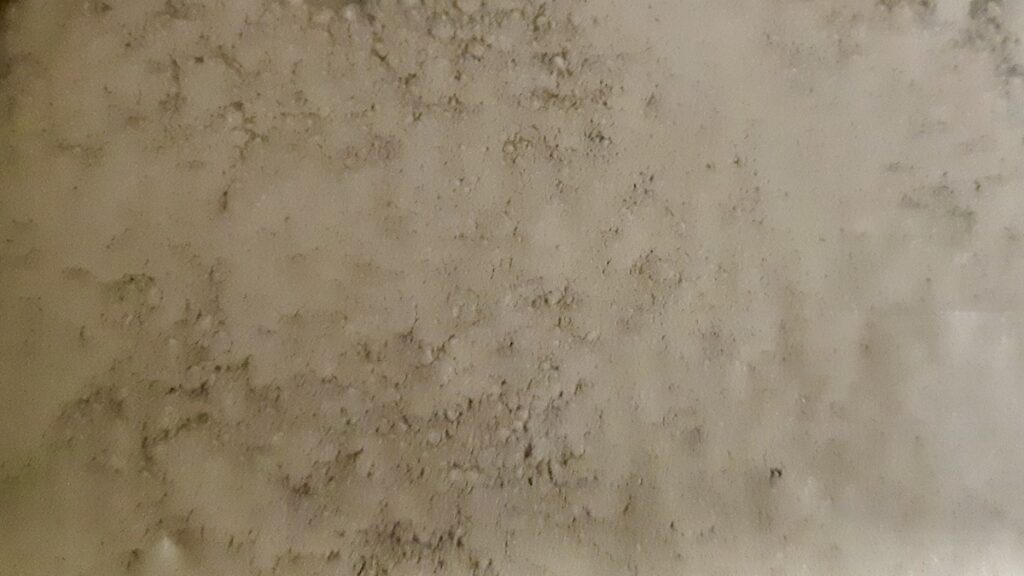
The objective is to turn the dried clay into a fine, even powder. Like dust.
This makes it much easier to rehydrate later and gives you another opportunity to remove any remaining pebbles, coarse sand, or organic material before making pottery.
Step 1: Break the Clay into Chunks
We started by breaking the dried clay cakes into pieces about the size of a walnut. Smaller pieces crush more evenly and are easier to work with.
Step 2: Wrap the Clay
Next, we placed several chunks in the middle of an old T-shirt and folded the fabric tightly around them.
The cloth kept the clay contained while still allowing us to strike it repeatedly without sending pieces flying everywhere. It keeps the powder and dust from blowing away. It’s that fine powder we want most of all!
Step 3: Crush the Clay
We laid the bundle on a flat rock and used a larger rounded rock to pound and grind the clay into powder.
Every few minutes we rotated the bundle so larger pieces moved into the centre. Some chunks broke apart quickly, while others took a little more persuasion. It wasn’t fast work, but it was satisfying—and by the end we’d definitely earned a good workout.
If you’re doing this yourself, take your time. There’s no rush, and any larger pieces can simply be wrapped up again and crushed a second time.
Step 4: Collect the Powder
Once we were happy with the consistency, we carefully unfolded the T-shirt and poured the powdered clay into a zip-top bag for storage.
The few larger pieces that remained went right back into the shirt for another round of crushing.
Why We Did It This Way
Our land lab is about 110 kilometres from the nearest hardware store, so buying specialized equipment didn’t make much sense.
Instead, we used what was already available: an old T-shirt and two rocks. It turned out to be a simple, inexpensive, and surprisingly effective way to process wild clay without creating much waste.
Sometimes the best workshop tools aren’t the ones you buy—they’re the ones already sitting around your camp, garage, or backyard.
What’s Next?
Our powdered clay is now ready for the next stage. We’ll rehydrate it, test its workability, and begin preparing it for wedging and making our first pottery from Melgund Township wild clay.