How community-led curation and exhibition practice are transforming a recreation hall into a cultural gathering place
A lot of what we’ve been learning over the past few months comes back to a simple but powerful idea: place is something you build through use, care, and shared creative activity. In Melgund Township, that idea is taking shape inside the Dyment Recreation Hall, where an unused space is being gradually transformed into a working arts and culture environment.
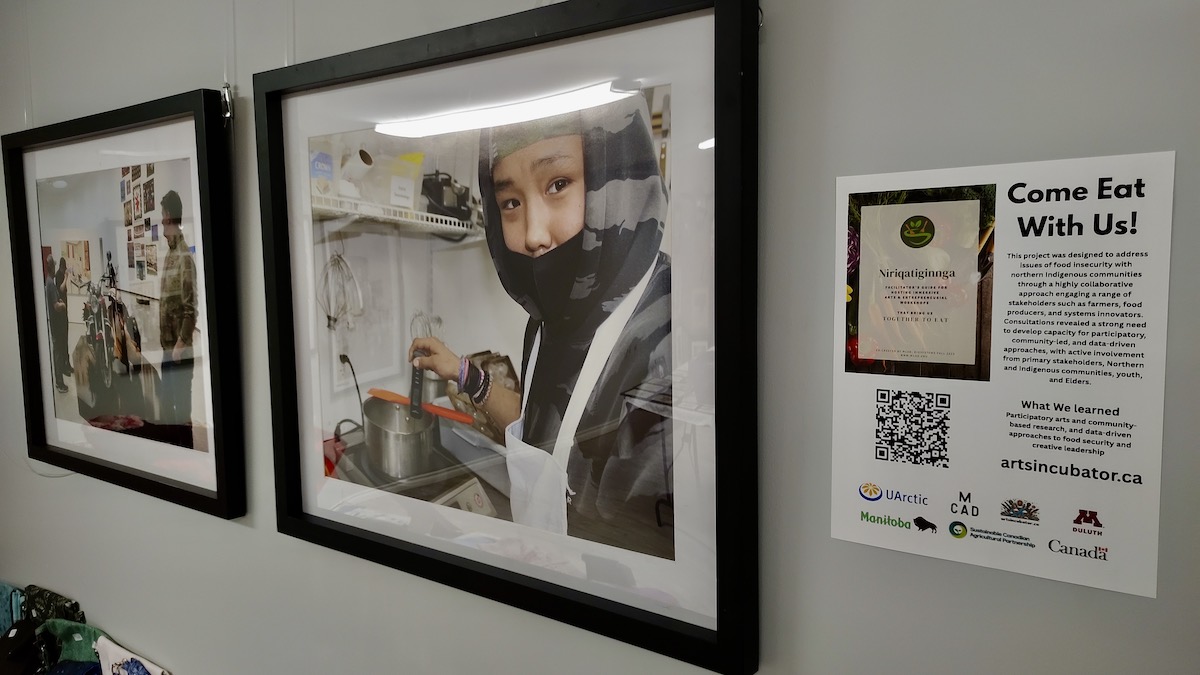
This isn’t just about hanging artwork on walls. It’s about placemaking—using arts practice, exhibition work, and community participation to shift how a space is experienced and understood.
Placemaking in Action
In many Northwestern Ontario communities, dedicated arts infrastructure is limited. That means existing public buildings often have to do more than one job. In this case, a recreation hall is becoming a cultural anchor point—an adaptable space where people can gather, create, and learn together.
What makes this project different is that the space is being shaped from the inside out. Artists and community members are not just using the room; they are actively defining what it becomes. Each installation, conversation, and workshop adds another layer to how the space is understood.
Over time, the room stops being “an unused area” and starts becoming a place with identity, memory, and meaning.
Learning Curation as a Community Practice
A key part of this work has been treating curation and exhibition not as specialized roles, but as shared skills that can be learned through participation.
Participants are working directly with ideas like:
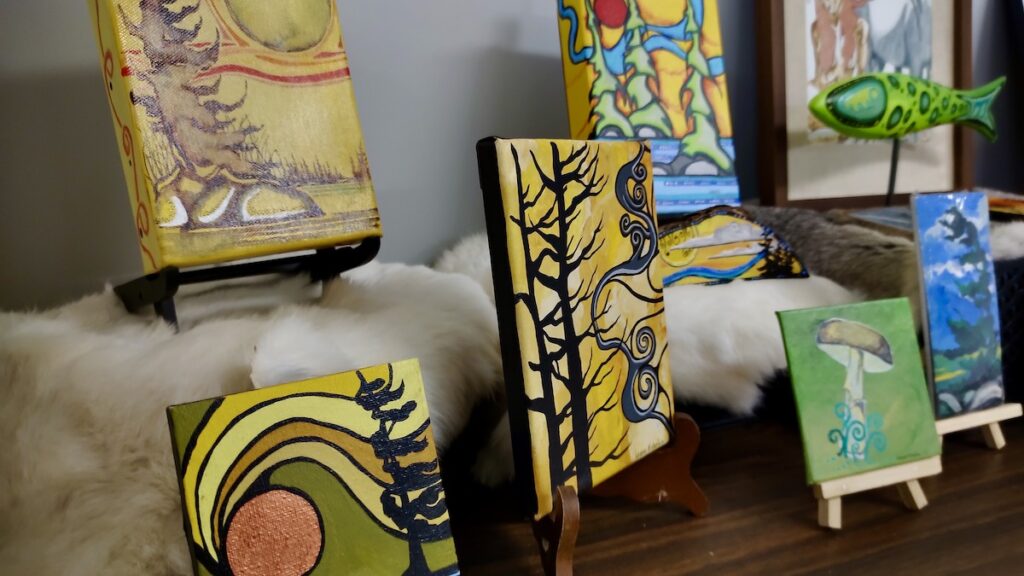
- How artwork is arranged in a shared space
- How visual relationships change meaning
- How viewers move through and experience an exhibition
- How storytelling happens through selection and placement
These are not abstract concepts—they are hands-on decisions made in real time as the space evolves.
For many emerging artists, this is their first experience seeing their work installed in a curated environment. For others, it is a chance to step into mentorship roles and rethink how their own practice fits within a collective space.
A Partnership Supporting Cultural Infrastructure
This placemaking work is being developed through collaboration and support from The Arts Incubator Winnipeg, Melgund Recreation Arts and Culture, and the Local Services Board of Melgund.
Together, these partners are supporting a model that blends recreation programming with arts development. The focus is not only on producing artwork, but on building the conditions where arts activity can happen consistently within the community.
A Space That Changes With Its Community
What is emerging is not a fixed exhibition or a traditional gallery model. Instead, it is a living space that changes week by week. New work comes in, installations shift, and ideas evolve based on who is present and what is being explored.
The program runs on a steady schedule:
- Mondays: 1:00 p.m. – 4:00 p.m.
- Wednesdays: 1:00 p.m. – 4:00 p.m.
- Saturdays: 10:00 a.m. – 12:00 noon
These sessions are open to artists, makers, and community members who want to take part in building a shared cultural space from the ground up.
Why Arts-Led Placemaking Matters
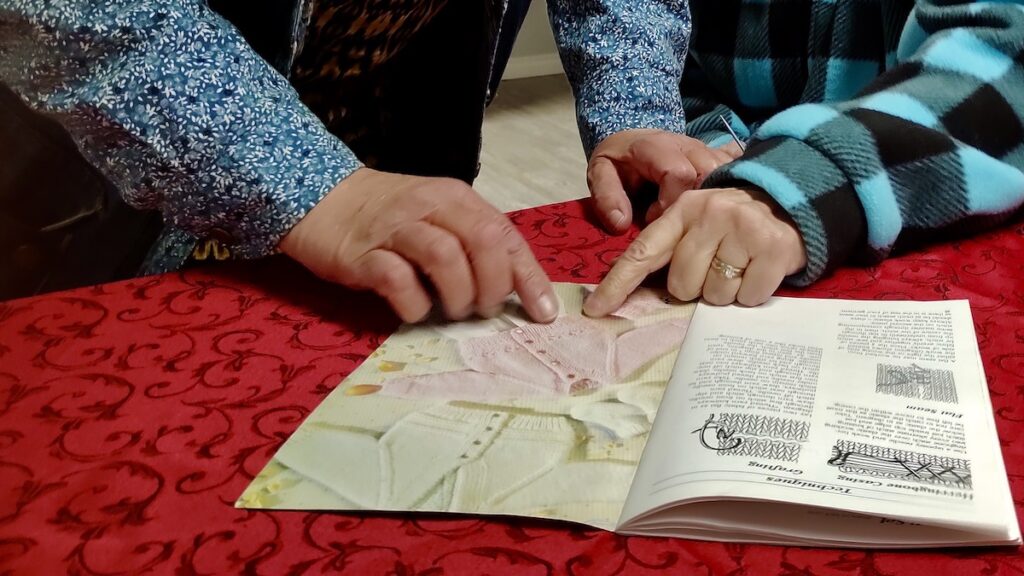
Placemaking through the arts is about more than aesthetics. It is about building connection—between people, between stories, and between communities and the spaces they use every day.
When exhibition and curation become part of community programming, they help shift how people relate to their environment. A room becomes more than a room. It becomes a place where stories are arranged, shared, and seen.
An Invitation to Participate
This project continues to grow through participation. There is no single way to be involved. Some people come to create artwork, others come to learn about curation, and others simply come to be part of a creative space in motion.
What matters most is presence.
In Melgund Township, placemaking is not a concept on paper—it is happening in real time, through people gathering in a recreation hall and slowly turning it into a cultural space shaped by the community itself.