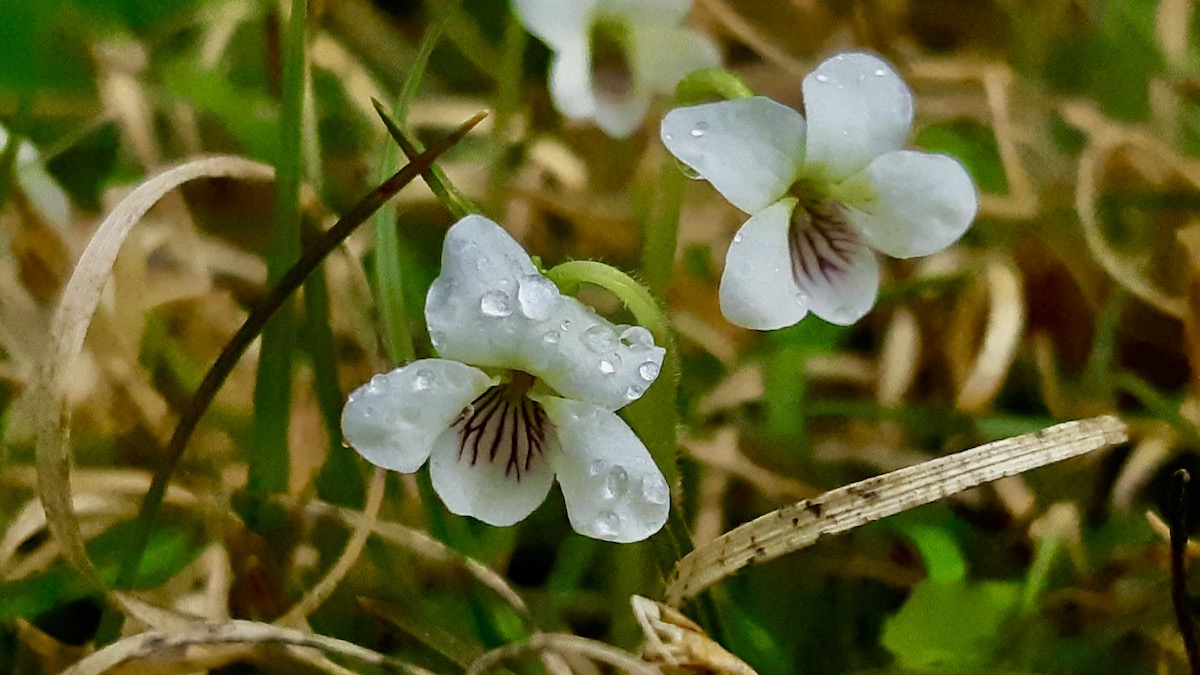
How these microscopic spring wildflowers power the Northwestern Ontario ecosystem from the forest floor.
If you venture into the damp woodlands or mossy clearings of Northwestern Ontario during late May, you might catch a glimpse of a hidden miniature wonderland. These tiny, low-growing treasures are native stemless white violets, known as Northern White Violet (Viola macloskeyi) and the Sweet White Violet (Viola blanda).
Measuring barely ten millimeters across, their microscopic size is actually a brilliant evolutionary adaptation for survival. By hugging the damp forest floor, these delicate flowers avoid harsh, biting northern winds and effectively trap the earth’s residual warmth to survive sudden late-spring frosts.
What makes these diminutive blooms so unique is the intricate architecture painted onto their pristine white petals. The lower petals feature delicate, dark purple veins known as “nectar guides”—nature’s very own neon runway strips designed to direct early-spring insects straight to the flower’s sweet center. Furthermore, violets possess a fascinating reproductive backup plan. Later in summer, they produce a second set of hidden, closed flowers near the soil that never open, self-pollinating in secret to guarantee the next generation survives even if spring pollinators are scarce.
Despite their small footprint, these white violets play a monumental role in the local wilderness. As some of the earliest wildflowers to emerge after the winter snow melts, they provide vital nectar for overwintered queen bees and early butterflies. Their lush green leaves serve as the primary food source for the caterpillars of beautiful Fritillary butterflies. Even their seeds are part of a cooperative network: they are coated in a rich lipid snack that coaxes local ants into carrying the seeds away, effectively planting the next generation across the Ontario wilderness.