Skip to content

Art Borups Corners

Melgund Township, Northwestern Ontario

MELGUND-RECREATION-ARTS-AND-CULTURE
Primary Menu
  • Home
  • About
    • About Art Borups Corners
    • Artists, Researchers and Collaborators
    • Arts Incubator Winnipeg
    • Melgund Township, Northwestern Ontario
      • Local Services Board of Melgund
      • Borups Corners, Northwestern Ontario
      • Dyment, Northwestern Ontario
      • Neighbouring Communities
    • Recreation
      • Framework for Recreation and Parks in Canada
      • Melgund Recreation
      • Recreation for an Aging Population
      • Youth Engagement
    • Reports
      • 2023-2024 Report
      • 2021-2022 Report
      • Sustainable Development Goals (SDG) Tracker
  • News
    • Arts, Culture, and Community Innovation
    • Melgund Township News
    • Motivation Matters!
    • Events and Activities
    • Local Services Board of Melgund Meeting Minutes
    • News Archive
    • Photos and Short Stories
  • Arts and Culture
    • Melgund Township Spring and Summer Arts Incubator Program
    • Living Land Lab
    • Milkweed to Market
    • Storytelling Club
      • Spring Short Stories
      • Winter Stories 2026
      • Unfinished Tales and Short Stories
  • Resources
    • Adaptive Phased Management
    • The Easy EPUB Reader
    • Melgund Integrated Nuclear Impact Assessment Project
    • Explore Our Methods, Epistemologies, and Pedagogies
    • Funding Programs and Sources
    • Guide for Local Services Boards
    • Northern Services Boards Act
    • Workshops
  • Exhibitions
    • 2026 Spring Exhibition
    • ARTSPOT Under $100 Art Show in Winnipeg
  • Contact
  • Home
  • Food Security and Innovation
  • Wild Blueberries: Tiny Berries, Big Impact
  • Community Garden
  • Food Security and Innovation

Wild Blueberries: Tiny Berries, Big Impact

In the woodlands of Northwestern Ontario, low bush blueberry plants are beginning to flower—marking the start of a season both eagerly anticipated and deeply rooted in local practice.
The Arts Incubator May 15, 2025
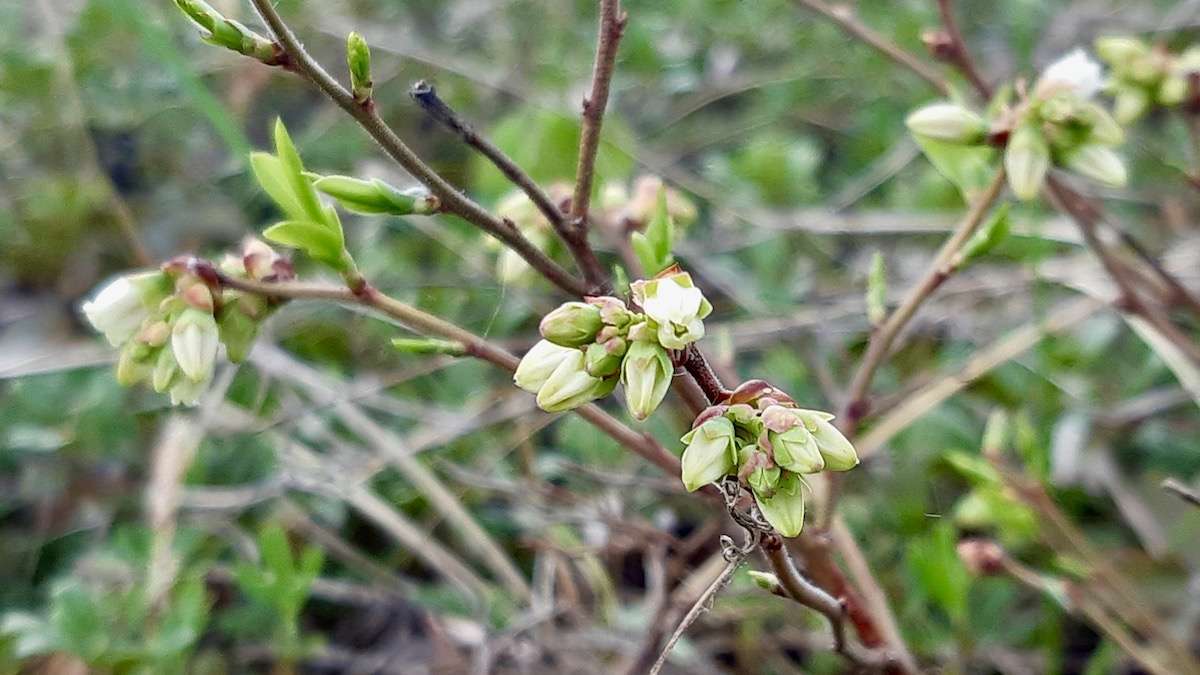
In the crisp air of Northwestern Ontario, a blueberry bush unfurls its delicate beauty. These blossoms signal the start of a new season, a time when the landscape will be painted with the vibrant blue of ripening blueberries, a testament to the enduring beauty and natural abundance of this northern wilderness.

In the crisp air of Northwestern Ontario, a blueberry bush unfurls its delicate beauty. These blossoms signal the start of a new season, a time when the landscape will be painted with the vibrant blue of ripening blueberries, a testament to the enduring beauty and natural abundance of this northern wilderness.

Why Northern Blueberries Beat the Store-Bought Kind—Every Time

Blueberry Season Begins in the North

In the woodlands of Northwestern Ontario, low bush blueberry plants are beginning to flower—marking the start of a season both eagerly anticipated and deeply rooted in local practice. For the second year in a row, our community-led food production program is preparing to harvest these wild berries by hand. We’re fortunate to have our own blueberry patches, and fields more around the community.

It’s May, and the timing of the bloom is critical. It reflects not only seasonal cycles but also the health of the surrounding ecosystem. Local monitoring of flowering stages and berry development helps ensure sustainable harvesting and long-term regeneration of berry patches. This process, grounded in observation and lived experience, allows communities to plan ahead, coordinate harvesting teams, and maximize both yield and stewardship.

Found in the Kivalliq region of Nunavut, Northwestern Ontario, Manitoba and beyond, blueberries embody the essence of the North, cultivated with care and harvested with pride.

Small Berries, Superior Quality

Wild blueberries differ significantly from their high-bush counterparts commonly found in grocery stores. They grow low to the ground, in shallow soils, without human intervention. These smaller berries are denser, more flavourful, and richer in antioxidants, making them a preferred choice for nutrition and taste.

The compact size of wild blueberries comes from their adaptation to challenging growing conditions—thin soils, unpredictable rainfall, and minimal nutrients. Yet these factors are what contribute to their deep blue pigment, rich taste, and higher concentration of beneficial compounds. Wild berries often contain nearly double the antioxidant capacity of cultivated ones, and their natural resilience translates into hardier fruit that holds up well during freezing and processing.

The Problem with Store-Bought Blueberries

Commercially farmed blueberries are often bred for size, uniform appearance, and shipping durability. These high-bush varieties are grown using irrigation systems, fertilizers, and pesticides, resulting in fruit that is large but often watery and bland. In contrast, wild blueberries grow naturally, requiring no synthetic inputs, and support a healthier local ecosystem.

Factory farming of blueberries, especially in southern regions, contributes to soil degradation, overuse of water resources, and habitat loss. These monocultures are designed for global markets, not local nourishment. Wild harvesting, on the other hand, maintains biodiversity and strengthens reciprocal relationships between people and the land. It offers not just a better berry, but a better way of producing food—one that values sustainability over scale.

Wild, low bush blueberries are slow to spread and mature. Unlike cultivated crops that are planted annually, wild blueberry plants expand through underground rhizomes—a process that can take years. It may take five to ten years for a wild patch to establish fully, and even longer for it to produce berries in abundance. Growth is influenced by fire cycles, soil conditions, and surrounding plant competition. Because of this long timeline, good patches are rare and often passed down as local knowledge across generations. Overharvesting or trampling can set a patch back for years, making careful stewardship essential.

Harvesting Food, Building Resilience

Beyond taste and nutrition, the wild blueberry harvest contributes directly to local food security and sovereignty. The berries are gathered, processed, and shared within the community, reducing dependence on external food systems. Fresh or preserved, they support year-round use in meals, baking, and traditional foods. The harvest process also strengthens ties between generations, as youth and elders work together on the land.

Our food production and food sector entrepreneurship program, launched in 2023-2024 increases access to healthy food, and works to build long-term capacity. Skills like identifying prime picking areas, learning preservation methods, and coordinating harvest crews are being passed on and expanded each season. What begins as a berry harvest becomes an entry point for deeper conversations about climate change, land use, and cultural continuity. It is a model of what local, land-based food systems can look like: community-directed, ecologically sound, and grounded in place.

About the Author

The Arts Incubator

The Arts Incubator

Administrator

The Arts Incubator is a participatory arts collective and living lab, based in Winnipeg, Manitoba and Northwestern Ontario. It's a space where innovation and creativity thrive. It's latest iteration was launched in 2021 with funding and support from the Canada Council for the Arts Digital Greenhouse. Today, working with students and faculty from the Minneapolis College of Art and Design, we fuse traditional and participatory media arts with artificial intelligence, music, storytelling and community-driven, land-based artist residencies to cultivate new voices and bold ideas. Whether through collaborative projects or immersive experiences, our small but vibrant community supports creators to explore, experiment, and connect. Join us at the intersection of artistry, technology, culture and community—where every moment is a new opportunity to create.

Author's website Author's posts
Tags: Climate Change food innovation Food Security Manitoba Northwestern Ontario SDG 2 Sustainable Agriculture Winnipeg

Continue Reading

Previous: How to Keep Everbearing Strawberries Producing All Season Long
Next: Melgund Local Service Board Approves Deck and Event Stage Funding, Discusses Financial Strategies

Related News

After a long, frosty winter in Northwestern Ontario, our tiny apple seedlings are officially waking up and showing off their first vibrant buds of the season.
  • Food Security and Innovation
  • Photos and Short Stories

Rooting for Success

Art Borups Corners Apr 28, 2026
Our overgrown raspberry beds will soon be moved as our land lab and local community garden program enters its spring planting season.
  • Community Garden
  • Photos and Short Stories

Spring Land Lab Cleanup Begins

Art Borups Corners Apr 27, 2026
The Milkweed to Market project began its planting season in Borups Corners and Melgund Township to support monarch butterfly habitat restoration.
  • Borups Corners
  • Community Garden

Seeding our Blood Flower Milkweed

Art Borups Corners Apr 26, 2026

Recent Posts

  • First Board Meetings for Ontario Nonprofits
  • Painted Wings and Local Things
  • Leanne Nicholson’s Land-Based Art Featured in Spring Exhibition
  • Marginalia
  • Allison Dunham Photography Featured at Dyment Spring Exhibition

Upcoming Exhibitions

The Melgund Integrated Nuclear Impact Assessment Project (MINIAP) is a community-driven research and policy initiative examining the environmental, social, cultural, economic, and long-term safety impacts of the proposed Deep Geological Repository (DGR) for Canada’s used nuclear fuel in Melgund, Ontario. Aligned with the federal impact assessment process led by the Impact Assessment Agency of Canada and the Canadian Nuclear Safety Commission, and focused on the proposal advanced by the Nuclear Waste Management Organization, this integrated project analyzes groundwater protection, nuclear waste storage safety, Indigenous rights and treaty interests, environmental monitoring, long-term radioactive waste containment, emergency preparedness, regulatory oversight, community health, regional economic impacts, and intergenerational stewardship. Designed to enhance public participation, transparency, and evidence-based decision-making, the Melgund Integrated Nuclear Impact Assessment Project provides accessible analysis, technical review, and community engagement resources to support informed input into Canada’s nuclear waste management strategy and the federal impact assessment process.
Discover a growing collection of inspirational and motivational short stories from Manitoba and Northwestern Ontario, created to inspire hope, resilience, courage, and personal growth. These uplifting short stories and daily motivational reads are rooted in strong community values, dignity, integrity, perseverance, and leadership—reflecting life across the Prairies and Northern Ontario.

Each inspirational story delivers powerful life lessons, positive mindset reminders, and encouragement for self-improvement, mental strength, and purposeful living. Whether you’re searching for motivational stories for tough times, short stories about resilience and overcoming challenges, or inspirational reflections grounded in rural, northern, and Indigenous-informed community perspectives, this collection is designed to fuel optimism, confidence, and long-term success.

Through storytelling that highlights community leadership, youth empowerment, kindness, and values-based living, these inspirational short stories help readers in Manitoba, Northwestern Ontario, and beyond stay grounded, build inner strength, and move forward with clarity, hope, and possibility.

You may have missed

The first nonprofit board meeting in Ontario is required but does not need public advertising whatsoever. Ontario law only requires notice to directors, not the public, for initial organizational board meetings.
  • Community Lens
  • Photos and Short Stories

First Board Meetings for Ontario Nonprofits

Art Borups Corners May 3, 2026
Find the perfect Mother’s Day gift at the Métis Center’s massive craft market this Saturday morning, like these beautiful dragonfly cards painted by Dryden artist Tanya McArthur.
  • Photos and Short Stories

Painted Wings and Local Things

Art Borups Corners May 1, 2026
Leanne Nicholson - On Display at the Dyment Recreation Hall - Northern Arts Program in Ontario
  • Melgund Township
  • Photos and Short Stories

Leanne Nicholson’s Land-Based Art Featured in Spring Exhibition

Art Borups Corners May 1, 2026
While examining books from the old schoolhouse in the 1940s-50s, we found several filled with drawings by former students at the time.
  • Borups Corners
  • Photos and Short Stories

Marginalia

Art Borups Corners Apr 30, 2026

ACKNOWLEDGEMENTS

The Arts Incubator and Art Borups Corners Collective was seeded with strategic arts innovation funding from the Canada Council for the Arts Digital Greenhouse and the Local Services Board of Melgund. We thank them for their investment, support and bringing the arts to life.

Canada Council for the Arts Digital Greenhouse Logo

NORTHWESTERN ONTARIO ARTS PROGRAMS

This platform, our Northwestern Ontario hub and programs have been made possible with support from the Ontario Arts Council Multi and Inter-Arts Projects Program. We gratefully acknowledge their funding and support in making the work we do possible.

Ontario Arts Council Multi and Inter-Arts Projects Program

SUPPORTING ARTS AND RECREATION

Borups Corners Arts and Recreation supports arts and recreation in Melgund Township, Northwestern Ontario as volunteer-driven Arts Collective.

Ontario Arts Council Multi and Inter-Arts Projects Program
Copyright © Art Borups Corners in partnership with The Arts Incubator. All rights reserved. | MoreNews by AF themes.