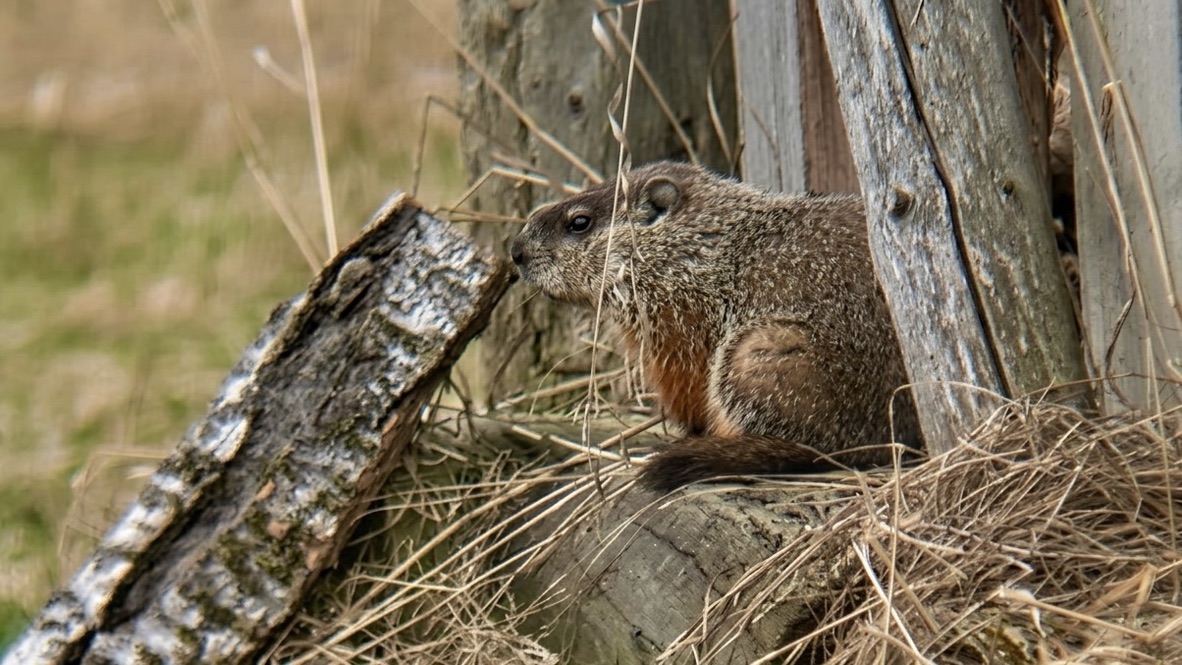
Observing the mid-afternoon rituals and legume-heavy diet of a remarkably well-fed backyard resident.
The rhythm of a Canadian backyard often dictates its own schedule, independent of the clocks ticking inside our homes. Beneath the weathered planks of a backyard woodshed, a resident has established a routine so precise it could set a watch. Mid-afternoon brings the emergence of a particularly stout woodchuck, a creature whose girth suggests a life of plenty and a distinct lack of natural predators in this quiet corner of the neighbourhood.
A Punctual Guest at the Garden Table
As the afternoon draws on, shifting the shadows across the grass, the woodchuck makes his appearance. There is no haste in his movements. He is a marmot of leisure, navigating the transition from his cool subterranean tunnels to the warmth of the afternoon air with the confidence of a homeowner. His primary objective is well-known to those who watch from the windows: the scattered peanuts waiting near his threshold.
Watching this fat little woodchuck chewing away on the grass is a study in quiet satisfaction. He sits up, his small paws deftly handling each shell with surprising dexterity. The crunching sound, though faint, carries through the still air, marking the progress of his daily feast. It is a simple pleasure to observe such unhurried existence, a reminder of the wilder lives unfolding just beyond our patio doors.
- Consistency in timing, usually appearing between two and three o’clock.
- A clear preference for unsalted peanuts over standard garden forage.
- A cautious but comfortable relationship with the human structures nearby.
The Shared Space of Modern Wildlife
There is a unique charm in these small, daily interactions with the local fauna. While some might view a woodchuck as a mere garden nuisance, his presence offers a layer of character to the property. His choice of residence—the dark, protected space beneath the woodshed—provides him security, while the provided snacks ensure his continued loyalty to this specific patch of earth.
The presence of such a well-fed neighbour reminds us that nature does not just exist in the distant woods, but thrives in the margins of our own constructed world.
The spectacle concludes as quickly as it began. Once the peanuts have vanished, the woodchuck retreats, his heavy frame disappearing back into the shadows of the woodshed. He leaves behind a silent garden and the anticipation of his return the following afternoon, continuing the cycle of a well-nourished life in the Canadian suburbs.