How this brilliant, low-growing bryophyte engineers the moisture and life of the northern forest floor.
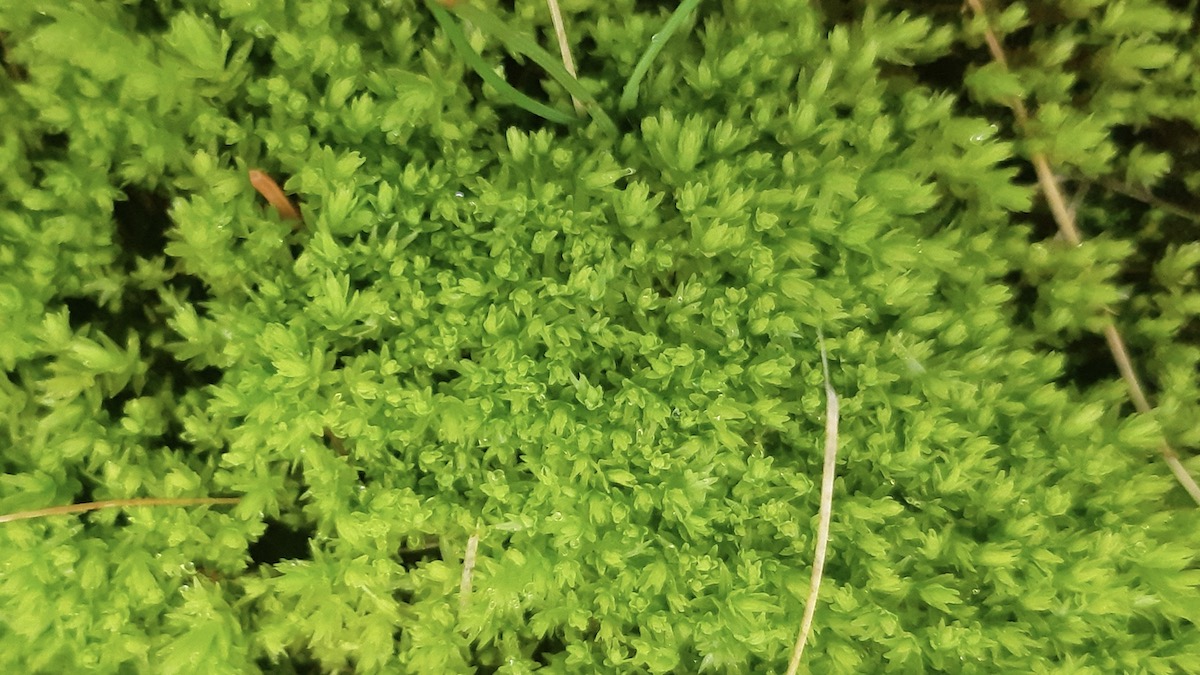
If you look down into the damp depressions of Melgund Township, you will often find patches of the forest floor that seem to radiate their own light. This is Glow Moss (Aulacomnium palustre), a gorgeous, moisture-loving bryophyte famous for its electric, yellowish-green coloration.
Lacking a traditional vascular system, roots, or seeds, this ancient plant stays microscopic in height but grows in expansive, dense cushions. By remaining mere centimeters from the ground, it avoids the drying effects of wind and directly absorbs water and ambient nutrients through its tiny, star-like leaves.
What makes this moss incredibly unique is its dual-layered survival strategy. When conditions are optimal, it doesn’t just rely on wind-blown spores; it produces specialized, microscopic cloning buds called gemmae at the tips of its stems to rapidly expand its territory. Furthermore, glow moss is a master of extreme resilience. During periods of summer drought, it can lose nearly all its cellular water and enter a state of suspended animation, turning a dull brown. The moment a spring shower hits the boreal forest, it rehydrates instantly, bouncing back to its radiant lime-green glory within hours.
Despite its humble size, glow moss operates as a primary environmental engineer in the Ontario wilderness. It acts like a massive natural sponge, holding many times its own weight in water to regulate the local water cycle and prevent soil erosion. This constantly moist, insulated microclimate serves as a critical protective nursery for neighboring flora—including the native white violets growing right beside it. On a microscopic scale, these dense moss carpets provide a thriving, safe sanctuary for vital invertebrates, tardigrades (water bears), and beneficial insects that drive the forest ecosystem.