The national program aims to create 340,000 jobs and support small businesses by 2031
Canada is embarking on a sweeping national strategy to address a persistent technology adoption gap and stimulate massive employment growth across the country. The federal initiative, titled “AI for All,” seeks to leverage the nation’s historical research strengths to drive commercial integration.
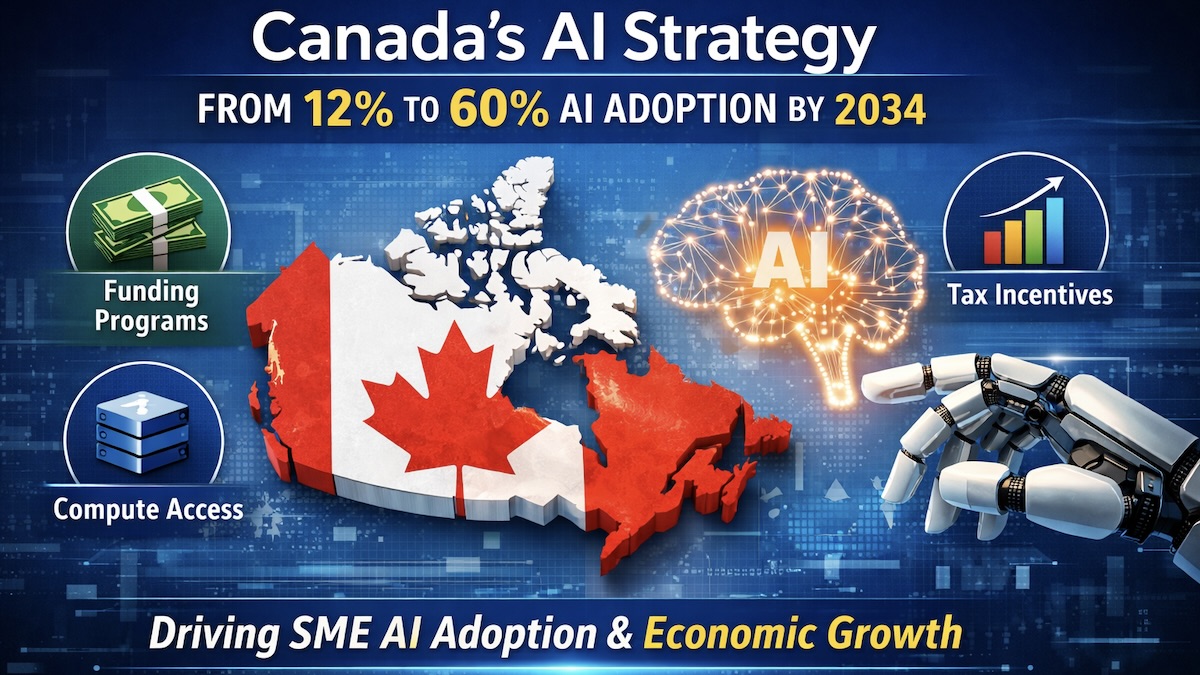
Statistics Canada reports that only 12 percent of Canadian businesses used artificial intelligence to produce goods or services between mid-2024 and mid-2025. This figure is projected to rise to 14.5 percent by mid-2026, highlighting a slow pace of domestic integration. The situation is particularly pronounced among small and medium-sized enterprises, where adoption stands at just eight percent.
This low rate places Canadian small businesses far behind international peers. Nordic nations lead with adoption rates between 29 and 42 percent, while Germany stands at 26 percent and France at 18 percent. On individual technology diffusion, Canada ranks 15th globally at 37 percent, trailing behind the United Arab Emirates, Singapore, and Norway.
The federal government aims to reverse these trends through aggressive employment and placement targets. The new strategy plans to create up to 90,000 AI-related jobs and work placement opportunities for young Canadians by 2031. These placements will focus on starting careers and supporting small businesses and non-profit organizations.
An additional 250,000 jobs are expected to be created through the broader adoption of artificial intelligence across the economy by 2031. Currently, more than 150,000 Canadian innovators employed by over 3,500 domestic companies are developing local solutions. The strategy aims to build on this existing momentum to secure long-term economic resilience.
Canada possesses significant structural advantages to support this transition, including a highly educated workforce and deep capital markets. Rich data assets exist across key sectors such as health, life sciences, energy, agriculture, transportation, manufacturing, and public services. The government plans to utilize these assets to foster domestic champions and unlock productivity gains.
The transition will require overcoming deep-seated public skepticism and low technical literacy. The strategy represents a coordinated effort to ensure technological advancements translate into tangible economic benefits for all citizens. Success will depend on whether these federal measures can successfully accelerate corporate technology integration over the next decade.
National planners hope the combination of youth placements and corporate incentives will bridge the gap between research excellence and commercial application. The initiative seeks to establish a self-sustaining cycle of innovation and employment. If successful, the program will secure Canada’s position as a highly competitive global economic player.
The country must act quickly to prevent its top-tier research talent from migrating to foreign markets. Retaining this intellectual capital is necessary for sustaining domestic economic growth and maintaining national competitiveness.